
How to Buy a Shared Ownership Property

Buying a shared ownership property lets you get onto the housing ladder by purchasing an initial percentage share of a home (between 10% and 75% of its full market value) and paying subsidised rent to a housing association on the remaining share. Because your mortgage and deposit are based only on the share you buy rather than the full property price, it offers a practical route into homeownership when buying outright is out of reach.
The conveyancing process to buy a shared ownership property depends on whether you are buying a new build or a resale (a previously owned shared ownership home). With a new build, you face the challenges of buying off-plan and delayed completions, while on a resale you may be staircasing simultaneously to buy a larger share than the seller currently owns.
Whichever route you choose, buying a shared ownership home involves extra eligibility checks, housing association approvals, and complex leasehold rules that catch many first-time buyers by surprise. Below, we explain exactly how shared ownership works, compare New Model and older resale leases, walk through the 8-step process to find and buy a shared ownership property, break down the costs (including Stamp Duty), and weigh up honestly whether the scheme is a good idea for you.
- Smaller deposit and mortgage: You buy an initial share of 10% to 75% (usually 25% to 75% on resales) with a 5% to 10% deposit on that share, and pay subsidised rent (typically 2.75%) on the housing association's remaining share.
- Check which lease model applies: Newer post-2021 builds come with 990-year leases, a 10-year initial repair allowance, and rent rises capped at CPI + 1% (since October 2023), whereas older resale homes often have shorter leases, 100% repair liability, and RPI + 0.5% rent reviews.
- You can choose your own solicitor and broker: While you must complete the housing association's free affordability check, you do not have to use the developer's or landlord's panel solicitor or tied broker to arrange your mortgage or conveyancing.
- Allow 12 to 14 weeks for conveyancing: Extra mortgage lender undertakings and housing association approvals mean specialist shared ownership conveyancing solicitors are essential to avoid delays.
What is shared ownership and how does it work?
Shared ownership (often called "part buy, part rent") is a government-backed affordable housing scheme in England operated by registered providers, primarily housing associations and local councils. Instead of needing a deposit and mortgage for 100% of a property, you buy an initial leasehold share with a 5% or 10% deposit on that share and pay monthly rent on the unsold equity retained by the landlord.
You can buy either a brand-new home directly from a housing association developer (which follows the new-build conveyancing process) or an existing shared ownership home sold by a current shared owner (known as a shared ownership resale).
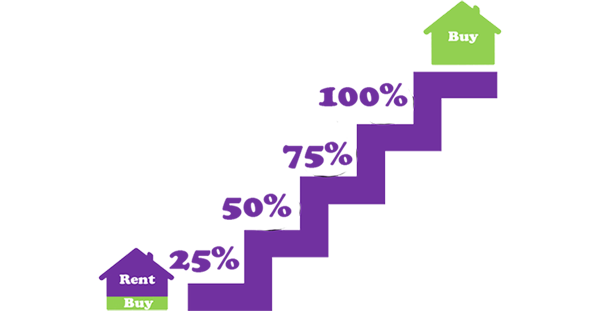
Over time, you can buy additional shares in your home whenever you can afford to, a legal process called staircasing. Each time you buy a larger share, the housing association's share shrinks and your monthly rent drops proportionally. On most properties, if you reach 100% staircasing, you stop paying rent completely (and on a house, the freehold is usually transferred to you).
Do not confuse shared ownership with Discount Market Sale (DMS), where you buy 100% of a home at a fixed local discount (such as 80% of market value) with zero rent payable on the discounted portion.

New Model (post-2021) vs Older Resale shared ownership leases
All shared ownership homes (both flats and houses) are sold as leasehold properties. Crucially, the rules in your lease depend heavily on whether the home was built under Homes England's New Model Lease (introduced from April 2021 and updated for rent reforms in October 2023) or an Older Model Lease (common on resales and legacy Section 106 developments):
Lease Feature | New Model Lease (2021+ / Post-Oct 2023) | Older Model / Resale Lease |
|---|---|---|
| Minimum Initial Share | 10% to 75% of full market value. | Usually 25% to 75% (or buying at least the seller's current share on a resale). |
| Lease Length | Minimum 990 years, removing future lease extension worries. | Typically granted at 99 or 125 years (always check remaining years if nearing 80 to 85 years). |
| Annual Rent Increase | Capped at CPI + 1% on new-build leases under October 2023 reforms (some 2021 to 2023 leases use RPI + 0.5%). | Usually RPI + 0.5% every April (which generally rises faster than CPI). |
| Repairs & Maintenance | 10-year initial repair period: Landlord covers external/structural repairs, plus up to £500/year towards essential internal repairs. | 100% buyer responsibility for internal repairs and your full building service charge share from Day 1. |
| Staircasing Increments | 1% per year (for the first 15 years using HPI indexation with no RICS fee), or larger 5%+ jumps. | Minimum 10% (or 25% on older leases), requiring a paid RICS valuation every time. |
| Ground Rent & Resale Period | £0 (peppercorn) ground rent; 4-week landlord nomination period when selling. | May include ground rent clauses; 8-week (or 12-week) landlord nomination period when selling. |
Worked monthly cost example: Mortgage, rent, and Stamp Duty
Suppose you buy a 40% share of a flat with a full market value of £250,000:
- Your 40% share price: £100,000.
- Your deposit (5% of your share): £5,000 (leaving a £95,000 shared ownership mortgage).
- Monthly rent on the unsold 60% (£150,000): Most housing associations set initial rent at 2.75% per year of the unowned share (capped at 3%). At 2.75% on £150,000, your rent is £4,125 a year, or £343.75 per month.
- Service charge & buildings insurance: Payable monthly on top of your mortgage and rent to cover communal upkeep, estate management, and buildings insurance (often £100 to £250+ per month on modern flat blocks).
- Stamp Duty Land Tax (SDLT): Shared ownership buyers in England can choose between making a one-off Market Value Election (paying tax on the full £250,000 value upfront, which is £0 for eligible first-time buyers up to £300,000 and means you never pay SDLT when staircasing later) or Paying in Stages (paying only on your initial share, with no further SDLT until you staircase past 80%). Read our dedicated guide to Stamp Duty on shared ownership properties before deciding.
Who is eligible to buy a shared ownership home?
To buy a shared ownership home in England, your household must meet five core eligibility rules:
- Age & household income cap: You must be aged 18 or over, with a combined gross household income of £80,000 a year or less outside London, or £90,000 a year or less in London.
- Cannot afford to buy outright: You must be unable to afford the deposit and mortgage payments for a home on the open market that meets your household's needs.
- Current ownership status: You must be a first-time buyer, a former homeowner who cannot afford to buy outright now, an existing shared owner looking to move, or a current homeowner with a formal sale agreed (subject to contract) on your existing property.
- Credit & affordability check: You must have no current rent or mortgage arrears, pass credit checks, and prove you can comfortably afford the mortgage, rent, and service charges without overstretching your monthly income.
- Priority & local connection rules: Serving British Armed Forces personnel (and recently discharged veterans) receive government priority, while individual councils often attach Section 106 planning rules giving initial priority to people who already live or work in that borough.
Specialist schemes: HOLD (disabled buyers) and OPSO (over 55s)
Alongside standard shared ownership, two specialist government variations cater for specific buyers:
- HOLD (Home Ownership for People with Long-Term Disabilities): If no suitable new-build shared ownership home meets your accessibility needs (for example, a ground-floor or adapted home near care support), HOLD lets a housing association help you buy a suitable property on the open market on a shared ownership basis.
- OPSO (Older Persons Shared Ownership): Designed for buyers aged 55 and over. OPSO works like standard shared ownership except the maximum share you can own is capped at 75%; once you own 75%, you pay £0 rent on the remaining 25%.
How to buy a shared ownership property: 8-step process
From finding a property to getting the keys, here is the exact step-by-step process for buying a shared ownership home in England:
Step 1: Find a new-build or resale shared ownership property
Start your property search across the dedicated affordable housing portals as well as mainstream sites:
- Government & specialist portals: Search Homes England's Own Your Home portal, Share to Buy, and Homes for Londoners (if buying in Greater London).
- Rightmove & Zoopla filters: Use the "Buying Schemes / Shared Ownership" filter to spot both new-build plots and resales marketed by housing associations or estate agents.
- Direct housing association mailing lists: Register directly with housing associations active in your target area (such as Clarion, L&Q, Peabody, Sovereign, Places for People, or Orbit) to get early alerts before plots hit Rightmove.
Remember that on a new build, you can choose your initial share (from 10% or 25% up to 75%, subject to affordability), whereas on a resale, you must buy at least the percentage share currently owned by the seller (for example, if they own 45%, you must buy 45% or more).
Step 2: Apply and pass the housing association financial assessment
Once you view a home you want to buy, submit an application to the housing association along with any local connection details. The housing association will direct you to its nominated panel financial adviser for a mandatory, free affordability assessment.
This check verifies your payslips, bank statements, savings, and credit commitments against Homes England affordability ratios to confirm both your eligibility and the suitable share percentage for your budget. Important: Completing this free sign-off with the landlord's panel assessor does not tie you into paying them a broker fee to arrange your actual mortgage.
Step 3: Pay your reservation fee and check the Key Information Document
Once approved and allocated the plot (or accepted on a resale), you normally pay a reservation fee (often £250 to £500, deducted from your completion monies) to lock the home off the market. Before reserving, carefully read the mandatory Key Information Document (KID), which sets out the lease length, annual rent review formula, service charge breakdown, repair period, and resale nomination period.
Step 4: Instruct a specialist shared ownership conveyancing solicitor
To issue the Memorandum of Sale, the housing association requires your solicitor's details within a few days of reservation. Housing associations and developers often hand you a list of "panel solicitors", which can carry expensive referral mark-ups or slow communication. You have the legal right to instruct your own independent shared ownership conveyancing solicitor, provided they sit on your mortgage lender's panel and know shared ownership leases inside out.
Need an experienced solicitor for your shared ownership purchase?
Get an instant, fixed-fee conveyancing quote with CQS-accredited shared ownership specialists on 99% of UK mortgage lender panels, backed by our No Sale, No Fee Promise(i).
Step 5: Apply for your shared ownership mortgage
Not every high-street lender offers shared ownership mortgages, and criteria vary significantly between New Model 10%-share homes, flats with cladding/BSA requirements, and older resales. Comparing lenders (such as Leeds Building Society, Skipton, Santander, Halifax, Nationwide, Barclays, and Newbury) through an independent whole-of-market broker helps secure competitive rates without paying inflated developer-broker fees.
Looking for a shared ownership mortgage?
Speak to an independent, whole-of-market mortgage broker experienced in shared ownership lenders to compare rates and check your exact borrowing limit.
Free Consultation(ii) | 100% Impartial Advice | Whole-of-Market Access
Step 6: Book a RICS survey (resales) or snagging inspection (new builds)
Do not rely solely on your bank's mortgage valuation, which only checks security for the lender. If you are buying a resale shared ownership home, you inherit 100% of any internal defects once any initial warranty has expired, so always book an independent RICS Level 2 Home Survey before exchanging contracts. On a brand-new build, ensure your structural warranty (such as NHBC, LABC, or Premier Guarantee) is in place and arrange a professional snagging check.
Step 7: Lease review, Stamp Duty election, and lender sign-off
Your solicitor orders property searches, reviews the draft shared ownership lease, checks the Management Pack (LPE1) on resales or Building Safety Act compliance on taller blocks, confirms your Stamp Duty election, and obtains written mortgage approval from both the housing association and your lender's Post-Offer team.
Expert Tip: Why shared ownership conveyancing takes longer (and why 28-day deadlines rarely work)
Developer sales agents often push buyers to exchange within 28 days, yet a new-build shared ownership purchase realistically takes around 12 to 14 weeks. Even after all property and title enquiries are satisfied, your solicitor cannot legally request your mortgage funds until your lender's specialist Post-Offer team grants written sign-off on three extra compliance documents required under the UK Finance Mortgage Lenders' Handbook.
First, on a new build, the lender must approve the developer's Disclosure of Incentives Form. Second, under government shared ownership guidance, the housing association must approve your exact mortgage terms in writing before completion so the lease's Mortgagee Protection Clause is legally valid. Third, because paying rent on the unsold share makes a shared ownership lease an assured tenancy under the Housing Act 1988, most lenders require a formal undertaking from the housing association promising at least 28 days' written notice before starting any possession action for rent arrears.
A common delay happens when a housing association issues a generic mortgage approval letter rather than signing your lender's exact undertaking templates. Checking that your solicitor has requested your lender's specific forms early, and asking your mortgage broker to chase the lender's Post-Offer team once submitted, can save up to two weeks right before exchange.
CEO of SAM Conveyancing
Step 8: Exchange contracts and complete your purchase
Once your solicitor reports to you on the lease, your mortgage lender grants final sign-off, and you sign your contract, lease, and Mortgage Deed, you transfer your deposit (5% to 10% of your share price) to exchange contracts. On the agreed completion day (or on notice once a new build passes building control sign-off), your solicitor transfers the mortgage funds, collects your keys release, files your HMRC SDLT return, and registers your leasehold title at HM Land Registry.
Is shared ownership a good idea? Pros and cons
Shared ownership is neither universally good nor bad; whether it works in your favour depends on the lease terms, service charge level, and how long you plan to stay.
Pros of buying through shared ownership
- Much smaller deposit hurdle: Putting down 5% to 10% on a £75,000 or £100,000 share (£3,750 to £10,000) gets you onto the ladder years sooner than saving £25,000+ for an open-market purchase.
- Subsidised rent on the unsold share: Rent set at around 2.75% of the landlord's share is typically lower than equivalent private market rent, while your mortgage repayments build equity in your own share.
- 990-year security on New Model homes: Modern post-2021 leases give you long-term stability without private landlord Section 21 "no-fault" eviction risk, alongside £0 ground rent and initial 10-year repair support.
- Flexible staircasing: You can buy further shares when your income grows (including 1% annual increments on New Model leases) to cut your rent bill over time, and benefit proportionally from any rise in your share's value.
Cons and hidden pitfalls to watch out for
- 100% of service charges (and post-warranty repairs): Even if you only own a 25% share, you pay 100% of the property's monthly service charge, and once any 10-year New Model repair period ends (or immediately on older resales), you pay 100% of maintenance and major works bills.
- Assured tenancy possession risk: Until you staircase to 100%, a shared ownership lease is legally classed as an assured tenancy under the Housing Act 1988. Serious rent arrears (such as 8 weeks / 2 months unpaid under Ground 8) can expose you to court possession proceedings with no automatic refund of your equity.
- Restrictions on subletting and alterations: Subletting the entire home is generally prohibited unless you staircase to 100% (save for rare exceptional hardship approvals from the housing association), though taking in a lodger where you remain resident is usually permitted. Structural alterations also require landlord consent.
- Slower, costlier resale process: If you own less than 100% when moving, you must pay for an independent RICS shared ownership valuation (valid for 3 months) and give the housing association a 4, 8, or 12-week nomination period to find an eligible buyer before marketing via an estate agent. See our full guide to selling a shared ownership property.
- Staircasing caps in rural / protected areas: Some leases in Designated Protected Areas cap staircasing at 80% or include mandatory buyback clauses so affordable stock stays in the local community.
- Higher legal and staircasing admin fees: Conveyancing fees are slightly higher than a standard freehold purchase due to the extra housing association and lender compliance work, and staircasing by 5%+ later carries fresh valuation, legal, and landlord admin fees.
When shared ownership makes sense (and when to avoid it)
- Shared ownership is usually a good idea if: You are stuck paying high private rent in an expensive region, plan to live in the property for at least 5+ years, have checked that the estate's service charges are reasonable and historically stable, and are buying a New Model 990-year lease (or a competitively priced resale with a long remaining lease).
- Think twice (or avoid it) if: You expect to move again within 2 to 3 years (where new-build price premiums, RICS valuation fees, and nomination delays can wipe out equity gains), you might need to rent the property out for work relocation, the flat block has uncapped escalating service charges, or your deposit already stretches to a 95% LTV open-market home.
Buying a Shared Ownership Home? Instruct Specialist CQS Solicitors
Whether you are reserving a New Model new-build plot or buying a shared ownership resale, our CQS-accredited panel solicitors handle housing association approvals, SDLT elections, and lender undertakings every day.
Get an instant fixed-fee quote online in 30 seconds or call our friendly team on 0333 344 3234.

Andrew Boast FMAAT is a qualified accountant, conveyancing specialist and author with over 25 years of experience in the UK property sector. Since beginning his career in 2000 within established SRA and CLC-regulated conveyancing solicitor firms, Andrew has overseen the legal journeys of more than 75,000 clients.
He is the self-published author of the first-time buyer guide: How to Buy a House Without Killing Anyone, and a frequent contributor to mainstream UK media on legislative updates, property law, first-time buyer guides, conveyancing best practices, and stamp duty changes. Andrew specialises in resolving complex title issues, property conflict disputes, and property tax options, streamlining the enquiry process to reduce transaction times and maintaining a client-friendly focus.

Amanda Ambler is a highly accomplished conveyancing specialist with over 15 years of dedicated experience across residential property law, legal compliance, and practice management. Having held senior roles, including Head of Legal Practice and Head of Conveyancing at established UK law firms, Amanda possesses a profound, hands-on understanding of the technical intricacies of the property market.
As the designated Legal Content Reviewer for SAM Conveyancing, Amanda ensures that every guide, legal update, and resource published meets the absolute highest standards of accuracy, regulatory compliance, and factual integrity. Her rigorous review process guarantees that complex property legislation and industry processes are communicated clearly, transparently, and safely for home buyers and sellers alike.