Completion on Notice: The 10-Day New Build Deadline

When purchasing a new-build property off-plan, it is impossible to set an exact moving day at contract exchange because the property is still under construction. Instead, developers utilise a legal mechanism known as exchange on notice.
This means that once the property is physically built and signed off by building control, the developer's solicitor will serve a formal document giving you, the buyer, just 10 working days to transfer funds and complete the legal process. While standard practice in the industry, this tight turnaround poses a Critical risk if your mortgage offer has expired due to build delays or your funds are tied up in a property chain below you.
- Completion on notice means a 10-day deadline: Once the developer serves formal notice, you must be ready to complete within 10 working days.
- Protect your mortgage offer: Build delays can cause your mortgage to expire, so consider an extended validity period or agreed extension.
- Never exchange without a long stop date: This gives you a legal exit if the developer fails to complete the property by the agreed deadline.
- Don’t give notice on your rental too early: Wait for the formal completion notice before committing to a move-out date.
- Prepare your completion funds in advance: Keep your deposit accessible so you can transfer the money to your solicitor quickly when notice is served.
What does Completion on Notice actually mean?
Legally, 'exchange on notice' means your completion date is entirely dictated by the developer's construction schedule. The estimated build date you are given when you reserve the plot is not legally binding.
Expert Tip: Know the difference between 'completion' and 'exchange'
There is a difference between the exchange and the completion day. Exchange of contracts is where you are contractually bound to buy the property, whether it is built or is being built. Completion is the day you collect your keys and move in.
Partner & Head of Conveyancing
The formal 10-day countdown is only triggered once the property receives its final building control sign-off and structural warranty certificate. Because a developer's estimated timeline can easily slip from three months to over six months, your biggest challenge is remaining transaction-ready. Once that official notice lands on your solicitor's desk, you must move immediately to:
- Finalise your mortgage: If your initial offer has expired due to the build delays, you must secure a new one immediately (or ensure your broker arranged an extension beforehand).
- Transfer the balance: Send your final completion money to your conveyancing solicitor without delay.
- Manage your tenancy: If you are renting, you must hand in your notice to avoid paying rent and a mortgage simultaneously. Crucially, never give notice based on an estimated build date; always wait for the official 10-day legal notice, or you risk being made homeless.
- Book your removals: Secure a removal company, keeping in mind you are booking at short notice.
Expert Tip: A client who made themselves homeless
Against our strict advice, a recent client served their landlord with a notice to move out in December, based on the developer's estimated completion date of October. When October arrived, the external walls of their new build weren't even up. The client was in serious trouble, as their landlord had already signed a new tenant and wanted them out.
If you find yourself in this nightmare scenario, your practical options are severely limited:
- Hold over on your tenancy: Remaining in the property past your notice date breaches your tenancy agreement. While you must continue to pay your rent in full, be prepared for your landlord to start formal eviction proceedings. It is highly stressful, but the legal eviction process takes months, which buys you critical time to avoid the streets.
- Sofa surf or short-term lets: Much like our client, you may have to put your belongings into storage and rely on the generosity of friends or pay a premium for a short-term holiday let until the build is finished.
- Move in with family: For most adults it isn't ideal, but moving back in with parents is often the only financially viable option to bridge a multi-month construction delay without committing to a new 6-month tenancy elsewhere.
CEO of SAM Conveyancing
The Critical Risk: Mortgage expiry during build delays
The single biggest threat when exchanging contracts on a 'completion on notice' basis is the expiration of your mortgage offer. A standard high-street mortgage offer is typically valid for just six months. However, when buying off-plan, severe construction delays caused by supply chain issues or bad weather are incredibly common, easily pushing the build schedule well beyond that six-month window.
If your mortgage offer expires before the developer serves the 10-day notice to complete, you will have to reapply for the funds. If lending criteria have tightened, or interest rates have risen, your new application could be declined—leaving you legally bound to buy a house with no way to pay for it. If you cannot complete the purchase, the developer is legally entitled to rescind the contract and keep your deposit.
Protecting yourself with 90-Day extensions
To mitigate this exact risk, you must actively target specialist new-build lenders who build flexibility into their mortgage products. Rather than settling for a rigid six-month offer, your mortgage broker should secure a lender that offers formal 90-day (3-month) extensions.
Lenders handle these extensions in two different ways:
- The 6+6 Model: Lenders such as NatWest offer an initial 6-month validity period and explicitly allow your broker to apply for two consecutive 90-day extensions, securing your funding for a full 12 months.
- The 9+3 Model: Lenders such as Coventry Building Society provide an automatic 9-month validity upfront, with the built-in option to request an additional 90-day extension if the developer is still delayed.
A crucial warning: Even if your lender offers a 90-day extension, approval is not automatic. When your broker applies for the extension, the underwriter will often run a refreshed credit check and ask for your latest payslips. It is critical that you do not change jobs, take out new car finance, or accumulate credit card debt while waiting for your completion notice, as this could cause your extension request to be rejected.
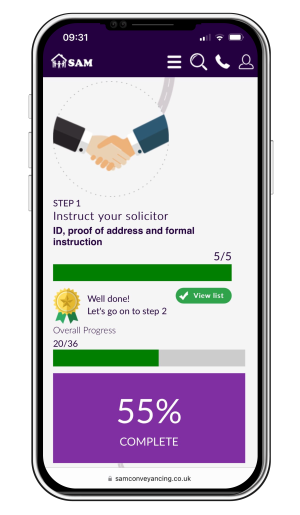
Our conveyancing process area includes:
- online checklists
- videos
- free downloads
- useful tips
It is completely free to use - from start to finish - and saves your progress along the way.
Bonus: Get a FREE book: House to Buy a House without Killing Anyone (Value £9.99).
What happens if you miss the 10-Day deadline?
Missing the initial completion date does happen, especially if your conveyancing solicitor or mortgage lender is rushing to draw down funds in such a short window. However, you must understand the exact legal process of what happens next.
If you fail to transfer the funds by the 10th day of the initial notice, you are legally in breach of contract. At this point, the developer's solicitor will serve a formal 'Notice to Complete'. This legal document makes time of the essence and grants you a final 10 working days to complete the purchase, but it immediately triggers severe financial penalties.
During this final 10-day penalty phase, you will be legally liable to pay:
- A legal fee: You must cover the developer's legal costs for serving the Notice to Complete (typically between £200 and £300 plus VAT).
- Penalty interest: You will accrue daily interest on the outstanding balance of the property (the total purchase price minus the deposit you already paid). This interest rate is dictated by your contract but is usually set at 4% to 5% above the Bank of England base rate.
What happens if you don't complete after the extra 10 working days?
If you still cannot finalise the purchase after this final 10-day grace period expires, the financial consequences are Critical. The developer has the legal right to rescind (cancel) the exchange contract, keep the exchange deposit, evict you if you have already moved in under a licence, and resell the property to someone else.
"If the buyer fails to complete in accordance with a notice to complete, the following terms apply. The seller may rescind the contract, and if he does so, he may: forfeit and keep any deposit and accrued interest, resell the property and any contents included in the contract, and claim damages."
Source: Standard Conditions of Sale
Why your solicitor must negotiate a Long Stop Date
When you exchange contracts on a new build, you are making a legally binding financial commitment to purchase the property; however, you do so without a definitive date for completion. What if a developer goes bust, another war happens, building costs escalate, and your development slows down? You could be stuck, contractually bound to buy a property that may take years to be ready. This is why it is paramount that your solicitor include a long stop date within the contract.
The long stop date is the absolute final legal deadline by which the developer must finish the property, receive building control sign-off, and serve the completion notice. If they fail to meet this deadline, the legal power finally shifts back from the developer to you.
Protecting your exchange deposit from infinite delays
Because developers want to protect themselves from supply chain issues or bad weather, they will often try to draft the contract heavily in their favour. They may attempt to set the long stop date unreasonably far into the future, sometimes 12 or even 24 months past the initial estimated build date.
If your life circumstances change, or your mortgage offer expires permanently due to a massive delay, walking away before the long stop date means you are in breach of contract and will forfeit your entire 10% exchange deposit. This is exactly why instructing an expert new build conveyancing solicitor is so vital. Before you are allowed to exchange, your solicitor must fiercely negotiate a fair and reasonable long stop date, typically set at a maximum of six months beyond the developer's originally estimated completion date. If the build breaches this negotiated deadline, you gain the legal right to:
- Rescind the contract: Walk away from the purchase entirely without any legal penalty.
- Recover your funds: Receive a full, unconditional refund of your exchange deposit and your initial reservation fee.
Expert Tip: Never exchange without a long stop date
Under the latest New Homes Quality Board (NHQB) rules, developers are required to provide a long stop date, but it is your solicitor's job to ensure the timeframe isn't drastically skewed in the developer's favour. If a developer refuses to agree to a reasonable deadline, it is a massive red flag regarding their financial health and their ability to finish the build. You should never proceed to exchange without this safety net in place.
Partner & Conveyancing Solicitor
Managing the logistics: renting, removals, and funds
Once your conveyancer receives the formal completion notice, the 10-day countdown begins. Because you have only two working weeks to finalise everything, your logistical preparation must be flawless to avoid missing the deadline.
1. Timing your rental notice
As previously highlighted, handing in your rental notice based on a developer's estimated build date is a High risk strategy that can leave you without a home. Instead, speak to your landlord about moving onto a monthly rolling contract as you approach the estimated build phase. While this might slightly increase your monthly rent, it guarantees you have a roof over your head and allows you to serve notice safely only after the 10-day completion notice actually arrives.
2. Booking flexible removal companies
Most reputable removal companies book up weeks in advance, making it incredibly difficult to secure a van on just 10 days' notice. To manage this, contact removal firms early in the process and explain that you are buying a new build on notice. Look for companies that offer flexible booking policies or specific 'new build waivers', which allow you to pencil in provisional dates and change them without incurring heavy cancellation penalties.
3. Liquidating and transferring your funds
Do not wait until the notice arrives to start moving your cash deposit around, and definitely don't secure your completion monies in an account where you can't easily access it. Transferring large sums of money routinely triggers anti-fraud checks by banks, which can freeze your accounts for days. Furthermore, if your money is tied up in a Lifetime ISA (LISA) or Help to Buy ISA, your solicitor must formally apply to the scheme provider to release the funds. This is a process that can take up to 30 days.
To avoid a critical delay, ensure your deposit funds are consolidated into a single, easily accessible UK bank account well before the property is signed off. As soon as the 10-day notice is served, you must immediately arrange a same-day CHAPS payment to your solicitor so the funds clear and are ready for completion day.
Your Completion on Notice survival checklist:
- Instruct an expert: Ensure your new build conveyancing solicitor is instructed before you pay your reservation fee.
- Check your mortgage: Work with a broker to secure a mortgage product with an extended 9 to 12 month validity period.
- Demand a long stop date: Do not exchange contracts unless a concrete 'long stop date' is written into the agreement, giving you a legal exit if the build is severely delayed.
- Hold your notice: Do not hand in your rental notice or pay for non-refundable removal vans until your solicitor confirms the formal completion notice has been legally served.
- Prepare your cash: Ensure your cash deposit is easily accessible so you can transfer it to your solicitor within 24 hours of the notice arriving.
Frequently Asked Questions About Completion on Notice

Andrew Boast FMAAT is a qualified accountant, conveyancing specialist and author with over 25 years of experience in the UK property sector. Since beginning his career in 2000 within established SRA and CLC-regulated conveyancing solicitor firms, Andrew has overseen the legal journeys of more than 75,000 clients.
He is the self-published author of the first-time buyer guide: How to Buy a House Without Killing Anyone, and a frequent contributor to mainstream UK media on legislative updates, property law, first-time buyer guides, conveyancing best practices, and stamp duty changes. Andrew specialises in resolving complex title issues, property conflict disputes, and property tax options, streamlining the enquiry process to reduce transaction times and maintaining a client-friendly focus.

Amanda Ambler is a highly accomplished conveyancing specialist with over 15 years of dedicated experience across residential property law, legal compliance, and practice management. Having held senior roles, including Head of Legal Practice and Head of Conveyancing at established UK law firms, Amanda possesses a profound, hands-on understanding of the technical intricacies of the property market.
As the designated Legal Content Reviewer for SAM Conveyancing, Amanda ensures that every guide, legal update, and resource published meets the absolute highest standards of accuracy, regulatory compliance, and factual integrity. Her rigorous review process guarantees that complex property legislation and industry processes are communicated clearly, transparently, and safely for home buyers and sellers alike.