
How to Choose the Best Conveyancing Solicitor

When you are trusting someone to handle the most expensive purchase of your life, you naturally want the best conveyancing solicitor available. Should a complex legal problem arise, you need absolute certainty that the right expert is at the helm, proactively steering you through the conveyancing process.
However, finding that expert is incredibly difficult when you only move home a handful of times in your life. In fact, our recent YouGov Survey revealed that a staggering 41% of people do not even know or recall why they chose their solicitor. This lack of clear criteria is exactly why so many buyers end up trapped with slow, uncommunicative legal teams.
This complete guide will show you exactly how to choose the best conveyancing solicitor for your move. We will explain the vital checks you must make, the major red flags to avoid, and the exact steps to ensure you instruct the right professional for the job.
- Communication is critical: The best solicitors are not just legal experts, they are proactive project managers. Choosing an inefficient firm can add weeks of unnecessary delays and stress to your property chain.
- Beware estate agent referrals: Estate agents often receive commercial referral fees upwards of £300, which are typically passed onto you in your final bill. Always compare independent quotes online or use a trusted personal referral.
- Make the five vital checks: Before signing any terms of business, ensure your chosen firm is CQS accredited, has strong independent reviews, shows stable staff retention on LinkedIn, is on your mortgage lender's panel, and provides a dedicated legal team.
- Online vs. local: Modern online conveyancers utilise secure digital portals for maximum speed and efficiency. While high-street solicitors offer face-to-face meetings, they often charge premium fees and rely on slower, archaic communication methods.
- Demand a fixed fee: Never accept a vague "estimate". Always insist on a strict Fixed Fee Guarantee, and treat exceptionally cheap quotes (under £400) as a major red flag for an overloaded volume factory.
Why Your Choice of Solicitor Matters
The conveyancing industry is vast, and service levels vary wildly. Choosing a competent solicitor means your legal enquiries are answered promptly, your mortgage offer is processed correctly, and your exchange of contracts happens on time. Conversely, choosing an inefficient conveyancer can add weeks of unnecessary delays to your timeline, increase your stress levels, and even cause your property chain to collapse entirely.
The conveyancing process is about much more than just ticking legal boxes. It is typically a three-month journey filled with emotional highs and lows, where the entire property chain remains on edge until you finally reach the exchange of contracts. Ultimately, the best solicitors are not necessarily those who are 'better' at the law, as every fully qualified conveyancer understands property legislation. The truly exceptional solicitors are the ones who are empathetic to your journey, actively manage your expectations, and proactively communicate with you every step of the way.
the BEST
Conveyancing Solicitor
By Andrew Boast, CEO of SAM Conveyancing
Where do you look for the best conveyancing solicitor?
Starting your search is often the hardest step because, as a property buyer, you will already have a long list of priorities: getting your offer accepted, securing a mortgage offer, and getting your ID and financial documents ready. This list will help you source solicitors, whom you can then vet using our checklist to select the absolute best one for your move.
Referrals
Still to this day, receiving a referral for a specific solicitor or conveyancer from family or friends is one of the safest ways to choose your legal representative. Provided you instruct the exact same fee earner who was recommended to you, you know they have a proven track record of delivering for someone you trust, drastically reducing the chance of a poor experience.
Your Estate Agent
For years, estate agents have actively recommended their own chosen solicitors. Historically, this used to be a local high-street firm on their doorstep with whom they had a close working relationship. Nowadays, these relationships are far more commercial. Often, the recommendation to use a "preferred" solicitor is based entirely on a commercial referral arrangement.
Estate agents can be paid upwards of £300 (excluding VAT) per case they refer to a law firm. Unfortunately, this hefty referral fee is often recouped by inflating the solicitor's legal fee charged to the client.
Expert Tip: Ignore pressure from the estate agent
Once you have chosen your independent solicitor, some estate agents will attempt to dissuade you from using them based on location or an alleged lack of speed. This is often backed by a heavy recommendation to use their in-house solicitor, who they promise is "the best". You must ask yourself: are they recommending the best service for you, or the best service to ensure they get paid their referral fee for you using them?
Estate agents should know better, as they cannot act impartially with their recommendations (especially towards the buyer). The Property Ombudsman's Code of Practice for Residential Estate Agents explicitly protects buyers from these pressure tactics:
"You should provide a service to both buyers and sellers consistent with fairness, integrity and best practice; and you should not seek business by methods that are dishonest, deceitful, manipulative or involve misrepresentation. You must avoid any course of action that can be construed as aggressive behaviour."
Aggressive behaviour is defined as: Pressuring a potential buyer to use associated services, for example to take out a mortgage through the in-house mortgage advisor or to use a particular firm of solicitors or licensed conveyancers.
Source: Code of Practice for Residential Estate Agents
Aggressive sales tactics will not speed up your property transaction. It is in your best interest to block out this noise and focus purely on instructing an independent, reliable conveyancer who works exclusively for you.
Partner & Head of Conveyancing
Online Search
This is how we help the majority of our clients. Through an online search, you are actively looking for the best conveyancing solicitor. Whether you're using Google Chrome, Bing, Gemini, or ChatGPT, this search intent is you saying, "I want to find the absolute best professional for my house purchase".
You will find a wide variety of results from local high-street firms to national online solicitors, ranging from excellent to poor, and from very cheap to incredibly expensive. You can then use the following vetting process to whittle down your selection to the very best you can find.
5 Vital Checks to Make Before Instructing
Do not simply instruct the first firm you find, or the one pushed onto you by the estate agent. Make these five essential checks before you sign a firm's terms of business:
- Check for CQS Accreditation: The Conveyancing Quality Scheme (CQS) is an accreditation awarded by The Law Society to property solicitors who meet the highest standard of legal rigour. Rest assured, SAM Conveyancing only works with experienced CQS-accredited solicitors.
- Check the Reviews: Ignore the specially chosen, glowing testimonials a firm writes on its own website. Instead, scrutinise independent platforms like Trustpilot and Google Reviews. Look specifically for how the firm handles communication during delays.
- Inspect Your Solicitor's LinkedIn: Once you are given a specific conveyancer's name, look them up on LinkedIn. High staff turnover or reliance on inexperienced paralegals to handle complex property titles is a recipe for disaster. If your conveyancer has been in their current role for over a year, this is a very reassuring sign.
- Verify Lender Panel Membership: Ensure the solicitor is on the approved panel for your specific mortgage lender. If they are not, you will have to pay hundreds of pounds for a second solicitor just to represent the bank.
- Demand a Dedicated Legal Team: Ask explicitly who will be managing your file day-to-day. An efficient conveyancing firm pairs an experienced solicitor with a dedicated case handler who knows your transaction inside out, ensuring you always have a direct point of contact. Avoid impersonal "volume factories" where your file is passed around an anonymous, generic pool of staff who have never read your paperwork.
Expert Tip: Hybrid models offer the best communication
At SAM Conveyancing, we work directly alongside the solicitor. This means our clients can call our direct line, ask a question, and receive a clear answer the same day. We know the immense stress of being left in the dark, which is why we operate a strict communication policy: we return every missed call, and we ensure all emails are replied to within 30 minutes where possible, and never later than 24 hours.
CEO of SAM Conveyancing
Local vs. Online Conveyancing Solicitors: Which is Best?
Historically, buyers felt they had to use a high-street solicitor they could visit in person. Today, modern conveyancing relies heavily on digital ID checks, secure portals, and online Land Registry filing. Here is a quick comparison to help you decide which route is best for your specific move:
Local High-Street Solicitors
The Pros:
- Face-to-Face Meetings: If you are anxious about the process or need to hand over complex physical documents, you can walk into their office and speak to someone directly.
- Niche Local Knowledge: They can occasionally offer valuable insight into highly specific local property issues, such as historic mining rights or quirky estate boundaries.
The Cons:
- Higher Costs: High-street firms carry significant overheads for their premium office spaces, which are often passed onto you in the form of higher legal fees.
- Archaic Communication: Many traditional firms still rely on postal letters and restricted 9-to-5 opening hours, which can drastically slow down your transaction.
Online Conveyancing Solicitors
The Pros:
- Speed and Efficiency: They utilise modern tech, such as digital ID verification, secure document portals, and electronic signatures, to keep your transaction moving rapidly.
- Cost-Effective: Online firms operate with lower overheads and typically offer highly competitive, fixed-fee quotes with a 'No Sale, No Fee' guarantee.
- 24/7 Tracking: The best online conveyancers provide digital tracking tools, allowing you to check the progress of your file outside of standard working hours./li>
The Cons:
- No Physical Office: You cannot pop in for an impromptu chat, meaning you must be comfortable handling your transaction via telephone and email.
- Risk of 'Volume Factories': If you simply choose the cheapest online quote, you risk ending up in an impersonal call centre where you never speak to the same person twice.
If you are still unsure whether you need someone on your local high street, or if an online specialist is better suited to your transaction, read our in-depth guide: Do I need a local conveyancing solicitor?
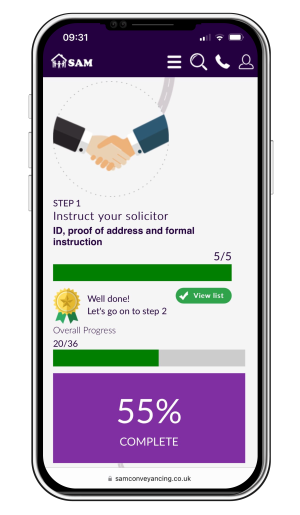
Our conveyancing process area includes:
- online checklists
- videos
- free downloads
- useful tips
It is completely free to use - from start to finish - and saves your progress along the way.
Bonus: Get a FREE book: House to Buy a House without Killing Anyone (Value £9.99).
How to compare conveyancing quotes accurately
Comparing online conveyancing quotes can be a minefield. Many firms hide behind the small print, relying on you being fazed by an unbelievably cheap initial price.
When reviewing your options, always demand a Fixed Fee Guarantee rather than an "estimate". Like anything else in life, if a quote seems too good to be true, it probably is. You cannot get top conveyancing solicitors to work for peanuts. If a firm quotes you under £400 for their basic legal fee, you are likely looking at an overloaded conveyancing factory that will recoup their costs by adding hidden extras to your final bill.
Red Flags: How to spot a bad conveyancer early
Watch out for these immediate warning signs when sourcing a quote. If you spot them, be prepared to walk away there and then:
- Critical Risk: Unregulated Firms. Never use a firm that cannot prove they are fully regulated by the Solicitors Regulation Authority (SRA) or the Council for Licensed Conveyancers (CLC). You will have zero legal protection if things go wrong.
- High Risk: "Estimates" Instead of Quotes. If a firm says, "I estimate you will pay..." or "This is the price to the best of my knowledge," walk away. You need a strict, itemised breakdown of all legal fees and third-party disbursements before you begin.
- Moderate Risk: Archaic Communication. If a conveyancer says, "I'll send your quote in the post," alarm bells should ring. If they rely on the postal system to send standard documents, you will lose days of valuable time waiting for physical letters to arrive.
Frequently Asked Questions

Andrew Boast FMAAT is a qualified accountant, conveyancing specialist and author with over 25 years of experience in the UK property sector. Since beginning his career in 2000 within established SRA and CLC-regulated conveyancing solicitor firms, Andrew has overseen the legal journeys of more than 75,000 clients.
He is the self-published author of the first-time buyer guide: How to Buy a House Without Killing Anyone, and a frequent contributor to mainstream UK media on legislative updates, property law, first-time buyer guides, conveyancing best practices, and stamp duty changes. Andrew specialises in resolving complex title issues, property conflict disputes, and property tax options, streamlining the enquiry process to reduce transaction times and maintaining a client-friendly focus.

Amanda Ambler is a highly accomplished conveyancing specialist with over 15 years of dedicated experience across residential property law, legal compliance, and practice management. Having held senior roles, including Head of Legal Practice and Head of Conveyancing at established UK law firms, Amanda possesses a profound, hands-on understanding of the technical intricacies of the property market.
As the designated Legal Content Reviewer for SAM Conveyancing, Amanda ensures that every guide, legal update, and resource published meets the absolute highest standards of accuracy, regulatory compliance, and factual integrity. Her rigorous review process guarantees that complex property legislation and industry processes are communicated clearly, transparently, and safely for home buyers and sellers alike.