How To Sell a House When One Partner Refuses

A relationship breakdown is hard enough to go through as it is, but it's so much harder when you're bound together by property ownership. Whether you're separating from a partner or disagreeing with another joint owner, being unable to agree on what happens to your home can be stressful, particularly if you still have a mortgage to pay.
Your options depend on how the property is owned, your circumstances and whether you can agree on a way forward. You may be able to negotiate a sale, arrange for one person to buy out the other's share or, if agreement isn't possible, seek legal advice about applying for a court order.
If your ex can't afford to buy you out, or you're unsure what your share of the property is worth, it's important to understand your position before deciding what to do next. This guide explains the options available in England and Wales and when you may need specialist legal advice.
Have more questions about selling a jointly owned property? Explore our related guides to find out more, including on how to buy out a jointly owned property and how to calculate buying someone out of a house.
- Explore your options: If your partner refuses to sell your jointly owned home, you may be able to negotiate a sale, agree a buyout or explore legal options if you cannot reach an agreement.
- A court-ordered sale is not guaranteed: If your ex cannot afford to buy you out, you may be able to apply to court, depending on your circumstances and ownership arrangements.
- Severing a joint tenancy does not force a sale: It changes how the property is owned, but does not, by itself, require the property to be sold.
- You remain responsible for your joint mortgage: You generally remain liable for the agreed mortgage payments until the lender formally changes or releases you from your obligations.
What if you're married or in a civil partnership?
If you are married or in a civil partnership and only your spouse or civil partner owns the home, you may still have rights to occupy it under family law. These rights depend on the circumstances and are different from owning a share of the property.
If you are separating or divorcing, the arrangements for the family home may be dealt with as part of the financial settlement. Do not assume that the registered owner can resolve every issue simply by selling the property, or that the non-owner automatically has a right to remain in it after a sale.
Read our guide to who gets the house in a divorce or dissolution? for more information.
Expert tip: What if your partner refuses to leave the home?
If your former partner refuses to leave, or you are being pressured to leave a home where you have a right to live, seek specialist advice about your rights and options. Depending on your circumstances, an occupation order may regulate who can live in the home, while a non-molestation order may offer protection from harassment or abuse.
If you feel unsafe, call 999 in an emergency. You can also seek confidential support from Refuge on 0808 2000 247, Women's Aid or Men's Advice Line on 0808 801 0327. If you have nowhere else to live, Citizens Advice explains how to apply for homelessness assistance.
CEO of SAM Conveyancing
What if you own the property as joint tenants?
If you own a property as joint tenants and your partner refuses to sell, you may still have legal options. Severing a joint tenancy changes how you hold the beneficial interest in the property, but it does not itself force a sale or guarantee that a court will order one. Whether you can apply for an order and what the court may decide depends on the ownership arrangements and circumstances. Before severing a joint tenancy, consider getting advice about your beneficial interests and the implications of changing the ownership arrangement. Severance does not, by itself, determine how the equity should be divided if you sell or one partner buys the other out.
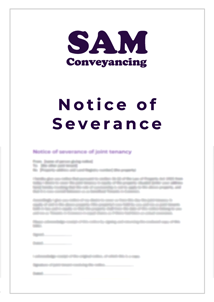
Download our notice of severance template in PDF or Word format, free from hassle.
- Instant download.
- Easy to fill in.
- Suitable format to submit your notice of severance.
The templates will be attached to your confirmation email after payment. Please allow a couple of minutes for the email to arrive.
What if you own the property as tenants in common?
If your partner refuses to sell and cannot or will not buy you out, you may be able to apply to the court for an order relating to the property, including an order for sale. The court will consider the relevant circumstances, and a sale is not guaranteed. However, this can take a long time and become very expensive.
Can you buy out your partner's share?
If your partner cannot fund the buyout from savings, they may need to remortgage or arrange additional borrowing. The lender will assess whether the proposed mortgage is affordable and whether the existing borrowing can be changed.
If you agree to a buyout, your partner may be able to take ownership of your share through a transfer of equity. If there is an outstanding mortgage, the lender will need to agree to the relevant changes to the borrowing and decide whether your partner can afford the mortgage on their own. This may involve a remortgage or a change to the existing mortgage, depending on the lender and product.
Do not assume you are released from the mortgage simply because you have agreed to give up your share of the property. Confirm that the lender has formally released you from any mortgage liability.
How to calculate buying someone out of a house
Before agreeing on a buyout, establish the property's current market value, the outstanding mortgage balance and each person's beneficial interest. Your shares may be equal or unequal, depending on the relevant ownership documents and circumstances. A declaration of trust may record the agreed shares.
Once you have established these figures, you can work out how much equity is available and discuss a fair buyout figure. If you disagree about the ownership shares or valuation, seek appropriate legal or valuation advice before proceeding.
Read more - How to calculate buying someone out of a house
This additional borrowing will be means-tested as with any mortgage. If your partner cannot obtain sufficient borrowing to buy you out, a buyout may not be possible on the proposed terms. You could explore alternatives, such as agreeing on a different arrangement or seeking legal advice about your options if you cannot reach an agreement. Depending on the circumstances, an application for an order for sale may be an option.
Expert Tip: Check the ownership and mortgage position first
Before agreeing to a buyout or taking steps towards a sale, check the title register, any declaration of trust and the outstanding mortgage balance. These documents can help clarify how the property is owned and what needs to be resolved. If you disagree about your beneficial shares, get legal advice before agreeing on how the equity should be divided.
CEO of SAM Conveyancing
What if your ex can't afford to buy you out?
If your ex cannot afford to buy you out, a court application may be an option if you cannot agree on what happens to the property. You do not necessarily have to sever a joint tenancy and register as tenants in common before seeking legal advice or exploring whether an application is available. The appropriate steps depend on the property's legal and beneficial ownership and any relevant trust arrangements. A solicitor can advise you on whether an application is appropriate and what outcome may be possible.
Can you apply for a court order to force a sale?
If you cannot agree on what should happen to the property, you may be able to apply to the court for an order. However, a sale is not guaranteed, and the outcome will depend on the circumstances of the case.
When considering an application under the Trusts of Land and Appointment of Trustees Act 1996 (TOLATA), the court must consider relevant factors set out in section 15 of the Act. These include the intentions of the people who created the trust, the purposes for which the property is held, the welfare of any minor who occupies or might reasonably be expected to occupy the property as their home, and the interests of any secured creditor.
The court's decision will depend on the evidence and the circumstances of the case. If you are considering an application, seek specialist legal advice about your options and the likely costs.
What if you change your mind about selling?
If you change your mind about selling, what you can do depends on the stage of the transaction, any agreement you have made and whether a court order applies. Before the exchange of contracts, it may be possible to withdraw from the proposed sale, although you could still owe fees or other costs. If contracts have been exchanged, withdrawing can have serious legal and financial consequences. Get advice from your solicitor before taking action.
Here's what you could do:
- Contact your estate agent and let them know you want to withdraw from any agreed sale and/or take the house off the market.
- The estate agent will inform the other parties that the transaction has fallen through.
- Speak to the agent and your solicitor; you will still have to pay some of the fees (for work completed so far and disbursements).
Do you need help to sell a house when one partner refuses?
If your partner or co-owner refuses to sell, the right next step depends on how the property is owned and whether an agreement can be reached. Getting advice early can help you understand your options, whether you are considering a buyout, a sale or possible legal action. You can book a free, no-obligation 15-minute meeting with a solicitor to discuss your situation and the options available.

Andrew Boast FMAAT is a qualified accountant, conveyancing specialist and author with over 25 years of experience in the UK property sector. Since beginning his career in 2000 within established SRA and CLC-regulated conveyancing solicitor firms, Andrew has overseen the legal journeys of more than 75,000 clients.
He is the self-published author of the first-time buyer guide: How to Buy a House Without Killing Anyone, and a frequent contributor to mainstream UK media on legislative updates, property law, first-time buyer guides, conveyancing best practices, and stamp duty changes. Andrew specialises in resolving complex title issues, property conflict disputes, and property tax options, streamlining the enquiry process to reduce transaction times and maintaining a client-friendly focus.

Amanda Ambler is a highly accomplished conveyancing specialist with over 15 years of dedicated experience across residential property law, legal compliance, and practice management. Having held senior roles, including Head of Legal Practice and Head of Conveyancing at established UK law firms, Amanda possesses a profound, hands-on understanding of the technical intricacies of the property market.
As the designated Legal Content Reviewer for SAM Conveyancing, Amanda ensures that every guide, legal update, and resource published meets the absolute highest standards of accuracy, regulatory compliance, and factual integrity. Her rigorous review process guarantees that complex property legislation and industry processes are communicated clearly, transparently, and safely for home buyers and sellers alike.