What are Legal Enquiries When Buying a House in 2026?

Legal enquiries are the formal set of questions raised by a buyer's solicitor to the seller's legal representative to clarify specific details about a property’s title, physical condition, and legal standing. This critical stage of the conveyancing process occurs after searches are returned but before the exchange of contracts, serving as the final "due diligence" check to uncover hidden liabilities or title defects.
Because the principle of caveat emptor (buyer beware) applies to property transactions in England and Wales; these enquiries are your primary legal protection against inheriting costly issues—such as undocumented structural alterations or restrictive covenants, that could devalue your home or complicate a future sale.
Before you get to raising legal enquiries, you'll need to receive draft contracts and your property searches.
Are
Legal
Enquiries?
By Andrew Boast, CEO of SAM Conveyancing
When is it time to raise enquiries?
After an offer has been accepted, the seller's conveyancer prepares and sends the draft contract pack to the buyer's conveyancer. At this stage in the house-buying process, the buyer's solicitor raises conveyancing enquiries to determine the property's legal condition and identify any issues that would affect the transaction.
Property in the UK is sold under 'caveat emptor', Latin for 'buyer beware'; this means that the buyer is responsible for uncovering any nasty surprises before they exchange contracts.
The legal enquiries stage is the technical stage of the conveyancing process undertaken by the buyer's conveyancer. The solicitor reviews all of the following documents provided by the seller's solicitor:
- Estate agent particulars
- Contract of Sale
- Property Information Forms including TA6, TA10 and (if leasehold) TA7
- Sales memorandum
- Title deeds
- Title plan
- Warranties and guarantees
- (if leasehold) Lease
- (if leasehold) Leasehold Management Pack
The seller's solicitor provides the buyer's solicitor with all the above documents (except the sales memo) in the draft contract pack.
The Most Common Examples of Property Legal Enquiries in 2026
These are the most frequently raised legal enquiries in 2026 for freehold and leasehold properties.
Freehold | Leasehold |
Please correct the names of the buyers on the contractThe seller's solicitor drafts the contracts, and the buyers' names are often incorrect. | Please provide the Leaseholder CertificateLeaseholder protections under the Building Safety Act 2022 largely protect qualifying leaseholders from historical cladding and building safety remediation costs. Crucially, the Levelling-up and Regeneration Act 2023 now ensures these protections transfer to new owners and extended leases. |
Please provide FENSA certificatesIf the seller installed double-glazed windows or doors, and the installation is not noted within the local authority search, or on the FENSA website, then they will need to provide the FENSA certificate. If they don't have this, the seller will need to obtain indemnity insurance or get the installation retrospectively signed off by the local authority. | Please confirm that the service charge accounts will be settled on completionThe buyer's solicitor wants to ensure that the service charges the seller is liable for are paid for by completion. |
Please confirm whether the seller has breached any restrictive covenants.Restrictive Covenants restrict the use of the land; they might, for example, prohibit an extension or specify how the property can be used. If the seller has breached a restrictive covenant, they must rectify the breach, or the buyer must obtain indemnity insurance for the mortgage lender. | Please confirm if the seller has breached the leaseholder obligationsThe seller is bound by the lease and should not breach any obligations to the freeholder. |
Expert Tip: Lender-referred enquiries are a pain
If the seller cannot provide a satisfactory answer to a critical legal enquiry, such as missing building regulations or a defective lease, and you are buying with a mortgage, your solicitor is legally obligated to refer the defect to your lender.
This is where transactions often grind to a halt. You lose control of the timeline because your file is placed in the lender's legal queue, which can take 5 to 15 working days for a response.
The best way to mitigate this delay is to ensure your solicitor submits a fully packaged referral (including any proposed indemnity insurance quotes) the very first time, so it doesn't bounce back and reset the clock. Read our complete guide to solicitor-referred legal enquiries.
CEO of SAM Conveyancing
The CQS Rulebook: What Enquiries Solicitors Should Never Raise
When it comes to the exact legal enquiries a solicitor should avoid, the rules are firmly laid out within the Law Society Conveyancing Protocol. Because adhering to this Protocol is a strict, mandatory requirement for any firm holding the Conveyancing Quality Scheme (CQS) accreditation, these guidelines serve as the ultimate authority on how practitioners must manage the enquiries process.
Strict Restrictions on Raising Enquiries
The Protocol is uncompromising: conveyancers must raise additional enquiries only if strictly necessary and directly relevant to protecting their client's best interests. According to the Law Society, a solicitor is at serious risk of breaching the Protocol if they engage in:
- Boilerplate enquiries: Any additional enquiries must be specific and triggered directly by the documentation provided. The Law Society has recently clamped down on this practice, explicitly warning against the lazy use of AI tools or boilerplate templates to churn out long, irrelevant lists of standard enquiries.
- Asking for opinions rather than hard facts: Questions must be strictly grounded in establishing factual information about the property. They are never the place to seek a seller's subjective judgement.
- Firing off unnecessary enquiries to the opposing conveyancer: Every question raised must be weighed against a firm's overarching duty to follow the Conveyancing Protocol and help standardise, which are likely to delay the conveyancing process.
Examples of enquiries that shouldn't be raised
- Please can you confirm the boundaries match the title plan?
- Please provide a copy of the Energy Performance Certificate (EPC)?
- We note the property is in a moderate to high risk of flooding.
- Are the windows/doors installed by a FENSA contractor?
- Please provide a copy of the Gas Safe installation Certificate.
- Where is the stop cock, as the surveyors couldn't locate it?
- Please ensure no damage will be left to the wall during the removal of the TV bracket.
- Please provide written confirmation that the garage is not prone to flooding.
The answers for these are either in the protocol forms/documents, or can be found through the buyer's own inspection of the property. The buyer should look to the estate agent for answers about these from the seller.
The Pushback: Dealing with Protocol Breaches
The official guidance empowers the seller's solicitor to push back against inappropriate or blanket questions. It states in no uncertain terms that the seller's solicitor is under no obligation to deal with any enquiries that clearly breach the Protocol.
You can find the exact guidelines and the full framework on the Law Society's website here: The Law Society: Conveyancing Protocol
Partner & Head of Conveyancing
Average time from Enquiries to Completion of Legal Work
Stage in the Conveyancing Process | Time to Exchange of Contracts |
How long do enquiries take after searches? | Conveyancing Searches, such as the local and drainage searches, are ordered within a few days of receiving the contracts from the seller. The searches come back at different times, especially the local search, because different councils have different turnaround times. |
How long is the conveyancing process from raising enquiries to completion? |
There are delays which can cause the process to take longer, and we list these below. |

What causes a delay with legal enquiries?
There are a number of reasons legal enquiries could be delayed, and it isn't always the buyer's solicitor who is slow.
Asking standard additional enquiries
Where the buyer's solicitor raises boilerplate legal enquiries, you'll find the conveyancing process is going to be severely delayed. The seller’s conveyancer does not need to obtain the seller’s answers to any enquiry seeking an opinion rather than a fact, which can lead to a stand-off.
No Protocol Forms
Some sellers issue contracts only at the start of the process, which means the buyer's solicitor cannot complete a title check until they receive the protocol forms. A title check is what the solicitor calls raising legal enquiries.
Expert Tip: Enquiries shouldn't be held up if there aren't boiler certificates
Under the Conveyancing Protocol drafted by the Law Society, conveyancing solicitors should not be requesting FENSA or Gas Safety certificates from the seller if they are clearly noted within the local authority search or on the respective website.
Partner & Conveyancing Solicitor
(If leasehold) No Leasehold/Freehold Management Pack
The seller orders the Leasehold Management Pack from the freeholder, and this process can take between 5 and 20 working days before it is received. A growing number of freehold properties are managed by a Freehold Management Company, which issues the management pack instead.
Probate Sale
If the seller has passed away, the executors need to obtain a Grant of Probate to allow the sale to proceed. A grant of probate can take up to 16 weeks to come through.
The other issue is that the seller isn't the original owner, so you are unlikely to get any replies to legal enquiries. You should proceed with caution on a probate sale.
No Building Control Sign Off
Sellers often remove chimney breasts, load-bearing walls, or even install new boilers, but they haven't registered this with building control. While an indemnity policy can be obtained to protect the mortgage lender's security and allow an exchange of contracts, some buyers may not want to risk the potential repercussions.
The buyer may delay the process to allow the seller to register the works with building control under a Letter of Regularisation.
Absent Freeholder
The conveyancing process will slow down drastically when the freeholder can't be found or is slow to respond. While the buyer can get indemnity insurance for the mortgage lender, the implications are serious for the leaseholder. Who manages the freehold? Who pays for building insurance? How do you extend your lease? This type of enquiry needs to be fully considered by any buyer.
Expert Tip - Don't ignore an issue, as it'll affect your future sale
Many buyers see the legal enquiries stage as a barrier to finalising the exchange of contracts. What you should never do is ignore an issue discovered through legal enquiries because once you purchase the property, it becomes your problem.
The seller and the estate agent wash their hands of any problems as soon as you exchange contracts, and whereas some enquiries can be ignored with indemnity insurance, this insurance protects the mortgage lender, not the buyer. This could leave you with the same issue when you sell, and not all buyers are cavalier, ignoring these legal issues. It is better for a buyer to dig their heels in and fix an issue while it isn't their problem, so that when you sell, your future buyer won't try to knock you down on the sale price because of it.
CEO of SAM Conveyancing
What happens after you finalise enquiries?
Once your solicitor has finalised the legal enquiries, they will start preparations for exchanging contracts. This includes preparing the Report on Title, the signing documents, securing the completion date, and more.
Your Next Step in the Conveyancing Process:
Preparing for Exchange of Contracts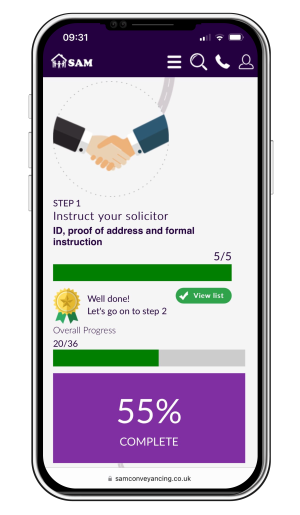
Our conveyancing process area includes:
- online checklists
- videos
- free downloads
- useful tips
It is completely free to use - from start to finish - and saves your progress along the way.
Bonus: Get a FREE book: House to Buy a House without Killing Anyone (Value £9.99).
Frequently Asked Questions About Legal Enquiries

Andrew Boast FMAAT is a qualified accountant, conveyancing specialist and author with over 25 years of experience in the UK property sector. Since beginning his career in 2000 within established SRA and CLC-regulated conveyancing solicitor firms, Andrew has overseen the legal journeys of more than 75,000 clients.
He is the self-published author of the first-time buyer guide: How to Buy a House Without Killing Anyone, and a frequent contributor to mainstream UK media on legislative updates, property law, first-time buyer guides, conveyancing best practices, and stamp duty changes. Andrew specialises in resolving complex title issues, property conflict disputes, and property tax options, streamlining the enquiry process to reduce transaction times and maintaining a client-friendly focus.

Amanda Ambler is a highly accomplished conveyancing specialist with over 15 years of dedicated experience across residential property law, legal compliance, and practice management. Having held senior roles, including Head of Legal Practice and Head of Conveyancing at established UK law firms, Amanda possesses a profound, hands-on understanding of the technical intricacies of the property market.
As the designated Legal Content Reviewer for SAM Conveyancing, Amanda ensures that every guide, legal update, and resource published meets the absolute highest standards of accuracy, regulatory compliance, and factual integrity. Her rigorous review process guarantees that complex property legislation and industry processes are communicated clearly, transparently, and safely for home buyers and sellers alike.