
Homebuyers Survey: Is It Worth It?

When property transaction costs begin to mount, buyers often look for ways to save money. Because a RICS Homebuyers Survey is not a mandatory legal requirement, such as conveyancing searches or instructing a solicitor, the temptation to skip it is incredibly common. Do you save a few hundred pounds upfront and risk buying a home with hidden defects, or do you pay for the peace of mind that a trained professional has thoroughly checked your investment?
The financial reality heavily favours getting an inspection. According to the Royal Institution of Chartered Surveyors (RICS), homebuyers who purchase a property without a survey spend an average of £5,750 on unexpected repair bills once they move in. This is exactly why 64% of our clients refuse to skip this vital step.
Whether a survey gives your new home a clean bill of health, highlights minor upcoming maintenance tasks, or uncovers severe structural flaws that allow you to renegotiate the purchase price, the report actively protects your financial interests. In almost every scenario, a professional survey pays for itself.
In this guide, we explain the strict legal realities of buying a house without a survey, expose the specific defects most commonly missed by an untrained eye, and provide a checklist of what to look for if you ultimately decide to proceed without one.
The legal reality: caveat emptor (buyer beware)
Purchasing a property in England and Wales is fundamentally different from buying a high-value consumer good. There are no statutory consumer protections, no standard warranties, and absolutely no returns policies. Property law operates under the strict legal principle of caveat emptor, which translates to "let the buyer beware".
This means the seller is under no legal obligation to proactively disclose physical defects about the property's condition to you. You are legally buying the property exactly as it stands on the day of exchange.
High Risk: Zero legal recourse post-completion
If you complete your purchase, move in, and immediately discover that the boiler is completely broken, there is a severe leak rotting the floorboards under the bath, or the roof requires a £10,000 replacement, you have absolutely zero legal recourse against the seller.
You cannot sue them for failing to mention the defects, and you cannot undo the transaction. The financial burden rests entirely on your shoulders, which is exactly why an independent RICS survey is your primary line of defence.
Expert Tip: You might have a case if the seller was hiding the defect
In cases where the seller knowingly hides a property defect, or provides deliberately false answers to your solicitor's formal enquiries (such as lying on the TA6 Property Information Form), you may have legal grounds to sue for misrepresentation.
However, proving in a court of law that the seller intentionally deceived you is incredibly difficult, stressful, and expensive. It is far cheaper and safer to instruct an independent RICS surveyor to uncover the truth before you commit to buying, rather than risking a costly legal battle after you have moved in.
CEO of SAM Conveyancing
What defects can be missed without a house survey?
When viewing a property, cosmetic presentation can easily mask severe underlying flaws. Fresh coats of paint, rearranged furniture, and scented diffusers often conceal damp patches, structural movement, or failing timbers. An RICS surveyor assesses the property with technical diagnostic equipment, systematically inspecting both visible and concealed elements to identify issues that could cost tens of thousands of pounds to rectify.
1. Structural movement and subsidence
Severity:Critical Risk
Cosmetic hairline cracks often look identical to progressive structural failure to an untrained buyer. Surveyors check crack patterns, monitoring whether fractures are wider at the top than the bottom, stepped through external brickwork, or causing door and window frames to distort.
- What is inspected:Foundation settlement, lintel failure over windows, sloping floors, outward wall bowing, and tree proximity affecting soil moisture (particularly in shrinkable London clay).
- Potential rectification cost: £8,000 to £40,000+ if underpinning, helical masonry stitching, or substantial foundation stabilising is required.
2. Wet rot, dry rot, and timber infestation
Severity:High Risk
Timber decay often takes place out of sight beneath ground-floor floorboards, behind skirting boards, and in unventilated sub-floor voids. While wet rot requires constant moisture, dry rot (Serpula lacrymans) can spread aggressively through masonry and plaster to destroy structural timber frames throughout a property.
- What is inspected: Sub-floor cross-ventilation, air brick blockages, timber condition in the loft, moisture readings in structural joists, and active wood-boring beetle (woodworm) infestations.
- Potential rectification cost: £2,000 to £15,000+ to strip contaminated plaster, replace structurally weakened joists, and carry out chemical treatments.
3. Roof structure, coverings, and flashing failure
Severity:High Risk
Assessing a roof from ground level leaves significant blind spots. Slipped slate, decayed bitumen underlay, spread rafters, and deteriorated lead valleys cannot be seen from the driveway, but lead to catastrophic water ingress over time.
- What is inspected: Slate and tile condition, roof sagging, failing chimney flaunching and pointing, lead flashing along abutments, and loft structural timbers (checking for bowing purlins or missing collar ties).
- Potential rectification cost: £1,500 for flashing repairs to upwards of £8,000 - £15,000 for a complete strip and retile.
4. Unregulated DIY and load-bearing alterations
Severity:High Risk
Open-plan kitchen layouts and loft conversions are common selling points, but many have been executed without Building Regulations sign-off or structural engineering calculations. Previous owners frequently remove load-bearing walls without inserting appropriately sized steel beams (RSJs).
- What is inspected: Internal partition changes, chimney breast removals (checking that unsupported stacks in the loft are not resting on timber ceiling joists), ceiling deflection, and fire safety compliance in converted spaces.
- Potential rectification cost: £3,000 to £10,000+ to retroactively install certified steel beams, rectify compromised floors, or obtain regularisation certificates from the local authority.
5. Hidden damp and bridged damp proof courses
Severity:Moderate Risk
Sellers frequently paint over damp patches immediately before marketing a home. A visual inspection will miss this entirely, but an RICS surveyor checks external ground levels against the damp proof course (DPC) and uses electrical moisture meters across internal wall surfaces.
- What is inspected: Rising damp caused by breached or absent DPCs, penetrating damp from damaged render or pointing, and interstitial condensation resulting from poorly retrofitted insulation or blocked air vents.
- Potential rectification cost: £1,000 to £5,000 for chemical DPC injection, specialist replastering, and external ground lowering.
6. Defective drainage and sub-surface run-off
Severity:Moderate Risk
Cracked, leaking, or blocked below-ground drainage pipes often wash away the fine subsoil beneath shallow property footings, serving as a primary hidden catalyst for localised building settlement.
- What is inspected: Chamber inspection covers (manholes) lifted where accessible to verify flow, standing effluent, structural benching condition, and proximity of root ingress from adjacent trees.
- Potential rectification cost: £800 to £4,000 for drain relining, excavation of collapsed clay pipework, or soakaway replacements.
7. Hazardous materials (Asbestos)
Severity:Moderate Risk
Properties built before the year 2000 frequently contain asbestos-containing materials (ACMs). Common locations include textured wall coatings (such as Artex), soffit boards, rainwater pipes, flue pipes, and corrugated garage roof sheeting.
- What is inspected: Visual identification of common ACM installations and condition assessment (identifying whether the material is stable or flaking/damaged and releasing dangerous airborne fibres).
- Potential rectification cost: £300 to £500 for intrusive testing of potential areas. £1,500 to £4,500 for licensed specialist removal, disposal, and air monitoring testing.
High Risk: Cosmetic Presentation vs Hidden Liabilities
A vendor is under no legal obligation under English law to notify you of defective roofing, rotting floor joists, or failing DPCs. Discovering any one of these seven issues post-exchange leaves you solely liable for the rectification bills. Booking an independent RICS survey is your primary means of identifying these faults before committing your funds.
8. Defective or outdated utilities
Severity:Moderate Risk
Replacing an ancient boiler or completely rewiring a property can easily cost thousands of pounds. While a surveyor will not dismantle the utilities, they will flag visual indicators of poor condition, outdated fuse boards, or if the heating system has been visually condemned or reported as unsafe to use.
- What is inspected: Visual condition of the boiler, radiators, fuse board (consumer unit), and visible wiring, alongside a check for recent safety certification.
- Potential rectification cost: £2,000 to £4,000 for a new boiler, or £3,000 to £7,000+ for a full property electrical rewire.
Important: RICS surveyors are not gas or electrical engineers
While the surveyor will perform a visual inspection of the central heating and electrical systems, this is not a full functional test. A homebuyers survey does not test the boiler's condition or the fuse board internally. They will only report on the visible condition and note any obvious issues when turning on the appliances.
If the RICS surveyor reports a suspected issue with the utilities, they will advise you to instruct a specialist Gas Safe engineer or a qualified electrician to provide a comprehensive functional report.
Is a mortgage lender's valuation enough?
A mortgage valuation is a mandatory part of the mortgage application process, but it should never be treated as a substitute for a house survey. You cannot rely on a valuation for a comprehensive defect assessment, primarily because many are now completed without a surveyor ever visiting the property.
Instead, lenders frequently use an Automated Valuation Model (AVM). This digital tool uses mathematical algorithms and extensive property databases to generate an instant valuation based on local market trends, so it entirely ignores the building's physical condition.
The valuation is for the lender, not the buyer
The sole purpose of a mortgage valuation is to confirm to the bank that the property provides adequate financial security for the loan. The resulting report is the lender's legal property, and as the buyer, you will rarely even receive a copy.
If a physical valuation is carried out, the valuer will only flag major, obvious defects that drastically affect the property's market value, such as the removal of a load-bearing wall, severe structural movement, or a failing roof. However, they will not diagnose the root cause or confirm the severity of the issue. Instead, the lender will simply halt your mortgage offer and require you to instruct your own independent, specialist building surveyor to investigate the problem further.
Expert Tip: The estate agent cannot stop you from getting a survey
Once you have chosen your independent RICS surveyor, some estate agents may attempt to dissuade you from proceeding. You might hear phrases like, "the seller won't budge on the price," "the seller will put the property back on the market if you get a survey," or simply, "why are you getting a survey?"
Estate agents act on behalf of the seller, not the buyer, meaning their advice is rarely impartial. Fortunately, The Property Ombudsman's Code of Practice for Residential Estate Agents explicitly protects buyers from these pressure tactics:
"You should provide a service to both buyers and sellers consistent with fairness, integrity and best practice; and you should not seek business by methods that are dishonest, deceitful, manipulative or involve misrepresentation. You must avoid any course of action that can be construed as aggressive behaviour."
Aggressive behaviour is defined as: Pressuring (for example by persistent and/or aggressive telephone calls) the buyer to act quickly to put in an offer, raise their price, skip the survey, finalise the sale and/or exchange contracts.
Source: Code of Practice for Residential Estate Agents
Aggressive sales tactics are designed to manipulate buyers into skipping a home survey. Do not fall for it. A survey is your primary tool for uncovering hidden defects, giving you the power to make an informed decision to proceed at the current price, request repairs, or renegotiate based on the factual findings.
CEO of SAM Conveyancing
How a survey pays for itself
A Level 2 Home Survey or Level 3 Building Survey frequently pays for itself by revealing hidden defects that directly impact the property's true market value. Buyers typically base their initial offer on the assumption that the home is structurally sound. If the surveyor's report proves otherwise, it is entirely standard practice to renegotiate your offer based on the findings.
Cost vs Risk Comparison
- The Upfront Cost: A standard Level 2 Home Survey typically starts from around £375 to £450.
- The Average Risk: Homebuyers who skip a survey face an average unexpected repair bill of £5,750 once they move in.
- The Worst-Case Scenario: 17% of buyers who do not bother with a survey end up paying more than £12,000 to make their new homes habitable.
Approaching this negotiation requires tact. While no seller wants to reduce their asking price, they also do not want you to pull out of the transaction and force them to restart the entire marketing process from scratch. A professional RICS report gives you the undeniable, independent evidence required to justify lowering your offer to cover the cost of the necessary repairs.
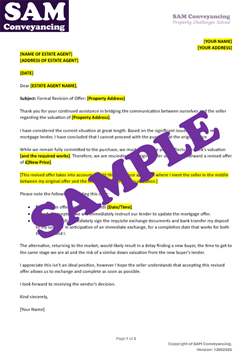
To help you navigate this successfully, we have published a comprehensive guide covering exactly how much you should reduce your offer by, including email templates to send to the estate agent: How to negotiate a house price after your survey .
Do you need to negotiate your house price?
- Suitable for negotiating offers with the seller post home buyer survey, or a down-valued mortgage valuation.
- Instant download.
- Easy to fill in.
Which survey is right for you?
Once you understand the financial risks of relying on caveat emptor, the question changes from "Do I need a survey?" to "Which property survey is actually worth getting?" Your choice will depend entirely on the age, condition, and construction type of the property you are buying. Most homes require either a Level 2 or Level 3 survey.
While a basic Level 1 survey exists, it provides only a minimal summary of the property's condition. We do not offer or recommend Level 1 reports to our clients, as they lack the rigorous detail required to be a worthwhile investment.
RICS Level 3 Home Survey (Building Survey)
A Level 3 survey, previously known as a Building Survey, is a more detailed and extensive inspection, better suited for older, larger, or unusual properties.
You should consider a Building Survey if the property is over 80 years old, in poor condition, or if you are planning to carry out major renovations.
The Level 3 report includes a more thorough and extensive visual inspection, including the roof space and underground drainage.
It describes how the property is built and outlines potential problems posed by hidden defects. It also provides a recommended repair plan, a timeline, and an explanation of the consequences of not acting.
Typical Cost: A Level 3 survey is more extensive, typically ranging from £600 - £1,500+, with our services starting from £400 EXC VAT.
When is a Home Survey NOT worth it?
Although a survey is recommended for most property purchases, there are a few specific circumstances where a full structural condition report may not be the most appropriate or cost-effective choice.
New Build Properties
If you are buying a brand-new home, a standard RICS Home Survey is generally not necessary, as the property will be covered by a structural warranty (such as NHBC). Instead, you should instruct a professional snagging survey. This is a specialist inspection focused on identifying cosmetic defects, poor finishes, and minor issues that the developer may have missed. This snagging list is then used to force the developer to fix the faults before you complete the purchase.
Valuation-Only Transactions
If you are not buying or selling the property but strictly need a formal valuation for legal or financial purposes, a full condition report is unnecessary. Examples include staircasing a shared ownership property, repaying a Help to Buy loan, or buying out a joint owner during a separation. In these instances, a current market RICS valuation without the deep diagnostic condition report will suffice.
What to do after your survey report arrives
Once you receive your RICS survey report, you will find it uses a highly intuitive traffic light system to grade the condition of different parts of the property.
- Red - Condition Rating 3: Defects that are serious and/or need to be repaired, replaced, or investigated urgently. This is a red flag that you must not ignore. You should get a specialist to investigate and provide a quote for the necessary work before you exchange contracts.
- Amber - Condition Rating 2: Defects that need repairing or replacing but are not considered to be either serious or urgent. These issues should be budgeted for and addressed in the future.
- Green - Condition Rating 1: No repair is currently needed. The element should simply be maintained as usual.
Armed with this factual information, you can decide whether to proceed with the purchase, renegotiate the price based on the cost of the necessary repairs, or pull out of the sale entirely. Always consult with your conveyancing solicitor to understand your legal options at this stage.
Frequently Asked Questions

Andrew Boast FMAAT is a qualified accountant, conveyancing specialist and author with over 25 years of experience in the UK property sector. Since beginning his career in 2000 within established SRA and CLC-regulated conveyancing solicitor firms, Andrew has overseen the legal journeys of more than 75,000 clients.
He is the self-published author of the first-time buyer guide: How to Buy a House Without Killing Anyone, and a frequent contributor to mainstream UK media on legislative updates, property law, first-time buyer guides, conveyancing best practices, and stamp duty changes. Andrew specialises in resolving complex title issues, property conflict disputes, and property tax options, streamlining the enquiry process to reduce transaction times and maintaining a client-friendly focus.

Amanda Ambler is a highly accomplished conveyancing specialist with over 15 years of dedicated experience across residential property law, legal compliance, and practice management. Having held senior roles, including Head of Legal Practice and Head of Conveyancing at established UK law firms, Amanda possesses a profound, hands-on understanding of the technical intricacies of the property market.
As the designated Legal Content Reviewer for SAM Conveyancing, Amanda ensures that every guide, legal update, and resource published meets the absolute highest standards of accuracy, regulatory compliance, and factual integrity. Her rigorous review process guarantees that complex property legislation and industry processes are communicated clearly, transparently, and safely for home buyers and sellers alike.