Conveyancing Property Searches: A Complete Guide to Which You Need

When purchasing or remortgaging a property in England and Wales, the principle of caveat emptor (buyer beware) applies. This means the onus is entirely on you to uncover any risks or legal obligations that could affect the land or building.
Crucially, this vital information is not held by the seller; instead, it must be sought through formal enquiries to the local authority, the water board, and the Environment Agency.
The results of these conveyancing searches are often a "make or break" factor for your transaction. Because certain findings can render a property unmortgageable without extensive further investigation, lenders insist on these searches as a mandatory part of the legal conveyancing process.
While buyers typically order searches once the draft contract pack is issued, significant delays at certain councils make timing critical. In this guide, we break down exactly what each search entails, the associated costs, and the current lead times you should expect before you can finalise your purchase.
Are
Property
Searches?
By Andrew Boast, CEO of SAM Conveyancing
The essential "Big Three" property searches
There are a variety of searches you can buy; however, these are the 3 main ones:
Type of Search | Detail |
Local Authority Search | The most common and mandatory search, the Local Authority Search reports on data held at the council, including planning permission, building regulation sign off, and rights of way. The local search takes the longest of all searches, ranging from a few days to upwards of 4 weeks, depending on your council. The cost is also the most, as you'll pay between £60 and £300 as the cost also varies by local authority. |
Water & Drainage Search | The Water & Drainage Search reports on how water gets to your property and the waste out from it, including where, if you have pipes running through your land. The water and drainage search takes between 1 and 2 weeks, and the cost is between £40 and £80, depending on the water authority. |
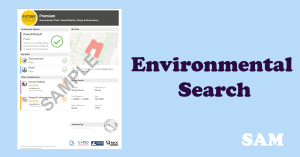
Environmental Search | The Environmental Search reports on flood risk, ground stability, contaminated land, radon, and other environmental factors. It takes between 1 and 2 days to be returned, and the cost is between £40 and £80, depending on what rate the search provider charges. |
The "Personal vs Official" Distinction
Many buyers are confused by the price and speed difference between search types: Regulated or Official Searches:
- Personal (Regulated) Searches: Produced by a private search agency using council data. These are often cheaper and faster, but you must ensure they are backed by adequate professional indemnity insurance to satisfy your mortgage lender.
- Official Local Authority Searches: Produced by the council, signed by an officer, and often preferred by stricter mortgage lenders.
Pretty much all mortgage lenders accept regulated searches back from the search provider, provided the search provider's indemnity insurance is in place. Lenders such as Vida Home Loans & Paragon don't accept regulated searches and require an official search.
Searches Expire!
The 6-Month Rule: Most mortgage lenders consider searches "stale" after six months. If a chain collapses and a buyer has to find a new property, or if the transaction takes too long to finalise, the searches may need to be refreshed at an additional cost.
Expert Tip - Use No Search Indemnity Insurance?
When councils have 6–10 week backlogs (as seen in certain boroughs), it can stall a whole chain. The solution to this is to obtain Search Delay Indemnity Insurance. This allows the buyer to complete without the search results, provided the insurance covers the risk of an "unknown" problem coming to light later. Not all mortgage lenders allow this, and it carries risks when buying a property without all the information.
Specialist enquiries for specific locations
Depending on where your property is, some bespoke searches may be required.
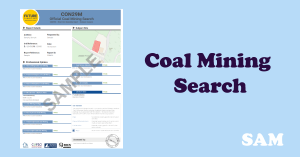
Coal Mining | Approximately 25% of all properties in England and Wales sit on a coalfield. While mining is now a part of our industrial heritage rather than a current activity, the underground legacy remains a significant factor in conveyancing. The affected areas are broadly categorised by major coalfields. If a property falls within these regions, a CON29M coal mining search is usually mandatory for mortgage purposes. It costs circa £79 INC VAT and should be turned around within 1 to 2 days. |
|---|---|
Radon | Radon is a naturally occurring radioactive gas that can enter buildings from the soil. In the context of conveyancing, "Radon Affected Areas" are defined as regions where there is a 1% or higher chance that a home's radon levels are at or above the "Action Level" of 200 becquerels per cubic metre. According to the latest maps from the UK Health Security Agency (UKHSA) and the British Geological Survey (BGS), the risk is highest where the underlying geology contains specific rock types like granite or limestone. A Radon Search costs circa £42 INC VAT and should be turned around within 1 to 2 days. |
Commons Registration Search | A Commons Registration Search (requested via the CON29O optional enquiry form) is essential whenever there is a risk that the land you are buying is subject to ancient "commoners' rights" or is registered as a town or village green. While these are less common in urban city centres, they are a vital part of due diligence for specific property types to ensure you don’t inherit a legal nightmare. The cost for a Commons Registration Search is £89 INC VAT and should be turned around within 1 to 2 days. |
Flood | A Flood Risk Search will provide information on previous flooding from various types in your local area. The cost for a Flood Risk Report is £64 INC VAT and should be turned around within 1 to 2 days. Check your property: Long-term flood risk - GOV.UK |
Chancel | A chancel is the space around the altar in a Christian church, typically located at the liturgical east end of the building. It is the area traditionally reserved for the clergy and choir, often separated from the nave by a screen or a set of steps. A chancel search is not often used now since a significant change in land registration laws that occurred in 2013. Before this, "Chancel repair liability was an overriding interest, meaning it was legally binding on a property owner even if it wasn't mentioned in the property's title deeds or the Land Registry. The liability can still be an issue if a property has not changed hands since 2013, or if it was transferred as a gift or by inheritance rather than by sale. In these cases, a church might still attempt to register the notice before the next sale. The cost for a Chancel Search is £42 INC VAT and should be turned around within 1 to 2 days. |
Why cash buyers still require property searches
Even if you're buying with cash, conveyancing searches are essential. They can uncover hidden issues that could impact your property's value and future saleability. Don't risk your own money – get the property searches you need.
Mortgage lenders won't lend their money without evidence that certain properties and searches have been obtained, so why would you want to risk your own money by buying without property searches?
Interpreting your results and raising further enquiries
Once your solicitor receives the results of your property searches, the next critical step is the interpretation of the findings. These documents are often highly technical, containing complex data from the Environment Agency and local council records.
Your solicitor will review these to identify "entries" or "charges" that could affect your enjoyment of the property, its future resale value, or its "mortgageability".
If a search identifies a potential risk, such as a high flood probability, a recorded mine shaft within 20 metres, or an adoption issue with the local water mains, it does not necessarily mean the transaction must fail. Instead, it triggers the need for further enquiries. Your legal team will raise specific questions with the seller’s solicitor to seek clarification, or they may recommend "Level 2" interpretive reports to finalise the risk level.
In some cases, you may need to negotiate a "Radon Bond" or an indemnity insurance policy to protect your investment. Ensuring these enquiries are fully satisfied is essential before you commit to the exchange of contracts, as once you have exchanged, you legally accept the property and all its associated risks.
Common issues and solutions found in searches
Contaminated Land | If the Environmental Report highlights the risk that your property has been built on contaminated land you solicitor must investigate. The solution is to obtain the NHBC certificate from the original developer or contact the council to confirm whether the land is still contaminated. You can't proceed with a mortgage without obtaining further evidence. |
|---|---|
High Flood Risk | If the Environmental Report indicates that your property is in a high flood risk area, it will be reported to your mortgage lender. The lender will then confirm how they wish to proceed, which may require a Flood Risk Assessment of the property by a surveyor. You can't proceed with a mortgage without obtaining further evidence. |
Ground Stability | If the Environmental Report highlights the risk that your property is built on a ground with a high chance of movement, you may need to instruct a surveyor to inspect the property for subsidence. |
Section 106 | If the local search shows an unexpired Section 106 Agreement, the seller's solicitor must confirm with the council if the works have been completed. |
Conveyancing Searches Checklist
Search Type | Mandatory? | Cost Range | Typical Lead Time |
Local | Yes, if buying with a mortgage | £150 to £300 | 5 to 20 working days. Some councils are 60 working days. |
Water & Drainage | Yes, if buying with a mortgage | £50 to £100 | 5 to 10 working days |
Environmental | Yes, if buying with a mortgage | £50 to £80 | 24–48 Hours |
Coal Mining | Location Specific | £40 to £70 | 24–48 Hours |
Chancel | Location Specific | £20 | 24–48 Hours |
What happens after you order your searches?
Once the property searches are returned, the buyer's solicitor will start the title check, also known as raising legal enquiries. From this point forward, the solicitor is finalising the legal work in preparation for preparing the buyer's Report on Title and then moving to sign documents in readiness for the exchange of contracts.
Your Next Step in the Conveyancing Process:
With draft contracts in it, it is now time for the buyer's solicitor to Raise Legal Enquiries.
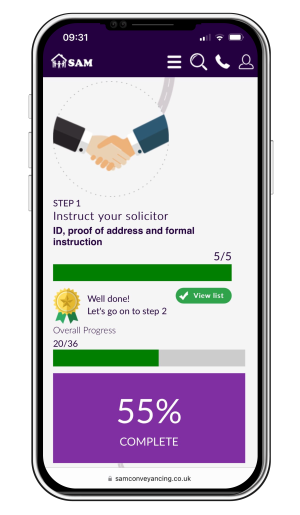
Our conveyancing process area includes:
- online checklists
- videos
- free downloads
- useful tips
It is completely free to use - from start to finish - and saves your progress along the way.
Bonus: Get a FREE book: House to Buy a House without Killing Anyone (Value £9.99).
Frequently Asked Questions

Andrew Boast FMAAT is a qualified accountant, conveyancing specialist and author with over 25 years of experience in the UK property sector. Since beginning his career in 2000 within established SRA and CLC-regulated conveyancing solicitor firms, Andrew has overseen the legal journeys of more than 75,000 clients.
He is the self-published author of the first-time buyer guide: How to Buy a House Without Killing Anyone, and a frequent contributor to mainstream UK media on legislative updates, property law, first-time buyer guides, conveyancing best practices, and stamp duty changes. Andrew specialises in resolving complex title issues, property conflict disputes, and property tax options, streamlining the enquiry process to reduce transaction times and maintaining a client-friendly focus.

Amanda Ambler is a highly accomplished conveyancing specialist with over 15 years of dedicated experience across residential property law, legal compliance, and practice management. Having held senior roles, including Head of Legal Practice and Head of Conveyancing at established UK law firms, Amanda possesses a profound, hands-on understanding of the technical intricacies of the property market.
As the designated Legal Content Reviewer for SAM Conveyancing, Amanda ensures that every guide, legal update, and resource published meets the absolute highest standards of accuracy, regulatory compliance, and factual integrity. Her rigorous review process guarantees that complex property legislation and industry processes are communicated clearly, transparently, and safely for home buyers and sellers alike.