Coal Mining Search

While an interesting thought that our industrial history could be lingering beneath the property you're trying to purchase, it can cause a headache for you. When buying a house, you need to check whether you're in a coal-mining area, which is where a coal mine search comes in.
Your lender might make this search mandatory, as coal mining activity can cause subsidence. This puts your property, and therefore the lender's investment, at risk. This article covers what a coal mining search is, what it can reveal, and how to check if the property is in a coal mining area.



What is a coal mining search?
A mining survey, often called a Coal & Brine Report or Coal Authority Report, is an additional survey required in certain areas of England and Wales where there was mining. One of the greatest risks would be the effect of the mining on the ground under a property that could lead to or have caused subsidence.If your solicitor is aware the property you are buying is located in a mining risk area, they will require you to book a coal authority search. If you are buying with a mortgage, the lender can make this a condition of granting it to you. Cash buyers can choose not to get this report since they are not bound by a lender's requirements.
What does a coal search reveal?
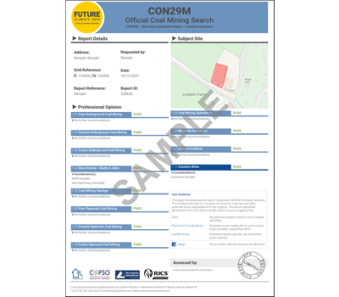
The report considers:
| 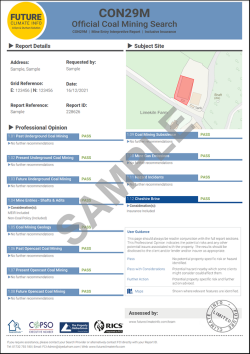 |
For mining activities, the report lists past, present and any planned future activities. The information about future activities is more of an opinion, but still usefully notes whether the area your property is located in might be mined in the future.
The Coal Mining Subsidence section of the coal authority search notes whether there has been any claim for damages from any property due to mining-related subsidence within 50m of your property. Mine gas tells you whether there has been any noted emission of mine gases and the hazards section notes whether the property has been subject to any recorded remedial work.
Does the vendor pay for a mining report?
Usually, it is the buyer who orders and pays for the conveyancing searches. Alternatively, if the vendor was worried about their house being built in an area with coal mining activity, they might have ordered the search beforehand. In this case, they can provide you with a copy of the results.How do you check if a property is in a coal mining area?
For brine mining, the main affected county is Cheshire. 'Wych' actually means Brine Town and can be observed as being part of the following towns' names, all of which are in Cheshire - Northwich, Middlewich and Nantwich. In this region, brine subsidence is very common, so a Cheshire Salt Search is requested when buying a house there. You will rarely need both a Coal Mining and a Cheshire Salt Search.Due to subsidence caused by brine mining, the Cheshire Brine Compensation Board was founded in 1952 to provide compensation, however, at present, a building survey must prove the damages.
Compensation should then be available for you, but if the previous owners of the house have been awarded this before and failed to carry out the necessary repairs, any other future claims might be rejected. We can help with both your purchase and your building survey.
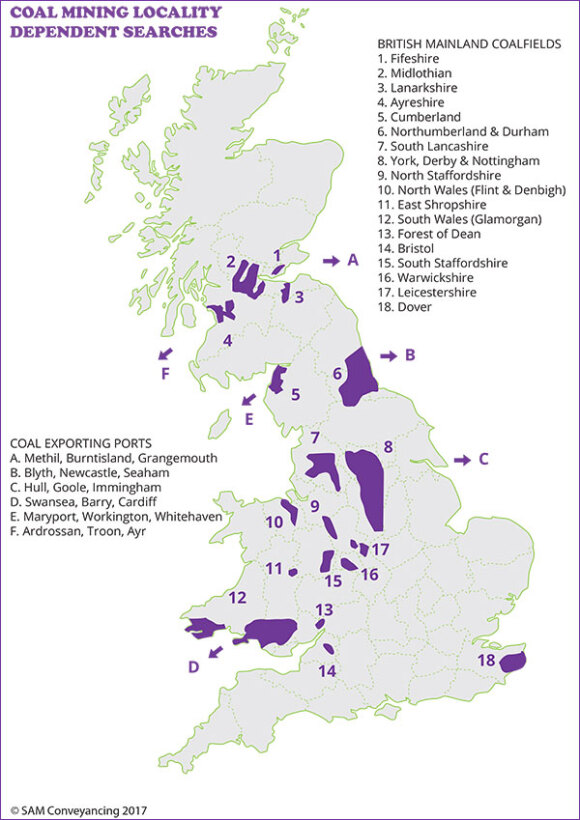
The below coal mining map highlights the areas most affected by coal mining. Generally, the largest areas cover Manchester, Liverpool, as well as Sheffield, Wakefield and Bradford. We can, however, help with your purchase all throughout England and Wales.
How to make a coal claim
If you believe your property has suffered damages, either from subsidence or by simply being located near a mine, you can claim compensation. This can be done either by filing a claim with the mine owner, or with The Coal Authority. There are certain steps you must take.- 1
Before worrying about the claim result, you should make sure your property is at risk because of coal mining.

Andrew Boast FMAAT is a qualified accountant, conveyancing specialist and author with over 25 years of experience in the UK property sector. Since beginning his career in 2000 within established SRA and CLC-regulated conveyancing solicitor firms, Andrew has overseen the legal journeys of more than 75,000 clients.
He is the self-published author of the first-time buyer guide: How to Buy a House Without Killing Anyone, and a frequent contributor to mainstream UK media on legislative updates, property law, first-time buyer guides, conveyancing best practices, and stamp duty changes. Andrew specialises in resolving complex title issues, property conflict disputes, and property tax options, streamlining the enquiry process to reduce transaction times and maintaining a client-friendly focus.

Amanda Ambler is a highly accomplished conveyancing specialist with over 15 years of dedicated experience across residential property law, legal compliance, and practice management. Having held senior roles, including Head of Legal Practice and Head of Conveyancing at established UK law firms, Amanda possesses a profound, hands-on understanding of the technical intricacies of the property market.
As the designated Legal Content Reviewer for SAM Conveyancing, Amanda ensures that every guide, legal update, and resource published meets the absolute highest standards of accuracy, regulatory compliance, and factual integrity. Her rigorous review process guarantees that complex property legislation and industry processes are communicated clearly, transparently, and safely for home buyers and sellers alike.