Should I Buy a Timber Frame House?

- Timber frame houses have lost their previous bad reputation and perform well
- Some lenders will not mortgage timber frame houses, some will, and others will only lend in specific circumstances
- You should get a level 3 building survey due to the wider scope regarding non-standard construction.
- Read more - What are the risks of buying a property with timber purlin?
This article examines:
- 1
- 2
- 3
- 4
- 5
- 1
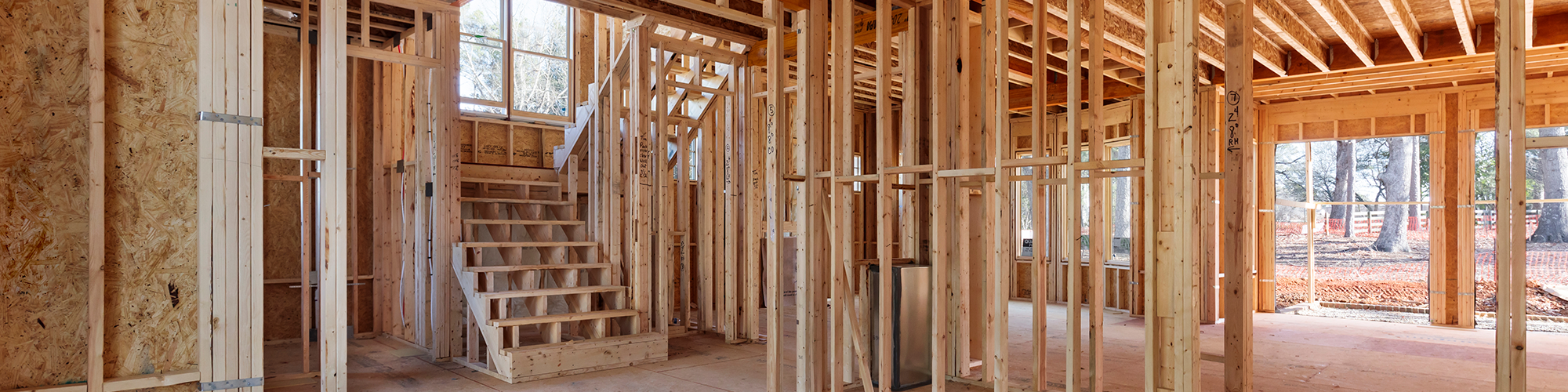
What's the difference between a timber frame house and a brick house?
- standard dense blocks;
- lightweight blocks with air pockets for better insulative qualities (Aircrete);
- clay honey-combed blocks that increase thermal performance (Porotherm); and
- large-format (thin-joint) blocks which can minimise laying times.
- 2
What are the advantages and disadvantages of timber frame construction?
Pros
- In the case of exposed oak frames, whether in new or existing builds, many prefer the aesthetics over traditional masonry.
- Timber has great appeal in terms of its sustainability and related matters such as carbon (dioxide) footprint.
- In terms of new builds, factory-produced timber frame homes are usually erected on site in a matter of days.
- Once up, the internal finishes can be started right away, which can produce further time savings. However, there may be lengthy delays involved in getting the frame built. That said, the National House-Building Council (NHBC) estimate that you might save up to 3 months in terms of a new build if you opt for timber frame over masonry.
- It's normally easier to accommodate insulation into timber frame walls compared to masonry so you can have thinner build-ups for the same result.
- Timber is light, construction doesn't involve heavy or complex tools and equipment and all components can be carried by hand - the main tool is a handheld nail gun.
- You can generally build a timber frame house with far great accuracy in terms of plumb walls and square rooms than you can one made of masonry, however you rely on there being a very accurate foundation. Timber can also be adapted to pretty much most geometric shapes and clad with a variety of materials.
Cons
- Timber tends to warp over time which can cause real problems for 'wet' rooms: bathrooms will warp along with the timber and shower enclosures in particular are not designed to warp. Once tiles crack, the room's structure isn't watertight and water can then leak and directly attack the timber frame structure. However this can be avoided by ensuring that shower enclosures themselves are fully isolated from the surrounding structure.
- Timber frame homes are more susceptible to damage from extremely strong winds (hurricanes) than masonry.
- They perform less well acoustically: masonry is a better sound insulator.
- Older homes, depending on the standard of the build and the timber itself, may be more susceptible to structural attack from moisture and condensation. New build timber frame homes can be made more resistant to moisture if they have a vapour barrier between the lining of the inner wall and the insulation to prevent any vapour passing through.
- If they are not well maintained, external timber elements can rot over time, although generally, the frames themselves are well protected. Older buildings, if not properly heated, can be more susceptible to wet and dry rot if there is a very high moisture content (at least 20%). They can also be more susceptible to attack from infestation, such as from woodworm.
- Older timber frame houses can be more at risk of fire because they lack the modern chemical fire protection of modern timber.
- Because timber frame is classed as non-standard construction, when it is known that a building is timber framed, you need to get a Building Survey rather than a HomeBuyers Report because they suit the former survey's scope rather than the latter's; Building Surveys cost more than HomeBuyers Reports.
- There is an arguable concern over security - it's far easier for an intruder to cut through timber than masonry, however this doesn't take into account matters such as cladding etc.
Timber frame houses have lost their previous bad reputation and perform well
- 3
Can you get a mortgage on a timber frame house?
Insulation
Always get a survey before bidding for a property at auction!
- 4
What are the different types of timber frame houses?
- 5
Why should you always get a Building Survey for a Timber Frame house?
Get a Building Survey from an experienced RICS surveyor

Andrew Boast FMAAT is a qualified accountant, conveyancing specialist and author with over 25 years of experience in the UK property sector. Since beginning his career in 2000 within established SRA and CLC-regulated conveyancing solicitor firms, Andrew has overseen the legal journeys of more than 75,000 clients.
He is the self-published author of the first-time buyer guide: How to Buy a House Without Killing Anyone, and a frequent contributor to mainstream UK media on legislative updates, property law, first-time buyer guides, conveyancing best practices, and stamp duty changes. Andrew specialises in resolving complex title issues, property conflict disputes, and property tax options, streamlining the enquiry process to reduce transaction times and maintaining a client-friendly focus.

Amanda Ambler is a highly accomplished conveyancing specialist with over 15 years of dedicated experience across residential property law, legal compliance, and practice management. Having held senior roles, including Head of Legal Practice and Head of Conveyancing at established UK law firms, Amanda possesses a profound, hands-on understanding of the technical intricacies of the property market.
As the designated Legal Content Reviewer for SAM Conveyancing, Amanda ensures that every guide, legal update, and resource published meets the absolute highest standards of accuracy, regulatory compliance, and factual integrity. Her rigorous review process guarantees that complex property legislation and industry processes are communicated clearly, transparently, and safely for home buyers and sellers alike.