What Are Easement Rights in Conveyancing?

An easement gives a landowner the right or rights to cross or otherwise use someone else's land; they are often referred to as the dominant owner. Two of the most common easement rights are a right to light and a right of way.
The problem with easements often arises when one is breached. This is why, during the conveyancing process, a seller must inform a buyer if any easements exist on the property. Quite commonly, this is not disclosed immediately and is only discovered during the buyer's legal enquiries.
What is an easement?
Technically, an easement is any right that a third party has over your land.
Types of easements:
- Express grant: This is normally expressly granted in a deed where a landowner offers the right to use part of their land. The physical extent, purpose, and limitations of use should be clearly set out within the deed of easement.
- Implied grant: This is similar to an express grant and normally arises when a landowner sells a piece of their land, where the land sold requires access through the retained land of the landowner.
- Prescription: This is a more complex easement where someone who is not the landowner can prove they have used a piece of land without permission for a continuous period of not less than 20 years. In these circumstances, an easement can arise to allow the continued use of the land for the physical extent, purpose, and limitations it has been used for over the previous 20 years.
To keep things simple, however, you can think of them as a right you have over some land adjoining yours, or conversely, a right which another party has over the land that you have bought or leased.
Expert Tip: The difference between the dominant and servient owner
The dominant owner is the party with the right, and the servient owner is the party granting the right. For example, if you own land that grants a right of way to someone else, you are the servient, and they are the dominant owner of the easement.
Partner & Conveyancing Solicitor
How do you find out if there is an easement right over your property?
You can find out if there are any easements that grant rights over your land by checking the Section C Charges Register within your title deeds. During a purchase, your conveyancing solicitor reports to you regarding any easements over the land you are buying.
Are
Legal
Enquiries?
By Andrew Boast, CEO of SAM Conveyancing
What are the different types of easements?
- Rights to light stopping neighbours from developing their property
- Rights of way to walk or drive through the land
- Rights to lay electricity, broadband, or telephone cables
- Rights to maintain gas, utilities, or water supplies
Example of an easement
A mobile phone company wants to place a mobile phone mast on your land. They agree to pay you an annual fee for the use of the land, and it is agreed that the phone mast will remain on your property for 10 years, after which you can agree whether to extend this period or not. The mobile phone company needs the right to use the land and access to the specific area they have paid to use. A deed of easement is drafted to confirm the physical extent of the mobile phone mast, the purpose of using the land, any limitations, and that the deed is in place for 10 years for an annual fee of £X.
Easements can actually be positive or negative; either allowing a right over another’s property or restricting the performance of an otherwise lawful activity on a property. The most common types of positive easements are rights of way or the right to light, as mentioned. These are the ones likely to be uncovered in your conveyancing solicitor's research on your title, and might even include the right to park your vehicle on a neighbour’s land or use their outdoor toilet. Negative easements could involve restricting the planting of trees so as not to block a neighbour’s countryside view.
In cases of a breach of an easement, there may be serious consequences if a case goes to court and the judge finds against you.
Even the building of a fence across someone’s right of way could mean you have breached an easement and may be liable to pay compensation for rectification. Similarly, if you were to build an extension which encroaches on a neighbour’s right to light, you may be forced to take the extension down. This could negatively affect your property's value, as you would lose a valuable addition to the home, which could, in turn, affect your mortgage, since a decrease in value jeopardises a mortgage lender’s security.
Are there any rules around easements?
The parameters fall under the following:
- What is the physical extent? This is, in essence, the size and width of a right of way through your land.
- What is the purpose and manner of the use? This could be for the use of a telephone mast on your land.
- What are the limitations? Some rights of way may only be granted during daylight hours.
What happens if there is excessive use?
The use must not exceed that which was originally granted or acquired. As noted above, an easement must have a clear nature, purpose, and use. Landowners who have an easement on their property often complain not about the right to use the land, but about excessive use. It is important to note that in these circumstances, the landowner cannot completely prevent someone from exercising their easement simply because it is being overused.
For example, if you own a piece of land that has a right of way easement allowing others the right to walk through it, and someone begins using it excessively, you are not allowed to block the right of way for them or others through your land just because of that individual's excessive use.
How can you remove an easement?
There are a number of ways in which an easement can come to an end, and all of these can be tested via an application to a court:
- Expiration: Some end at an expressed date set out within the deed (express grant).
- Release: An agreement with the dominant tenement (the person or organisation who is in control of the easement) to release the servient tenement (you) from it.
- Abandonment: The dominant tenement demonstrates they intend for the easement to end.
- Merger: Both the dominant and servient tenements join and are placed under a single title, such as if a buyer purchases both pieces of adjoining land. Essentially, it becomes redundant because the landowner owns both pieces of land, and there is no need for a separate right of use.
- Necessity: The necessary reason for the easement no longer exists.
- Condemnation: The government takes over the property and essentially condemns it.
- Prescription: The servient tenement disallows the dominant tenement's use of the easement by continuous, open, and hostile blockage of the easement for at least 20 years.
- Estoppel: If an easement is unused, the servient tenement relies on this ‘termination’ in good faith, so the dominant tenement cannot enforce its rights. This is a very complex legal doctrine and, by far, the most uncertain to enforce successfully.
What happens if you breach an easement?
If you interfere with or breach an easement, such as blocking a neighbour's right of way with a newly built fence or constructing an extension that breaches their right to light, the dominant tenement (the owner of the right) can take civil legal action against you.
Because an easement is a legally binding property right, the courts take any interference very seriously. If a judge finds you to be in breach, they can enforce several severe remedies:
- An injunction: The court can issue a strict order forcing you to stop the interference and rectify the issue. This could mean being legally compelled to tear down a wall, fence, or even an expensive home extension entirely at your own expense.
- Damages: You may be ordered to pay substantial financial compensation to the dominant owner. This could cover their loss of enjoyment, any direct financial loss they suffered, or the reduction in their property's market value caused by your actions.
- Abatement (Self-help): In certain specific circumstances, the dominant owner has the common law right to 'abate' the nuisance themselves without going to court. For example, they might be legally entitled to cut a padlock off a gate that is unlawfully blocking their established right of way, provided they do not use excessive force or cause a breach of the peace.
Ultimately, breaching an easement can lead to incredibly costly litigation, severely damage relations with your neighbours, and make your property exceptionally difficult to sell or remortgage in the future.
Expert Tip: Handling a right of way breach
If an easement is breached, the impacted property owner can face significant legal action. Before rushing to court, here are the steps and legal remedies we explore:
- Agree & Draft a Deed: The first step is always to try and get both parties to talk to one another and agree on the changes to be made. An application can then be made to HM Land Registry (HMLR) to amend the easement by creating a new Deed to vary the first one. If the parties cannot agree, it becomes a formal legal dispute (reporting trespassing to the police to obtain a crime reference number is often advised in these scenarios).
- Injunctions: A judge can order the offending person to stop blocking the path, take down a fence, or halt building work.
- Damages: The party in breach may be ordered to pay money to cover financial losses or a drop in property value.
- Forced Reinstatement: The court can force the individual to fix the land back to how it was, entirely at their own cost.
Partner & Head of Conveyancing
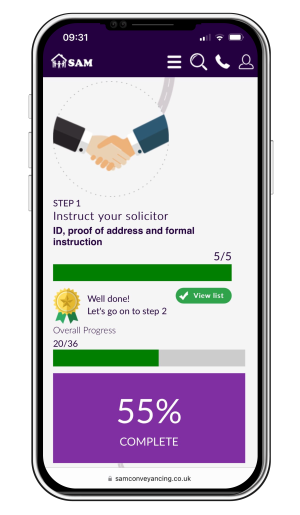
Our conveyancing process area includes:
- online checklists
- videos
- free downloads
- useful tips
It is completely free to use - from start to finish - and saves your progress along the way.
Bonus: Get a FREE book: House to Buy a House without Killing Anyone (Value £9.99).
Frequently Asked Questions

Andrew Boast FMAAT is a qualified accountant, conveyancing specialist and author with over 25 years of experience in the UK property sector. Since beginning his career in 2000 within established SRA and CLC-regulated conveyancing solicitor firms, Andrew has overseen the legal journeys of more than 75,000 clients.
He is the self-published author of the first-time buyer guide: How to Buy a House Without Killing Anyone, and a frequent contributor to mainstream UK media on legislative updates, property law, first-time buyer guides, conveyancing best practices, and stamp duty changes. Andrew specialises in resolving complex title issues, property conflict disputes, and property tax options, streamlining the enquiry process to reduce transaction times and maintaining a client-friendly focus.

Amanda Ambler is a highly accomplished conveyancing specialist with over 15 years of dedicated experience across residential property law, legal compliance, and practice management. Having held senior roles, including Head of Legal Practice and Head of Conveyancing at established UK law firms, Amanda possesses a profound, hands-on understanding of the technical intricacies of the property market.
As the designated Legal Content Reviewer for SAM Conveyancing, Amanda ensures that every guide, legal update, and resource published meets the absolute highest standards of accuracy, regulatory compliance, and factual integrity. Her rigorous review process guarantees that complex property legislation and industry processes are communicated clearly, transparently, and safely for home buyers and sellers alike.

Property Covenants: Restrictive Covenants