Tree Pruning Laws: Rights and Rules in England and Wales

Navigating the complexities of property boundaries can be challenging, particularly when a neighbour’s tree begins to encroach upon your garden. In England and Wales, the law provides clear frameworks, primarily through the principle of abatement of a nuisance, to help homeowners manage overhanging branches and intrusive roots.
However, exercising these rights requires a delicate balance of legal compliance and neighbourly diplomacy. Did you know you're breaking the law by taking a cutting from your neighbour's rose bush without permission?
It is critical that you understand your obligations regarding what you can legally prune, what a Tree Preservation Order (TPO) is, the disposal of garden waste, and the protection of local wildlife, as these are essential to resolving these issues without escalating to a formal legal dispute or facing criminal penalties.
The right to prune: boundary lines and abatement
In England and Wales, your legal right to prune a neighbour’s tree is based on the common law principle of abatement of a nuisance. This means you have the legal right to cut back any branches or roots that cross the boundary line into your property. However, this right is strictly limited by two main conditions:- The Boundary Line: You must stop exactly at your boundary. You cannot cross into your neighbour's airspace or land to carry out the work.
- No Trespass: Entering your neighbour’s garden to prune their tree without their express permission constitutes trespass.
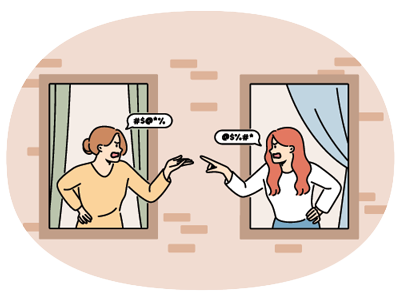
Are you arguing with your neighbour?
- Book a FREE(1) 15-minute meeting with a specialist SRA-regulated Property Dispute Solicitor.
- Find out how to handle disputes with your neighbour, including nuisance, boundary, and party-wall disputes.
- Our paid-for services are competitively priced.
- No obligation to use our paid-for services.
(1) A free 15-minute call with a specialist property dispute solicitor. Our panel solicitor discusses your options and provides quotes for the work; however, there is no obligation to pay for any of their legal services after your free meeting.
Expert Tip - Don't get caught by the law of trespass!
The core principle is that any "unjustifiable interference with land which is in the immediate and exclusive possession of another" is a trespass. Because English law values property rights highly, trespass is actionable per se, meaning the landowner does not have to prove you caused actual damage to succeed in a claim; the mere act of stepping over the boundary is sufficient.
Andrew Boast FMAAT
CEO of SAM Conveyancing
The law and other remedies
While the act of crossing the fence is a Common Law tort, specific actions taken while trespassing can breach the following pieces of legislation:
- 1
The Access to Neighbouring Land Act 1992:
This is the most relevant statute for homeowners. It acknowledges that you do not have an automatic right to enter a neighbour's land to carry out maintenance. If you enter without permission or without a Commonhold and Leasehold Reform Act order, you are in breach of the neighbour's right to exclusive possession.
- The Breach: If you enter without permission or without a Commonhold and Leasehold Reform Act order, you are in breach of the neighbour's right to exclusive possession.
- The Remedy: If your neighbour refuses access for basic preservation works (which may include tree safety), you must apply to the court for an Access Order under this Act rather than attempting to carry out the works without it.
- 2
Criminal Damage Act 1971:
If you enter the land and prune the tree so severely that you damage its health or value, or if you damage the fence, or any other property in your neighbour's garden, you have broken the law under Section 1(1) of the Act. A person who, without lawful excuse, destroys or damages any property belonging to another, intending to destroy or damage any such property or being reckless as to whether any such property would be destroyed or damaged, shall be guilty of an offence.
- 3
Theft Act 1968:
If you enter the land to prune a tree, bush, or shrubby plant and take the branches (arisings) away for your own use (e.g., as firewood, or to grow in your own garden) without offering them back, you have broken the law under Section 1 of the Act. You are "dishonestly appropriating property belonging to another with the intention of permanently depriving the other of it."
Expert Tip - Trespass includes their airspace
In England and Wales, trespass also applies to airspace. Technically, leaning your body over the fence into your neighbour's garden or using a ladder that overhangs their property is a trespass into their lower airspace, even if your feet never touch their soil.
Andrew Boast FMAAT
CEO of SAM Conveyancing
Who owns the cuttings?
So you've cut your neighbour's tree, now what do you do with the cuttings? Legally, the wood, fruit, and even the leaves (referred to as arisings) are the property of your neighbour who owns the tree, even though you cut them.
As we have seen above, even if you throw garden waste away or burn it, you are "depriving" your neighbour of property that belongs to them. That means the garden waste you are throwing away is considered theft.
You must offer the cuttings back to your neighbour. If they do not want them, it is usually your responsibility to dispose of them properly. Simply throwing branches back over the fence into your neighbour's garden without consent can constitute fly-tipping or a statutory nuisance.
Statutory Nuisance and Fly-Tipping
A common misconception is that you can simply throw the cuttings back over the fence. Doing so without the neighbour's agreement can lead to the following legal complications:
- Statutory Nuisance: Under the Environmental Protection Act 1990, depositing garden waste on someone else's land can be deemed a nuisance.
- Fly-Tipping: In extreme cases, dumping large amounts of waste on your neighbour's property can be treated as illegal waste disposal.
Expert Tip - Don't be a nuisance
To ensure you remain within the law, you should send a formal enquiry to your neighbour before pruning; email or a note through the door. State that you intend to exercise your right to prune to the boundary and ask how they would like the arisings disposed of. If they refuse to take them, you are free to dispose of them yourself, but you cannot charge the neighbour for the disposal unless previously agreed.
Andrew Boast FMAAT
CEO of SAM Conveyancing
Identifying protected trees (TPOs and Conservation Areas)
You cannot cut down a tree protected by a TPO. You should contact the Local Planning Authority (LPA) before pruning back an overhanging tree. The legal consequences of pruning a protected tree without council consent.
Furthermore, if the tree is in a Conservation Area, special regulations apply even if a specific TPO is not in place.
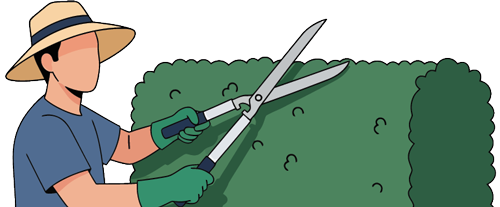
What if my neighbour has a tall hedge?
In England and Wales, there is no general legal limit on how tall a tree can grow. However, Part 8 of the Anti-social Behaviour Act 2003 was introduced to give local authorities the power to intervene in specific disputes involving tall hedges that obstruct light or enjoyment of a property.
For the council to accept a complaint under the Act, the hedge in question must meet all of the following statutory criteria:
- Composition: It must be formed wholly or predominantly of a line of two or more evergreen or semi-evergreen trees or shrubs.
- Height: It must be over 2 metres (measured from natural ground level).
- Obstruction: It must act as a barrier to light or access, significantly curtailing the reasonable enjoyment of your property (including your garden).
How do you raise a complaint?
The council acts as a "last resort." You cannot trigger Part 8 unless you can prove you have attempted to resolve the issue through informal discussion or mediation first.
- Evidence of Negotiation: You must provide the council with a record of your attempts to settle the matter. This usually includes copies of letters or logs of conversations with your neighbour.
- The Role of the Local Authority: If the council accepts the complaint, it will send an officer to assess the hedge's impact. They use a standard government formula (often involving the "Red Book" method) to calculate the Action Hedge Height. This calculation determines how much the hedge actually blocks light, based on its distance from your windows and the sun's position.
- The Remedial Notice: If the council finds in your favour, they will issue a Remedial Notice to the tree owner. This legal document sets out what the owner must do (e.g., cut the hedge down to 2 metres), a deadline for the work, and may require the owner to maintain the hedge at a certain height in the future.
Wildlife and Seasonal Considerations
Under Section 1 of the Wildlife and Countryside Act 1981, it is a criminal offence to intentionally (or, in the case of specifically protected birds, recklessly):
- Kill, injure, or take any wild bird.
- Take, damage, or destroy the nest of any wild bird while that nest is in use or being built.
- Take or destroy an egg of any wild bird.
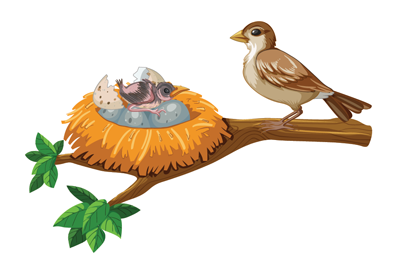
You are wrong if you think you're only pruning a tree, and garden maintenance is exempt from prosecution. If you prune a branch and, in doing so, destroy a nest containing eggs or chicks, you have committed an offence. Penalties can include unlimited fines and, in extreme cases, up to six months' imprisonment.
While birds can technically nest at any time of the year, the main breeding season in England & Wales is generally between March and August. You should avoid major pruning, hedge cutting, or tree felling during these months.
If a nest is discovered, all work must stop immediately. You cannot move the nest or continue pruning around it if there is a risk of disturbing the birds, exposing the nest to predators, or exposing it to the elements. You must wait until the young have fledged (left the nest for good).
A summary for pruning your neighbour's tree
- Time of Year: Don't prune between the months of March and August.
- Ask Permission: Politely ask your neighbour if you can prune their tree/bush.
- Check on the Waste: Ask your neighbour if they want the garden waste, of if they are happy for you to keep/dispose of it
- Inform: Inform your neighbour of this article, so they know the rules and laws around neighbours' pruning trees.
- Be Reasonable: Be polite, fair and reasonable. You won't get anywhere by being rude.
- Use the Law: If your neighbour is breaking the law, don't take matters into your own hands. Speak to a Property Dispute Solicitor and let them mediate/enforce the law.
Frequently Asked Questions About Tree Pruning Laws

Andrew Boast FMAAT is a qualified accountant, conveyancing specialist and author with over 25 years of experience in the UK property sector. Since beginning his career in 2000 within established SRA and CLC-regulated conveyancing solicitor firms, Andrew has overseen the legal journeys of more than 75,000 clients.
He is the author of the property guide 'How to Buy a House Without Killing Anyone' and a frequent contributor to mainstream UK media on legislative updates, property law, first-time buyer guides, conveyancing best practices, and stamp duty changes. Andrew specialises in resolving complex title issues, property conflict disputes, and property tax options, streamlining the enquiry process to reduce transaction times and maintaining a client-friendly focus.

Caragh Bailey is a Lead Property Content Specialist at SAM Conveyancing, having joined the firm in 2020. With a portfolio of over 150 technical conveyancing, house survey and mortgage guides, she has become a primary authority on the end-to-end sale and purchase process.
Caragh specialises in complex legal workflows, including Help to Buy redemptions, equity transfers, shared ownership structures, trust deeds for tax planning, and joint ownership disputes. Her expertise extends to leasehold reform and RICS home surveys, where she provides clear, factual guidance on independent legal advice for specialist mortgage products and intricate ownership structures.