Buying a House with Japanese Knotweed: The Complete Guide

Japanese knotweed (Fallopia japonica) is an invasive species that affects approximately 5% of UK properties. While it is not illegal to have it on your land, it is a controlled waste under the Environmental Protection Act 1990, which means you can't simply pull it up and throw it in the green bin.
For buyers, the risk is critical because if the property is affected by Japanese knotweed, then the value of the property could be devalued by 5% to 20% and make the property un-mortgageable without a professional management plan; however, what do you do if you don't spot it, or the seller has concealed the weed? The risk isn't just devaluing the property and struggling to get a mortgage; the weed is so invasive that it can burrow into the foundations and cause subsidence.
This is a complete guide to identifying whether the property is affected by Japanese knotweed, what the seller should do to tell you, what you can do if the seller hides it from you, and, if it is present, the type of professional treatment plan you will need.
- Property value hit: Knotweed affects around 5% of UK properties and can devalue a home by 5% to 20%.
- Mortgage blocker: Lenders will usually refuse a mortgage without an active management plan and 10-year guarantee.
- Legal requirements: Sellers are legally required to declare knotweed on the TA6 form or face misrepresentation lawsuits.
- Controlled waste: Illegal disposal or letting it spread can lead to criminal prosecution, heavy fines, or prison.
As seen in Manchester Evening News
In the world of conveyancing, this means lenders will be more cautious. Most banks won't lend on a property with knotweed, for example, unless there is a professional management plan and a 10-year insurance-backed guarantee in place.
— Andrew Boast FMAAT, CEO of SAM Conveyancing
What is Japanese knotweed?
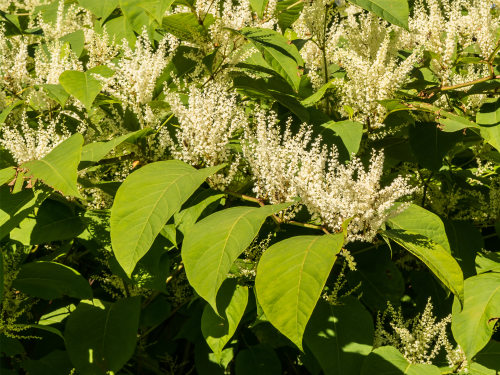
Japanese Knotweed (Fallopia japonica) is a tall, fast-growing plant in the dock family with bamboo-like stems and small white flowers. It was introduced to the UK in the mid-19th century for its beauty, but it has since become a scourge for homeowners.
It can grow up to 20cm a day, and its roots can reach down to 3m. It can grow through concrete and tarmac, and it has no natural predators. It swamps other plants, denying them light. Although it produces no seeds, it can grow from the tiniest fragments of rhizomes, which are the underground network of stems and roots.
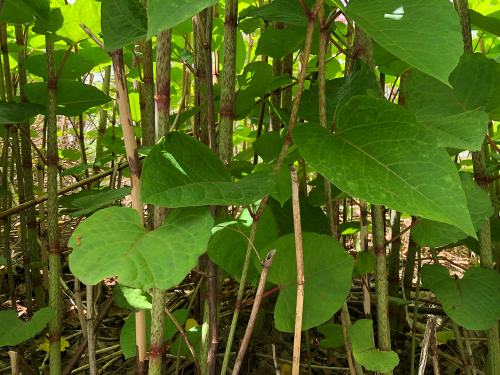
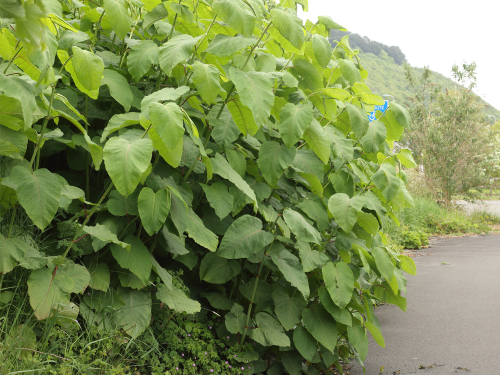
What does it look like?
These are examples of what to look for when going round the garden.

Why is Japanese knotweed dangerous?
While Japanese knotweed is not poisonous to humans or pets, its "danger" lies in its extraordinary growth rate and the physical and legal risks it poses to property.
Here is why it is considered so hazardous:
- Structural Damage: The plant’s rhizomes (underground roots) are incredibly strong and opportunistic. They can grow through existing cracks in concrete, cavity walls, drains, and pavements, leading to significant structural instability over time. The extreme but real issue could be that the weed causes the foundations to move and the property to subside. The cost to repair this depends on the severity and size of damage, but is in the region of £10,000 to £100,000.
- Rapid Expansion: It can grow up to 10cm per day during the summer. Because the root system can extend up to 3 metres deep and 7 metres horizontally, a small patch can quickly take over an entire garden.
- Regeneration from Fragments: The plant is nearly impossible to kill without specialist chemicals. A fragment of root as small as 0.8g (about the size of a fingernail) can lie dormant for years and then regrow into a completely new infestation if the soil is disturbed.
- Mortgage Refusal: Most UK lenders view the plant as a high risk to their security. If knotweed is found on or near a property, they will often refuse to grant a mortgage until a professional Knotweed Management Plan (KMP) and an insurance-backed guarantee are in place.
- Property Devaluation: Due to the risks and hassle of dealing with the removal, the presence of knotweed can devalue a home by 5% to 20%. This makes it difficult to sell the property at its true market value.
- Legal Liability: Under the Wildlife and Countryside Act 1981, it is an offence to cause the plant to grow in the wild. Furthermore, if you allow knotweed to spread from your garden into a neighbour's land, you could be sued for private nuisance and held liable for the costs of its removal and the devaluation of their property.
How does Japanese knotweed affect your mortgage?
If Japanese knotweed is present at the property, it will be noted within the mortgage valuation. The mortgage valuer will either:
- State the valuation is nil until a specialist surveyor has provided a report with a treatment plan; or
- Reduce the valuation or insist on a retention (holding back funds) until treatment has begun.
The presence of the weed could jeopardise your mortgage application, which might mean you don't want to tell the lender if your survey report flags the issue. It is important to note that if you are aware of the presence of Japanese knotweed and fail to inform your mortgage lender, then you are in breach of your mortgage terms and your home may be repossessed.
What if the weed has been removed, or has a treatment plan?
Most high street mortgage lenders will be fine to lend if there is a Knotweed Management Plan (KMP) and an Insurance Backed Guarantee (IBG) in place. Even though this is the case, your conveyancing solicitor will provide these to your mortgage lender for confirmation that they are happy to proceed, known as lender consent.
Expert Tip - Don't just check the garden!
Because Japanese knotweed is an intrusive plant, you shouldn't limit your investigation to your own property. You should inspect neighbouring properties and any wasteland around you, and look for it.
Whilst you may not be in your boundary at the moment, if it is growing around your property, there is a high risk it'll start coming in. This is then an issue that you must deal with, at your own cost.
CEO of SAM Conveyancing
How do RICS surveyors check for Japanese knotweed?
When buying the property, you may not be confident in spotting Japanese knotweed in or around the grounds of the property, so you should instruct a RICS surveyor to inspect the property. A RICS surveyor will check for any visible signs of the plant during a Home Survey (Level 2 or Level 3).
Here is what is included, and the limitations of the survey:
What is included? | What are the limitations? |
| What are the limitations of an RICS survey?It is important to understand the limitations:
The RICS surveyor may include a caveat within their report confirming the limitations, such as this: "Although the Surveyor inspects for evidence of invasive plants, such as Japanese knotweed, we cannot guarantee that none are present. We therefore recommend that an experienced gardening contractor be instructed, prior to the exchange of contracts, to survey the site and provide recommendations. Shrubs and trees close to the property, including those on neighbouring properties, may cause damage in the future." |
- We offer RICS Level 2 or 3 Home Surveys.
- National coverage with local RICS surveyors.
- Same week availability.
- Reports delivered within 5 working days.

How do RICS surveyors classify knotweed?
While previously, RICS surveyors would use the 7-meter rule, they now use a management category system if Japanese Knotweed has been found:
- Category A: This is the most severe, where Japanese Knotweed is visible and causing material damage to the property. In this instance, the RICS surveyor will recommend a remediation specialist.
- Category B: Where Japanese Knotweed has been discovered, but it's not causing material damage to the property, and can prevent the space from being used in the future.
- Category C: Like in category B, Japanese Knotweed has been discovered. This time, however, it's not impacting future use of the area. In this instance, lenders are not advised to do any remediation.
- Category D: Knotweed is not on the property, but has been flagged as being three metres from it. In category D, it's recommended that the surveyors inform the lender or the homeowner, depending on who ordered the survey.
Even with the limitations, a RICS surveyor is still the start of any physical inspection of the property to identify if there is any knotweed. In fact, since 2022, RICS' focus has shifted to how the plant affects the use of the garden and the home's structural integrity.
If the plant is suspected within the grounds of the property, the surveyor will make a note in Section G - Grounds, and make recommendations for you to instruct a Japanese knotweed specialist survey.
What happens during a Specialist Survey?
While a RICS surveyor assesses the whole house and surrounding grounds, a specialist focuses solely on the plant’s biology and the legal/financial risks it poses to the property boundaries. The specialist must be registered with the Property Care Association (PCA).
Site Identification & Mapping
The specialist walks every inch of the property and its immediate surroundings (including neighbouring gardens). They look for:
- The Plant itself: Heart-shaped leaves, bamboo-like stems, or red "asparagus-like" shoots in spring.
- Rhizome Spread: They estimate the underground root system, which can extend up to 3m (or sometimes more) horizontally from the visible plant.
Categorisation of Risk
In the UK, specialists typically use the RICS Risk Assessment framework to categorise the threat. They look at whether the weed is within 7m of a habitable structure, as this is the "magic number" that often triggers lender rejection.
The Management Plan (KMP)
The most important output of a specialist survey is the Knotweed Management Plan. This is a legal document that outlines:
- Treatment Method: Herbicide application, excavation ("dig and dump"), or on-site burial.
- Timeline: Usually a 3-to-5-year program.
- Insurance Backed Guarantee (IBG): This is the "golden ticket" for SEO keywords. Lenders usually won’t approve a mortgage unless there is an IBG in place to protect the buyer if the weed returns.
Encroachment Analysis
The specialist will check if the knotweed is coming from or moving toward a neighbour’s land. This is vital for potential legal claims or "private nuisance" issues under the Wildlife and Countryside Act 1981.
Expert Tip - Don't jump straight to get a specialist survey
Whilst you should always thoroughly inspect your property before buying it, there is a risk you may spend money on a specialist survey when there are no signs of Japanese knotweed at the property.
If you don't spot any signs yourself, it isn't flagged in a RICS Home Survey, and the seller doesn't state the property is affected in their TA6 Property Information Form, then it wouldn't make sense to instruct a specialist surveyor; however, you can do so at your own cost for peace of mind.
CEO of SAM Conveyancing
Costs for a specialist management plan in 2026
For a buyer, factoring the cost of a Japanese knotweed Management Plan (KMP) is often the most critical figure in the transaction, as mortgage lenders usually require the plan to be paid in full before completion.
Costs for a specialist management plan in 2026 typically break down as follows:
- 1
The Specialist Survey
Before a plan is created, a PCA-accredited specialist must visit the site.
- Cost: £200 to £600. Many specialists will refund this fee or offer the survey for "free" if you commit to the treatment plan. If you only need a report to prove the plant isn't there (for a lender), expect to pay around £200–£300.
- 2a
Herbicide Treatment Plan (Most Common)
This is the standard approach for residential purchases. It involves a 3-to-5-year programme of professional chemical spraying or stem injection.
- Minor Infestation (<50m²): £1,500 – £3,000.
- Intermediate Infestation (50m² – 100m²): £3,000 – £5,000.
- Severe Infestation (100m²+): £5,000 – £12,000+.
- 2b
Excavation and Removal (Fastest)
If you are on a tight deadline and cannot wait years for chemicals to work, dig and dump is the only option. This is significantly more expensive due to the high landfill taxes on controlled waste.
- Cost: £4,000 to £20,000+ for an average domestic garden.
- Per m²: Roughly £100 – £400 per m², depending on depth and access.
- 4
Insurance Backed Guarantee (IBG)
Lenders require this to ensure the treatment continues even if the removal company goes out of business.
- Cost: £50 to £100 (as a one-off insurance premium).
- Administration: The specialist may charge an additional £200–£500 to set up the 10-year guarantee policy.
Should the seller tell me if there is Japanese knotweed?
The seller is legally bound to inform you if they are aware that Japanese Knotweed is present in the property's grounds. In the TA6 Property Information Form, the seller must state:
- Is the property affected by Japanese knotweed?
- Is there a Japanese knotweed management and treatment plan in place?
- Provide a copy of the plan with any insurance cover linked to the plan.
- Has a Japanese knotweed survey been carried out in relation to the property?
- Provide a copy of the survey.
Source: TA6 Property Information Form
This means that if the seller is aware, even from their own investigations and surveys when they bought the property, they are legally bound to provide this information to the buyer.
What if the seller lied about Japanese knotweed
Whilst the sellers can only tell buyers about matters they know, if the seller gives misleading information or doesn't tell the buyer there is knotweed when they know there is, the buyer may be able to claim compensation after completion. A misrepresentation claim could cost the seller the property's value if it is devalued, the cost of removal, and the buyer's legal fees.
Can I sue the seller if they lied?
Yes, you can sue the previous owner if they lied to you.
What if the seller tries to remove the knotweed themselves?
The law states that the seller will be guilty of an offence if they:
...plant or otherwise cause to grow in the wild any plant which is included in Part II of Schedule 9...Japanese knotweed (Fallopia japonica) is explicitly listed in Part II of Schedule 9. This list contains non-native, invasive plants that the government has deemed a threat to the UK's natural biodiversity.
If the seller attempts to remove the Japanese knotweed themselves, and it causes the weed to grow more than they have committed an offence. Offences under this Act are typically enforced by the police (Wildlife Crime Officers). Penalties can include:
- Magistrates' Court: An unlimited fine and/or up to 6 months in prison.
- Crown Court: An unlimited fine and/or up to 2 years in prison.
Source: Wildlife and Countryside Act 1981
How do you remove Japanese knotweed?
You cannot simply dig up the weed. As we've seen above, if you do that and it causes the weed to spread, then you have committed a criminal offence. This means that you must use a PCA-accredited Japanese knotweed removal company.
Don't just hire a gardener
The Environment Agency and DEFRA define any soil or plant material containing Japanese knotweed as "controlled waste" because it is discarded material (meeting the definition of waste). The weed has the potential to cause environmental harm or pollution if not handled at a licensed facility.
- Under Section 33 of the Environmental Protection Act 1990, it is an offence to deposit controlled waste, or knowingly cause or knowingly permit controlled waste to be deposited in or on any land without an environmental permit. As Japanese knotweed is a controlled waste, the seller cannot merely dig it up to remove it.
- Under Section 34, The Duty of Care, the most critical point for the seller is stated. It imposes a "Duty of Care" on anyone who produces, carries, keeps, or disposes of controlled waste.
Source: Environmental Protection Act 1990
Breaching the Environmental Protection Act 1990, specifically regarding Japanese knotweed, carries severe criminal and financial repercussions. Because the plant is classified as "controlled waste," any mismanagement of its disposal is treated with the same severity as illegal fly-tipping.
The repercussions depend on whether you are an individual or a business and which specific "duty" you have breached.
Potential offences
- Illegal Disposal (Section 33): This section prohibits the unauthorised deposit of controlled waste. If the seller digs up knotweed and dumps it on other land, or even puts it in their household green waste bin, they are in breach.
- Breach of Duty of Care (Section 34): The seller has a "Duty of Care" to ensure any knotweed waste is handled by an authorised person.
- Civil Liability & Injunctions: Beyond criminal prosecution, breaching the EPA often leads to civil repercussions such as Private Nuisance Claims or Community Protection Notices.
- Seizure of Vehicles: If a vehicle is used to illegally transport or fly-tip Japanese knotweed, the authorities (Environment Agency or Police) have the power to seize and potentially destroy the vehicle involved in the offence under the Controlled Waste Regulations.
Summary Table of Penalties
Offence | Type | Maximum Penalty (Individual) |
Illegal Dumping (Section 33) | Criminal | Unlimited Fine / 5 Years Prison |
Duty of Care Breach (Section 34) | Criminal | Unlimited Fine |
Failing to produce Waste Notes | Fine (FPN) | £300 |
Breaching a Community Protection Notice (CPNs) | Fine (FPN) | £2,500 Fine |
Expert Tip - The risk is the same if you buy a house or a flat
Even if you are buying a flat on the top floor, Japanese knotweed in the grounds still poses the same risk. As a leaseholder, even though it is the freeholder's obligation to organise the Knotweed Management Plan (KMP), the cost of the plan is passed on to leaseholders through service charges.
Under the Landlord and Tenant Act 1985, these costs must be reasonably incurred. If the Freeholder fails to act quickly and allows the infestation to worsen (increasing the cost), leaseholders may have grounds to challenge the service charge at a tribunal.
The rules do, however, vary if you have a communal garden, a private garden, or if the weed is in your neighbour's garden:
Summary Table: Responsibility at a Glance
Location | Primary Responsibility | Funding Source |
Communal Area | Freeholder/Managing Agent | Service Charges payable by leaseholders |
Private Garden | Leaseholder | Leaseholder's personal funds |
Boundary Wall | Shared (Check Title Deeds) | Split Costs |
Neighbour's Land | Neighbough | Neighbour's Funds/Insurance |
CEO of SAM Conveyancing
Summary: For Buyers
This guide covers in detail how to spot Japanese knotweed and what to do, but here is a concise summary for any buyer worried about this plant.
- Inspect the grounds and your neighbour's garden for signs of growth.
- Use a Japanese knotweed Heat Map Tool.
- Check the TA6 Property Information Form to see if the seller has had an issue.
- (leasehold) Find out who is responsible for maintaining the grounds, and inspect the Building Insurance for exclusions.
- Instruct a RICS surveyor to provide a professional opinion.
- (if any risk) Instruct a Specialist Japanese knotweed survey.
- (if confirmed) Obtain Knotweed Management Plan (KMP) and Insurance Backed Guarantee (IBG).
Frequently Asked Questions About Buying a House with Japanese Knotweed

Andrew Boast FMAAT is a qualified accountant, conveyancing specialist and author with over 25 years of experience in the UK property sector. Since beginning his career in 2000 within established SRA and CLC-regulated conveyancing solicitor firms, Andrew has overseen the legal journeys of more than 75,000 clients.
He is the self-published author of the first-time buyer guide: How to Buy a House Without Killing Anyone, and a frequent contributor to mainstream UK media on legislative updates, property law, first-time buyer guides, conveyancing best practices, and stamp duty changes. Andrew specialises in resolving complex title issues, property conflict disputes, and property tax options, streamlining the enquiry process to reduce transaction times and maintaining a client-friendly focus.

Amanda Ambler is a highly accomplished conveyancing specialist with over 15 years of dedicated experience across residential property law, legal compliance, and practice management. Having held senior roles, including Head of Legal Practice and Head of Conveyancing at established UK law firms, Amanda possesses a profound, hands-on understanding of the technical intricacies of the property market.
As the designated Legal Content Reviewer for SAM Conveyancing, Amanda ensures that every guide, legal update, and resource published meets the absolute highest standards of accuracy, regulatory compliance, and factual integrity. Her rigorous review process guarantees that complex property legislation and industry processes are communicated clearly, transparently, and safely for home buyers and sellers alike.