
Interactive Japanese Knotweed Heatmap: Search by Postcode

You've found the home you love, but then you hear the dreaded words: Japanese knotweed. If you’re mid-transaction, discovering you’re in a 'red zone' is enough to make any buyer panic. Before you let the stress take over, it's important to look at the actual data.
While knotweed isn't necessarily a dealbreaker, it is a game-changer. Whether you are worried about your mortgage being declined or the sheer cost of digging it out, the first step is knowing exactly what you're up against.
The interactive Japanese Knotweed Heat Map uses the same data lenders use to assess risk, so why not check your postcode now to see if your property is at risk?
Top 10 most affected areas in 2026
This table ranks regions/counties by the number of verified incidents per square mile. Urban areas and former industrial hubs remain the most significantly affected due to historical soil movement.
Rank | Region or County | Estimated Incidents | Density (per sq. mile) | Risk Level |
1 | 1,440 | 33.91 | Critical | |
2 | 2,963 | 11.87 | High | |
3 | 4,687 | 7.74 | High | |
4 | Lancashire | 8,612 | 7.25 | High |
5 | 3,558 | 7.22 | High | |
6 | Isle of Man | 982 | 4.45 | Moderate |
7 | Channel Islands | 301 | 3.94 | Moderate |
8 | Isle of Wight | 554 | 3.77 | Moderate |
9 | 3,427 | 3.38 | Moderate | |
10 | 2,091 | 2.51 | Moderate |
Source: Regional hotspot rankings are based on verified sightings from the Exposed™ national database and NBN Atlas records. Figures are updated annually to reflect the most recent RICS-compliant data for 2026.
How to use the heatmap
This map is a valuable resource used by conveyancing solicitors, developers, and surveyors to assess property risk. Developed by knotweed experts Environet UK, this unique, live tracking tool lets you see exactly how many infestations have been reported in your area.
Click on the heatmap to be taken to Environet's interactive map
Enter your postcode in the search bar
Review local infestation data within a 5-mile radius
Check the colour - red zones indicate high-density hotspots where extra caution is needed
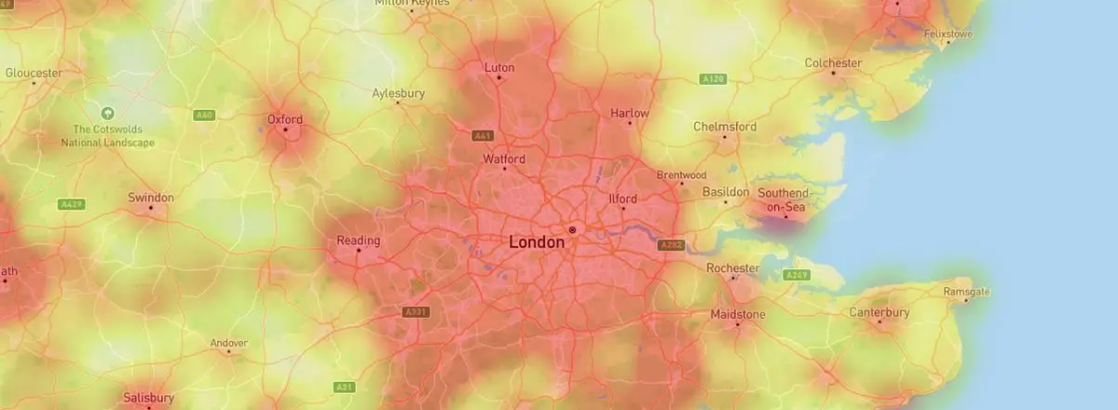
Source: Environet UK
Are you in a hotspot?
- We offer RICS Level 2 or 3 Home Surveys.
- National coverage with local RICS surveyors.
- Same week availability.
- Reports delivered within 5 working days.

I'm in a hotspot - should I run?
If the map is lighting up around your street, don't panic. A hotspot doesn't mean Japanese knotweed is present in every property in the area, but you'll want to keep your eyes peeled during the viewing.
What should you look for?
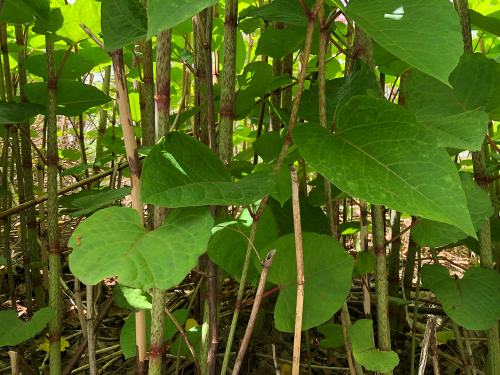
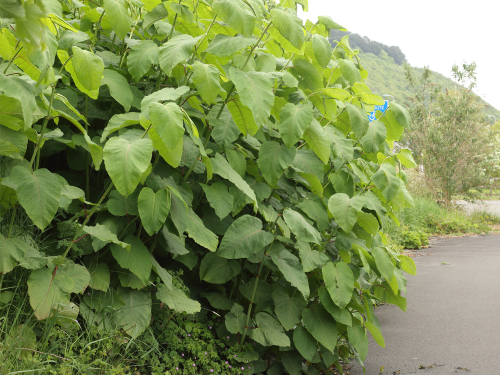
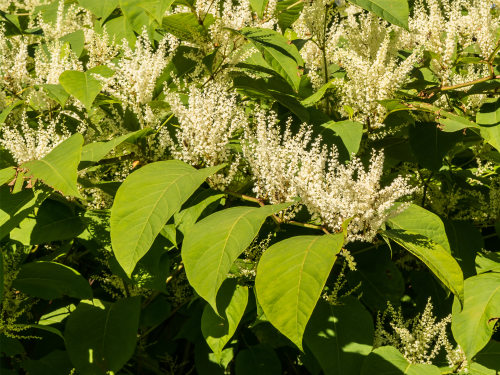
If it’s summer, look for heart-shaped leaves and reddish, bamboo-like stems. If it’s winter, look for brittle, brown canes. But remember, even if you don't see it, it doesn't mean it isn't nearby.
If you've spotted something suspicious and want to know exactly what the "danger signs" are, check out our visual identification guide here.
Will knotweed kill your mortgage application?
Seeing a cluster of red dots near your potential new home can feel like a dealbreaker, but it’s often just a prompt for better due diligence. In the world of conveyancing, a "hotspot" usually means:
- Lenders will be cautious: Most banks won't lend on a property with knotweed unless there is a professional management plan and a 10-year insurance-backed guarantee in place.
- Your Surveyor needs a heads-up: If you know you're in a high-risk area, you can ensure your RICS surveyor pays extra attention to the boundaries.
If you're worried about how this affects your mortgage specifically, we've broken down the risk of Japanese knotweed in our full guide .
Your next steps
The map tells you where the weed is, but our guide tells you what to do about it. Don't let it scare you off a great house without getting the facts first.
Whether there is a high number of knotweed sightings nearby, or you are worried about the potential risk, you can read our complete guide to buying a house with Japanese knotweed.
Quick links to our guide:
- What are my next steps? - Find out about how knotweed is classified and what your options are.
- What are the seller's legal duties? - Learn about the TA6 form and what happens if a seller "forgets" to mention a sighting.
- How much does removal cost? - Get a realistic idea of treatment prices so you can negotiate the house price fairly.
How to report sightings of Japanese knotweed
You can also report Japanese knotweed in your area directly through the heatmap tool. Simply click the “Add a Sighting” button on the right-hand side of the map and submit the location details.
This heatmap will enable us to build a nationwide picture of the Japanese knotweed problem and help property and legal professionals to assess the risk locally. The site is already well populated, but this is an ongoing project. The more people who report sightings, the more effective it will become.
Source: Nic Seal, Founder and MD of Environet
What does the weed look like?


Andrew Boast FMAAT is a qualified accountant, conveyancing specialist and author with over 25 years of experience in the UK property sector. Since beginning his career in 2000 within established SRA and CLC-regulated conveyancing solicitor firms, Andrew has overseen the legal journeys of more than 75,000 clients.
He is the self-published author of the first-time buyer guide: How to Buy a House Without Killing Anyone, and a frequent contributor to mainstream UK media on legislative updates, property law, first-time buyer guides, conveyancing best practices, and stamp duty changes. Andrew specialises in resolving complex title issues, property conflict disputes, and property tax options, streamlining the enquiry process to reduce transaction times and maintaining a client-friendly focus.

Amanda Ambler is a highly accomplished conveyancing specialist with over 15 years of dedicated experience across residential property law, legal compliance, and practice management. Having held senior roles, including Head of Legal Practice and Head of Conveyancing at established UK law firms, Amanda possesses a profound, hands-on understanding of the technical intricacies of the property market.
As the designated Legal Content Reviewer for SAM Conveyancing, Amanda ensures that every guide, legal update, and resource published meets the absolute highest standards of accuracy, regulatory compliance, and factual integrity. Her rigorous review process guarantees that complex property legislation and industry processes are communicated clearly, transparently, and safely for home buyers and sellers alike.