
Is your new home a concrete build?
Get the property inspected as part of a RICS Home Survey and avoid the risk of a costly leaking tank. We cover the whole of England & Wales.
Our prices start from as little as £375 EXC VAT with bookings from 02/07/2026.

Get a Quote

Illustration of a modern concrete house with large glass windows and flat roofs | SAM Conveyancing's guide to buying a concrete house

Buying a Concrete House: Mortgages, PRC Defects and Conveyancing Tips

Last Updated: 10/06/2026
3,668
19 min read

If you are eyeing up a concrete house, you are stepping into a complex legal and financial landscape. In the UK property market, a concrete house is classified as non-standard construction. Falling blindly in love with one without doing your due diligence can lead to your mortgage being rejected, your building insurance being denied, or leaving you with an unsellable home.

However, you do not have to walk away from the deal. By understanding the strict legal frameworks, securing the right structural guarantees, and deploying the correct RICS surveys, you can safely navigate the purchase and unlock an incredible, affordable investment.

Concrete house construction: Systems and post-war methods

A concrete house is a residential property where the load-bearing walls are constructed from concrete rather than using two primary methods:

  • Pre-cast reinforced concrete (PRC): Factory-made, dense, and heavily-weighted concrete foundation.
  • In-situ poured concrete: Liquid concrete poured directly into temporary timber or steel moulds (known as formwork or shuttering) built on-site around an internal grid of steel reinforcing bars.
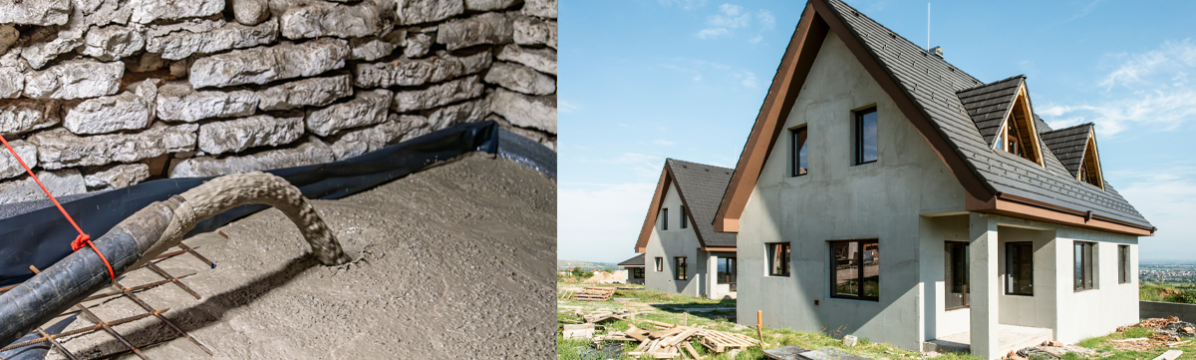
A concrete house being constructed

The Housing Act 1985

Under Section 528 (1) and (2) of the Housing Act 1985, the government officially designated over 30 specific types of prefabricated concrete houses, including Wates, Airey, Cornish, Woolaway, and Reema designs, as inherently defective. This statutory declaration means that by law, these properties are considered structurally flawed due to the rapid degradation of their materials.

Critical risk factors: Mortgages, insulation, and structural integrity

As a buyer, identifying whether a property is a concrete house dictates your entire financing, legal, and insurance strategy. Mistaking a concrete property for a standard brick home carries severe consequences:

  • The mortgage valuation trap: You might secure a standard Mortgage in Principle based purely on your income. However, during the formal purchase process, the lender will instruct a desk valuation or physical valuation survey. The moment the valuer identifies a non-standard concrete build, they assess it against strict risk criteria. If it fails, they will flag the property as unsuitable security, instantly revoking your mortgage offer.
  • High-street mortgage refusal and LTV drops: Mainstream high-street lenders view unremediated concrete houses as high-risk liabilities. Even if a specialist lender agrees to offer a mortgage on a repaired concrete home, they will drastically adjust the loan terms. While a standard brick home allows for a 5% to 10% deposit, a concrete house valuation often forces a drop in the maximum Loan-to-Value (LTV) down to 75% or even 60%, requiring you to find a massive cash deposit to bridge the gap.
  • Extreme thermal bridging: Unlike modern cavity-wall brick homes, older concrete panels offer terrible thermal insulation. Without specialised external wall insulation, these homes suffer from severe cold bridging, leading to heavy internal condensation and toxic black mould.
  • Reinforcement degradation (carbonation): Unlike brick, unsealed concrete is highly porous. It absorbs atmospheric moisture and carbon dioxide over decades, leading to a chemical process called carbonation. Once moisture penetrates the core, it triggers rust on the internal steel. As the steel corrodes, it expands up to three times its original size, fracturing the concrete framework from within.

How mortgage valuers catergorise concrete properties

When a surveyor conducts a mortgage valuation on a concrete home, they categorise the property into one of three distinct risk brackets that dictate if a bank will lend:

  • Category A: The property type is well-established, structurally sound, and mortgageable in its original, un-remediated condition (e.g., certain Laing Easiform or Wimpey No-Fines builds).
  • Category B: The property is acceptable to lenders only following an approved, government-licensed scheme of structural repair backed by a valid PRC Certificate.
  • Category C: The lender rules the property inherently defective, high-risk, and completely unmortgageable.

The 4-step legal and conveyancing path to buying a concrete home

The conveyancing and legal process for a concrete house requires a rigorous, multi-step validation path that differs significantly from a standard transaction.

1

Idenitfy the exact concrete house type

Before making an offer, review the estate agent listing or ask the seller to confirm the exact architectural system name (e.g., Airey, Cornish, Reema).

2

Verify the PRC Certificate via your solicitor

During the conveyancing search phase, your solicitor must check the property deeds for a formal PRC Certificate of Structural Repair. This certificate confirms that the house has undergone a licensed, government-approved repair scheme in which concrete panels were removed and replaced with a traditional brick skin.

3

Instruct a RICS Level 3 Building Survey

Commission an experienced surveyor to perform an intrusive structural assessment. If the property is located in Cornwall or Devon, you must also order a specialised Mundic Block Test to ensure the aggregate isn't degrading into dust due to historic mining waste components.

4

Source a specialist non-standard lender

Provide the RICS report and PRC Certificate to a specialist mortgage broker to target non-standard construction mortgage lenders who explicitly accept repaired concrete homes.

Budgeting for specialist surveys and concrete material tests

Because a concrete house is a non-standard construction, a standard RICS Level 2 HomeBuyers Report is completely inadequate because it is purely visual and non-intrusive. You must budget for deeper, structural investigations.

Expert Tip: Avoid a hidden financial trap

If you are buying a flat within a concrete high-rise or low-rise block, you face a hidden financial trap: The Section 20 Notice. In the 1970s, High Alumina Cement (HAC) was banned due to sudden structural collapses, so if a building is found to contain HAC or modern Reinforced Autoclaved Aerated Concrete (RAAC), the freeholder is legally obligated to carry out remediation works. Under a Section 20 leasehold consultation, the freeholder can pass those structural remediation costs directly to leaseholders. A seemingly cheap £120,000 flat can instantly come with a mandatory £40,000 service charge bill for structural concrete repairs. Always have your solicitor demand the full block testing history from the freeholder.

">Andrew Boast FMAAT

CEO of SAM Conveyancing

Survey/test type
Average cost
Strategic purpose and necessity

RICS Level 3 Building Survey

£600 – £1,200+

Evaluates overall structural integrity, identifies internal reinforcement rust, and checks for historic structural movement.

Mundic block core drilling

£400 – £800

Mandatory in the South West. Drills core samples to analyse if mining waste aggregate is causing structural rot.

Intrusive engineer inspection

£500 – £1,500

Required if the RICS surveyor finds internal concrete cracking and needs to inspect the core reinforcement framework directly.

How long does purchasing a concrete home take?


A concrete house is classified as being of non-standard construction (or non-traditional construction), and if you are looking to buy - or sell - one, you need to be aware that this has implications for mortgages, insurance and even your home buyers survey.

This article examines:


We also include advice from two of our most senior RICS surveyors, Nigel Smith FRICS and Guy Mattinson MRICS regarding variously the experience of your surveyor and issues related to one particular type of concrete, commonly found in concrete flats.

Looking to buy a Concrete Build house? You must get a Building Survey from an experienced RICS surveyor

If you already have a mortgage in place, neither you nor your lender might realise that the property you want to buy is made of concrete. When this fact comes to light, your lender might refuse to lend and you might find it impossible to get buildings insurance.

For peace of mind, once you know the house is built from concrete, you should get a Building Survey from one of our expert RICS surveyors who have years of experience in surveying concrete property.

Please note, this service is offered subject to us having an appropriately qualified RICS Surveyor operating in the postcode area of the property you'd like to be surveyed.

Get a Survey Quote
* Concrete building specialists - RICS regulated - same week availability


  • 1

    What's the difference between a house built with concrete and a brick house?

In the UK, brick-built houses are regarded as being of standard construction or traditional construction and the vast majority of houses are built using brick.

>Builders lay a concrete foundation and build walls on top of this using layers of bricks which have mortar in between them. Floors are mainly constructed from wood, as are internal roof structures.

>Concrete building is a comparatively more recent phenomenon with concrete properties first being built in large numbers in the 20th century.

The concrete is either made on site, with internal steel rods providing the internal support in walls after which concrete is poured in moulds around the steel or prefabricated reinforced concrete (PRC, also known as precast concrete) panels (whether walls or floors or roof structures) are made off-site at a factory then assembled at the development site, in both cases on top of concrete foundations.

  • 2

    Concrete vs brick - Pros and Cons

We'll tackle the 'cons' first because these matters are the reasons for problems with mortgageability of some concrete builds (discussed below) and getting building insurance for them. They also illustrate why, if you're a prospective buyer, you should always get a RICS home buyers survey before buying and, if you know that the property is made from concrete, you should get a Building Survey.

Cons

  • Some concrete builds, particularly those which were built prior to the 1980s (and particularly those which were built in the immediate post-war period) are known to suffer from their panels deteriorating relatively rapidly, particularly if the panels are compromised by, for example, water erosion.
  • Defects can be more difficult to spot in concrete builds - unlike say subsidence and rising damp in brick-built houses - this is one of the areas where an experienced RICS surveyor can be worth their weight in gold.
  • They are regarded as being of non-standard construction therefore when it is known that a building is made of concrete, you need to get a Building Survey rather than a HomeBuyers Report because they suit the former survey's scope rather than the latter's albeit that a Building Survey costs more than a HomeBuyers Report.
  • You may not be able to remove walls or alter the structure of a concrete built house or flat and you should always consult a structural engineer before considering doing so. You also have to use a strong drill if you want to, for example, put up pictures on the walls but any work like this might encourage faster erosion of the materials. Additionally, with older concrete properties, you are restricted to running electrical wiring via surface runs.
  • Even a Building Survey - which is a purely visual, non-intrusive inspection, might not provide evidence of structural problems as there's no way of knowing if the steel in the core has been affected. For this reason, many surveyors might recommend a further intrusive inspection to provide a better insight into how sound the structure is, because they would not wish to give a 'green light' to a building which might suffer problems further down the line. Following from this, there is no reason why a vendor has to agree to such an intrusive inspection, although they might wish to in order to for a possible sale to eventually go ahead.

What is the nature of the deterioration of concrete panels?

This is something that became particularly apparent since the advent of Right to Buy in the 1980s, when many people opted to buy their council houses and flats and many concrete homes were checked in regards to their structural state of repair.

Over time, water can work its way into the panels via slow erosion or faults in the concrete. It not only weakens the concrete itself but when it reaches the reinforcing steel cables at the cores of the panels it causes these not only to rust (therefore they weaken considerably) but also, because of the rust, to expand up to 3 times in size which can devastate the whole structure of a panel.

This effect is more marked and more rapid the nearer that the steel reinforcing cables are to the sides of the concrete panels. Into the bargain, poor quality steel, if originally chosen, is more likely to suffer from metal fatigue over the decades since a property was constructed.

Pros

  • Concrete panels, compared to brick-built walls, are generally lighter weight and, if well-built, can be harder wearing. Additionally they are more fireproof and waterproof (they can provide a barrier to water entering a property) and they are excellent sound insulators.
  • Concrete built houses and flats are often cheaper to heat than brick-built houses, being cool in summer and warm in winter. They also don't suffer from particular parasites such as woodworm!
  • They can be cheaper to buy and are often applicable for government insulation grants. Additionally, you can find that if they are maintained properly or necessary repairs are carried out, you might make a considerable profit on resale.
  • 3

    Can you get a mortgage on a concrete property?

Concrete builds are often regarded as the province of cash buyers only although depending on the particular type and state of repair of an individual property, a lender might decide to offer you a mortgage to buy one.

However even if you're a cash buyer you should gain as much knowledge as you can about any concrete build you're looking to buy in order to increase your chances of resale and potentially making a profit when you do.

You should never assume that you can get a mortgage on a concrete property. This is because lenders, a number of whom 'got burnt' from previously lending to people who bought defective examples, have become very restricted about which types of concrete property they will grant mortgages to buy and some will not grant mortgages on them at all.

Always get a survey before bidding for a property at auction!

Concrete builds present a particular hazard when they are sold at auction. A prospective buyer - particularly one who hasn't had a proper survey/inspection carried out - might be unaware that a house is made of concrete but reliant on a mortgage to complete on a successful bid.

Their lender on finding out the fact of the concrete build, can 'pull the rug' from under them - in theory jeopardising their deposit as well.

Over time, mortgage lenders have generally gone towards defining concrete houses as either A), B) or C), where:

  • A means a property in question is mortgageable in its original condition; or
  • B means it is mortgageable 'following an approved scheme of repair'; or
  • C which means the lenders have ruled it defective and unmortgageable.

In theory, if you knew in advance of applying for a mortgage that the house you wanted to buy was made of concrete and you could find out its type, then you could help yourself by hiring a mortgage broker to find you a lender who is more likely to grant you a mortgage for the property.

However in practice you'll have secured your mortgage in principle before you've selected your property. You might then select a concrete build - without knowing this - to put in a bid for and, if this is accepted, your lender's valuation survey should, but may not, reveal the fact of the concrete structure

Scenario 1: lender's valuation discovers that your property is a concrete build

Here, your lender will decide on one of Options A), B) or C) above; if they choose B), you'll only be able to proceed if you (or you and the vendor, or the vendor takes the entire cost on themselves) pay out to carry out the required repairs. Obviously for Option C), you'll have to find another property and you'll lose out on any expenses to that point.

Option B is also likely to involve you and/or the vendor having to pay for a surveyor to carry out an intrusive inspection. The challenge here is that a mortgage company might expect the building surveyor to cover their lending - assuming the surveyor passes the building as structurally sound - with their own indemnity: this is likely to make most surveyors very cautious about their findings.

If there is any evidence at all that the building might suffer problems further down the line, surveyors are likely to err on the side of ruling the structure as potentially unsound because 1) their own reputations are on the line and 2) they won't want to have pay for any ensuing claims out of their own insurances. 

Scenario 2: lender's valuation doesn't uncover the fact of the concrete build

You may complete (all other things being equal) however as/when/if the fact of the concrete build comes out, you might find it very difficult to remortgage with another company, particularly if the build type is known to suffer from defects. Your buildings insurance is likely to become invalid, necessitating a new policy with a much higher premium (or you might be refused cover) and you're likely to have much greater challenges when you come to sell up.

  • 4

    What are the different types of houses built with concrete?

Concrete-house-RICS-survey.png

As referred to previously, concrete properties are either cast on-site or prefabricated/precast. There are very many types representing many different manufacturers. Some of the names of the building companies and types include: Airey, Bison, Cornish, Corvus, Cruden, Dorran, Kencast, Wimpey No Fines, among others.

You should consult the Building Research Establishment Bookshop (click to visit the BRE Bookshop's website) if you're trying to find out more about a particular type of concrete home.

Your local building control authority (normally a department within your local council) should be able to provide you with some information about concrete flats within concrete flat blocks which are located within its geographical area.

  • 5

    Why should you always get a Building Survey for a Concrete Build house?

You are always advised to get a RICS home buyers survey (click to find out more about this), whether a RICS HomeBuyers Report or a RICS Building Survey, when you're looking to buy a property.

In the case of a concrete build house, if you know that it is made of concrete or this fact becomes apparent, then you should get a RICS Building Survey, as stated above, because of the wider scope that this type of survey has regarding non-standard properties.

Concrete Building RICS survey? Experience counts

You should always look to hire a RICS surveyor with great experience in surveying concrete build houses because they are more likely to know how to spot the particular defects which can afflict these types of property. Nigel Smith FRICS, one of SAM Conveyancing's senior RICS surveyors said, on this subject:

"A RICS surveyor with experience in surveying concrete built houses can ensure that renovations have been done well within the terms and conditions of the building survey – each type of concrete build property is different and has a standard procedure for repair. If you're looking to buy using a mortgage this has further implications: your lender can impose particular conditions for any lending it's prepared to grant, depending on the individual type of concrete property in question.

"This is why the experience of the surveyor is particularly important: the more concrete builds they have surveyed previously, the more they are likely to know about what particular repairs and renovations are involved."

As stated previously, you should prepare yourself for a surveyor advising you to arrange for a further intrusive survey to better calculate the safety of the build. They might not feel confident about pronouncing the concrete house to be structurally sound, particularly given that a Building Survey, although comprehensive, is a purely visual inspection.

The vendor would have to agree to this; obviously they might do so if they want the possibility of a sale to you to continue, and the matter of who pays for the further survey has to be settled between yourself and the seller too.

Finally, you should be prepared for the surveyor who carries out the intrusive survey to err on the side of caution as well, not least because any lender is likely to take legal action in the future against that surveyor in the event that they passed the building and it subsequently decayed structurally.

  • 6

    Concrete flats and issues with high alumina cement (HAC)

Guy Mattinson MRICS, one our most experienced RICS surveyors, also described issues related to the construction of concrete flats as opposed to houses. He told us:

"Concrete became a popular construction material after the second world war when there was a large demand for new housing and a shortage of traditional materials and labour. It is commonly found in post-war blocks of local authority flats (both high rise and low rise).

High Alumina Content (HAC)

"Two types of cement were used and one type – high alumina cement or HAC was banned in the 1970s after a number of buildings collapsed. It is difficult for a surveyor to identify the type of cement used and if a survey describes the building as being of cast in-situ or pre-cast concrete construction, it is advisable to ask the freeholder whether the building has been tested for HAC as this will limited the number of mortgage providers willing to lend against it. This will in turn limit the marketability of the property.

"Concrete cancer – where steel reinforcements to concrete corrode and expand, causing the concrete to “pop" can usually be identified during the survey process. Repairs to blocks can be significant, particularly in high rise blocks."

The surveyor therefore reiterated that it is always best practice, if there is suspicion that a flat you're thinking of buying is made of concrete, to get a RICS survey, because they might uncover concrete cancer and alert you to question your freeholder additionally about the presence of HAC.

The rule of thumb overall is if you're considering buying a property and you have any suspicions that it's made of non-traditional materials, you should always seek appropriate professional advice from an experienced RICS surveyor.

Looking to buy a Concrete Build house? You must get a Building Survey from an experienced RICS surveyor

If you already have a mortgage in place, neither you nor your lender might realise that the property you want to buy is made of concrete. When this fact comes to light, your lender might refuse to lend and you might find it impossible to get buildings insurance.

For peace of mind, once you know the house is built from concrete, you should get a Building Survey from one of our expert RICS surveyors who have years of experience in surveying houses built with concrete.

Get a Survey Quote
* Concrete building specialists - RICS regulated - same week availability
Andrew Boast of Sam Conveyancing
Written by:

Andrew Boast FMAAT is a qualified accountant, conveyancing specialist and author with over 25 years of experience in the UK property sector. Since beginning his career in 2000 within established SRA and CLC-regulated conveyancing solicitor firms, Andrew has overseen the legal journeys of more than 75,000 clients.

He is the self-published author of the first-time buyer guide: How to Buy a House Without Killing Anyone, and a frequent contributor to mainstream UK media on legislative updates, property law, first-time buyer guides, conveyancing best practices, and stamp duty changes. Andrew specialises in resolving complex title issues, property conflict disputes, and property tax options, streamlining the enquiry process to reduce transaction times and maintaining a client-friendly focus.

Amanda Ambler Legal Content Reviewer & Senior Conveyancing Consultant
Reviewed by:

Amanda Ambler is a highly accomplished conveyancing specialist with over 15 years of dedicated experience across residential property law, legal compliance, and practice management. Having held senior roles, including Head of Legal Practice and Head of Conveyancing at established UK law firms, Amanda possesses a profound, hands-on understanding of the technical intricacies of the property market.

As the designated Legal Content Reviewer for SAM Conveyancing, Amanda ensures that every guide, legal update, and resource published meets the absolute highest standards of accuracy, regulatory compliance, and factual integrity. Her rigorous review process guarantees that complex property legislation and industry processes are communicated clearly, transparently, and safely for home buyers and sellers alike.



People also searched for

Buying a Bungalow

Buying a Bungalow

23/10/2017
754
Steel Frame House

Steel Frame House

14/05/2019
5,622
Timber Frame Houses

Timber Frame Houses

06/05/2019
10,299