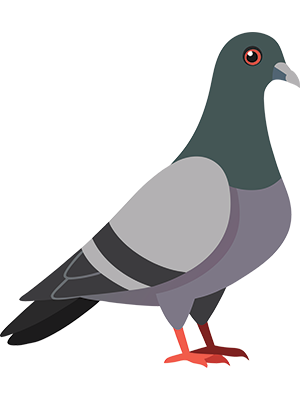
Is Pigeon Guano Structural Damage? A Complete Guide

Walking into a prospective new home, it’s easy to fall in love. But overlooking a cluster of grey feathers or a musty odor in the eaves could lock you into a financial catastrophe.
While pigeon guano may look like only a cosmetic nuisance, it is actually a highly corrosive, heavy, and toxic substance that can quietly eat through your house's structure, rot its timbers, and compromise its entire drainage system. Left unchecked, you risk inheriting a legal biological hazard that could leave you facing thousands of pounds in decontamination costs before you can even unpack.
Fortunately, an RICS Home Survey will unmask these hidden structural threats before you exchange contracts. This guide explores how pigeon guano can wreak havoc on a property and how you can protect your investment.
- Legal biohazard: Pigeon guano is classified as hazardous waste under COSHH regulation, carrying over 60 transmissible pathogens that can halt building work.
- Severe structural damage: Highly acidic (pH 3.5–4.5) droppings eat through masonry, rot timber joists, corrode solar wiring, and compromise roof drainage.
- Unmasked by RICS surveys: A Level 2 or Level 3 RICS Home Survey flags bird infestation risks, structural rot, and flue blockages under official condition ratings.
- Expensive remediation: Professional COSHH-compliant removal and proofing ranges from £180 for minor areas up to £8,000+ for severe, multi-level structural infestations.
- Leverage for renegotiation: Short, scannable explanation here.
- Strong bold point: Identification of guano damage allows buyers to secure specialist quotes and negotiate price reductions before exchanging contracts.
As seen in Homebuilding & Renovating
"Under the Control of Substances Hazardous to Health Regulations 2002 (COSHH), construction workers may be at risk from harmful micro-organisms during property renovation. Consequently, they are within their rights to refuse to undertake any work until the pigeon guano has been safely removed. We have seen projects halted because contamination was found beneath insulation, in roof spaces, or around ventilation systems."
— Andrew Boast FMAAT, CEO of SAM Conveyancing
What is pigeon guano?
It is the accumulated waste and droppings left behind by feral pigeons. Birds are hardwired to seek high, sheltered vantage points, so they naturally colonise on rooftops, balconies, gutters, and unprotected loft spaces across the UK.
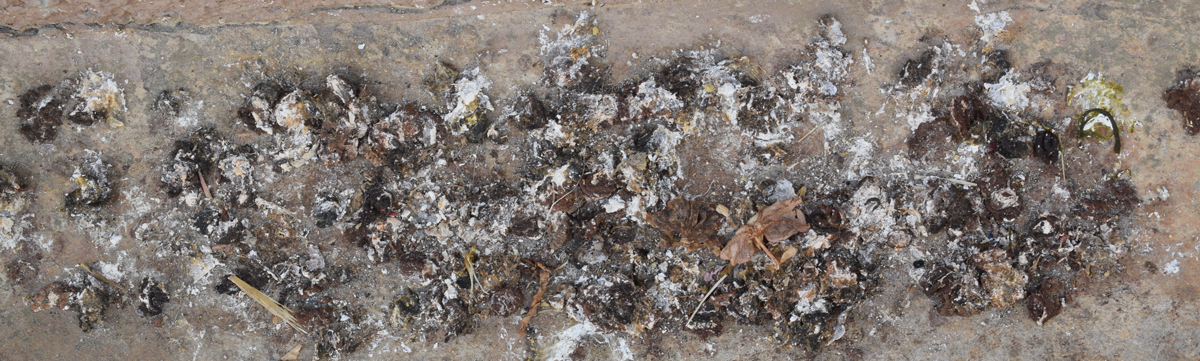
Over time, their dropping combine with nesting materials, feathers, and carcasses, forming dense, layered mounds that bond to the building fabrics.
- We offer RICS Level 2 or 3 Home Surveys.
- National coverage with local RICS surveyors.
- Same week availability.
- Reports delivered within 5 working days.

How does guano damage a property?
The true danger of pigeon guano lies in its chemical composition and physical weight. It is legally classified as an official biohazard under the UK’s COSHH (Control of Substances Hazardous to Health) regulations and can harbour more than 60 transmissible pathogens.
The structural impact can be equally as stark:
- Extreme acidity: Pigeon guano contains high concentrations of uric acid, reaching pH levels of 3.5 to 4.5
- Weight hazard: An individual urban pigeon produces around 11 to 12kg of droppings per year. If left unchecked, a nesting flock can deposit hundreds of kilograms of debris, introducing a massive, unintended dead load onto structural ceiling joists.
The hidden risks for prospective home buyers
As a home buyer, you need to recognise the hidden risks of guano, as its presence can, in severe cases, completely alter a property's structural integrity and valuation. If you buy a house with an active or historic infestation, you often assume responsibility for any concealed damage.
The acidic nature of guano is particularly destructive:
- Corrosive action: Acid can actively etch into stone and masonry, leading to degradation that can be expensive to remediate.
- Material degradation: It aggressively compromises modern roofing felts and strips protective coatings from metal flashings.
- Water infiltration: Once these protective barriers are compromised, moisture can penetrate the home's framework, potentially leading to rot and further structural failure.
Failing to identify and address these issues early can transform a routine cleanup into a major spend.
How can guano affect my solar panels?
Guano poses an entirely different economic and safety threat to properties with solar installations. Pigeons are drawn to sheltered, warm gaps beneath solar arrays, making them prime nesting sites and there are some things worth looking out for:
- Hotspot effect: As guano is dense and completely opaque, it blocks the sunlight reaching the photovoltaic cells. This doesn't just cause a standard drop in energy efficiency - often exceeding 30% - but it can also cause localised overheating known as a hotspot.
- Wiring and framework corrosion: The uric acid (pH 3.5 to 4.5) actively attacks the anodised aluminium framing, mounting brackets, and exposed wiring harnesses beneath the array. This accelerates galvanic corrosion, risking electrical shorts and inverter faults.
- Fire risks: The accumulation of dry nesting debris, twigs and feathers, packed directly against damaged wiring and overheating solar cells, creates a distinct fire hazard on the roof plane.
Why is a RICS Home Survey useful?
When you commission a RICS Home Survey Level 2 or Level 3, the surveyor will check the structure for any damage. They utilise the mandatory RICS traffic light condition rating system to evaluate the severity of the issue.
The surveyor will systematically inspect and log bird damage across several standard sections of the report:
RICS survey section | Area inspected | Damage logged |
Section E: Outside the property | E2: Roof coverings | Notes on lead flashings eaten through by acid, degraded roofing felt, or displaced tiles. |
E3: Rainwater pipes & gutters | Identification of gutters completely clogged by guano and nests, leading to penetrative damp. | |
E4: Main walls | Acid staining and chemical etching of brickwork, stone, or external rendering. | |
Section F: Inside the property | F1: Roof structure | Detection of foul odours, rot on structural timber trusses, and contaminated, useless loft insulation. |
Section G: Services | G5: Other services | Nesting material or guano blocking external balanced boiler flues or extraction vents, posing a severe carbon monoxide risk. |
Section J: Risks | J3: Risks to people | Heavy accumulations explicitly flagged as a critical biological safety hazard due to respiratory risks. |
What are the condition ratings?
The surveyor will assign one of the three RICS condition ratings to the issue:
- Condition rating: No current repair
- Condition rating 2: Defects that need repairing, not serious or urgent
- Condition rating 3: Serious defects requiring urgent repair or specialist investigation
How is it safely removed?
Cleaning away pigeon guano requires a specialist; it's not a weekend DIY job. To remove the guano, you need a COSHH-regulated cleaning firm. It requires pre-treating with biocides, high-efficiency particulate air (HEPA) vacuuming, and full PPE. Because it is legally classified as hazardous waste, any heavy accumulation must be handled by a licensed professional.
Pigeon guano is classified as a controlled waste under UK environmental law. Under section 33 of the Environmental Protection Act 1990:
A person shall not deposit controlled waste, or knowingly cause or knowingly permit controlled waste to be deposited in or on any land unless an environmental permit authorising the deposit is in force and the deposit is in accordance with the permit.
Source: Environmental Protection Act 1990
Therefore, if someone clears an accumulation of pigeon guano and fly-tips it, dumps it in a standard skip without permission, or disposes of it improperly, they are breaching section 33.
How long does it take to remove?
A standard extraction and decontamination project usually takes between 1 and 2 days to complete, depending on the volume of accumulated waste.
How much does it cost to fix?
Costs vary depending on scale, accessibility, and the extent of structural damage. For example, a small, localised area that is easily accessible will cost in the region of £180-£350 EXC VAT. For severe cases where access requires a cherry picker or scaffolding, the cost could range from £2,000 to £8,000+ EXC VAT.
If the guano issue involves solar panels, clearing the nesting material, biocide washing the space beneath the array, and installing specialised mesh/skirting to prevent the birds' return, typically adds an extra £450 to £1,500 to the bill, depending on the number of panels.
Contamination Scale | Typical Property Area | Average Cost Range (UK) |
|---|---|---|
| Small / Localised | External balconies, window ledges, or single gutters | £180 – £350 |
| Medium Scale | 20–50 m² areas, light loft fouling, gutter runs | £400 – £1,200 |
| Large / Severe (CR3) | 100+ m² deep loft accumulations, structural timber rot | £1,500 – £8,000+ |
London and the South East typically see a 15% to 20% premium on these rates. If scaffolding or specialist access equipment is required to reach high eaves, expect an extra £20 to £35 per square metre.
Case study: The £15,000 open-door catastrophe
A case in East London shows how, in particularly serious cases, a bird infestation can spiral into a financial nightmare. Following a tenant eviction in East London, a patio door to a high-rise flat was accidentally left ajar. Over the course of just four weeks, a local flock of approximately 40 feral pigeons discovered the open entrance and completely took over the two-bedroom property.
The birds left every visible surface of the home covered in thick, toxic layers of bird guano. The damage was so severe that a surveyor from the London Network for Pest Solutions had to inspect the site wearing a full protective suit and an air-purifying respirator, due to the extreme health hazard and overpowering stench. The flat had to be completely gutted, cleaned, redecorated, and refurnished, leaving the landlord with a remediation and repair bill of £15,000 and a month of lost rental income.
Expert Tip: Look out for a BICSs or RSPH Level 2 certification
If you are racing against a mortgage offer deadline and need the issue resolved fast, check if the specialist company you or the seller hires holds a BICSc (British Institute of Cleaning Science) or RSPH Level 2 certification. These accredited firms can legally self-certify the safety of the workspace and provide instant Waste Transfer Notes and Completion Certificates, allowing your conveyancing solicitor to satisfy mortgage lenders without waiting weeks for council health inspections.
CEO of SAM Conveyancing
The buyer's post-survey checklist
If your home survey has highlighted a pigeon guano issue, follow these steps to protect your health and your bank balance:
You need to:
- Review the RICS survey sections: Check sections E, F, G, and J to see exactly where the birds have breached.
- Verify the condition rating: If it is a Condition Rating 3, treat it as an urgent structural and health warning.
- Inspect the solar array: If the property has solar panels, ensure a RICS surveyor or qualified Microgeneration Certification Scheme technician verifies that the underside of the panels is free from nests and the harnesses have not been corroded by uric acid.
- Instruct a structural engineer: If timbers or masonry are etched, ensure the engineer verifies that the framing remains safe.
- Get a quote from a COSHH-compliant cleaner: Secure a firm quote from an environmental cleaning specialist.
- Negotiate the purchase price: Present these professional quotes to the vendor to deduct the repair costs from your final purchase price.
- Secure the property: Ensure proof of professional birdproofing (such as netting or spikes) is included so the flock doesn't return on the day you move in.
Get a RICS survey
Don’t let a hidden biohazard derail your move. Protect your investment and your health by getting a RICS Home Survey to uncover hidden structural threats before you exchange.
Frequently asked questions about pigeon guano

Andrew Boast FMAAT is a qualified accountant, conveyancing specialist and author with over 25 years of experience in the UK property sector. Since beginning his career in 2000 within established SRA and CLC-regulated conveyancing solicitor firms, Andrew has overseen the legal journeys of more than 75,000 clients.
He is the self-published author of the first-time buyer guide: How to Buy a House Without Killing Anyone, and a frequent contributor to mainstream UK media on legislative updates, property law, first-time buyer guides, conveyancing best practices, and stamp duty changes. Andrew specialises in resolving complex title issues, property conflict disputes, and property tax options, streamlining the enquiry process to reduce transaction times and maintaining a client-friendly focus.

Amanda Ambler is a highly accomplished conveyancing specialist with over 15 years of dedicated experience across residential property law, legal compliance, and practice management. Having held senior roles, including Head of Legal Practice and Head of Conveyancing at established UK law firms, Amanda possesses a profound, hands-on understanding of the technical intricacies of the property market.
As the designated Legal Content Reviewer for SAM Conveyancing, Amanda ensures that every guide, legal update, and resource published meets the absolute highest standards of accuracy, regulatory compliance, and factual integrity. Her rigorous review process guarantees that complex property legislation and industry processes are communicated clearly, transparently, and safely for home buyers and sellers alike.