Boundary Disputes and How To Solve Them

A property boundary dispute arises when neighbours disagree about where one property ends and another begins. The disagreement might concern the position of a fence, ownership of a wall, or even a hedge that appears to encroach on neighbouring land.
Working out where a boundary lies is not always straightforward. HM Land Registry title plans usually show the general boundaries of a property rather than the exact legal boundary, so the position of a fence or the red edging on a plan may not settle the question on its own.
If you are dealing with a boundary dispute with your neighbour, there are steps you can take to investigate the issue and explore a resolution. A dispute can also affect a property sale or purchase, particularly if it leads to additional enquiries, professional investigations or disagreement about what is being sold.
This guide explains how to find information about your property boundary, how to resolve a disagreement and what to consider if you are buying or selling a home.
Got a boundary dispute question? Explore our related guides to find out more, including whether your neighbour can build a shed or pergola against your fence and whether your neighbour can paint your fence.
- Start with the evidence: Check your title register, title plan, original deeds and any documents referring to the boundary before assuming a fence or hedge marks the legal boundary.
- Do not rely on the red edging alone: HM Land Registry title plans usually show general boundaries, not the exact legal line between neighbouring properties.
- Try to resolve disagreements proportionately: Gathering evidence, discussing the issue calmly and obtaining appropriate professional advice may help you reach an agreement without formal proceedings.
- Understand the available options: A boundary agreement is great if neighbours agree, but alternatively, you can look at a determined-boundary application if a more formal procedure is required.
- Address the issue during a property transaction: If you are selling or buying a home with a known boundary concern, tell your conveyancer so they can advise on the information, enquiries and documents needed.
What is a property boundary dispute?
A property boundary dispute can concern the position of the legal boundary, ownership of a boundary feature, responsibility for its maintenance or whether something has crossed onto another person's land. For example, two neighbours might disagree about whether a fence should stand where it currently is, whether a wall belongs to one property or both, or whether a proposed extension would cross the boundary.
The difference between a physical boundary and a legal boundary
A physical boundary is a visible feature separating properties. Examples include:
- A fence, wall or hedge.
- A ditch, bank or line of trees.
- The edge of a driveway, path or garden.
A legal boundary is the line separating the land legally belonging to one property from the land belonging to another. It is an invisible line and does not necessarily follow the centre, edge or face of a physical boundary feature. For example, a fence might stand entirely on one owner's land, sit on the boundary itself, or be installed in the wrong position. Its existence does not, by itself, prove where the legal boundary lies.
It is also important to distinguish the location of a boundary from responsibility for maintaining a fence or wall. Even if the legal boundary can be established, the documents may need to be checked separately to determine who is responsible for a particular structure.
HM Land Registry explains these distinctions in its guidance on property boundaries and boundary disputes.
How do you find out where your property boundary is?
If you are unsure where your property ends, start by gathering the available documents and comparing them with the physical features on the ground. Do not assume that the fence is in the correct position simply because it has been there for many years.
1. Check your HM Land Registry title register and title plan
If your property is registered, you can obtain a copy of its title register and title plan through HM Land Registry's property information service.
The title register contains important legal information about the property. The title plan shows the registered extent of the land using a map based on Ordnance Survey mapping, usually with the registered land outlined in red.
However, the red edging normally indicates the general boundary, not the exact legal line. It should not be treated as a precise measurement of the land or used on its own to establish that a fence, wall or hedge is in the wrong position. HM Land Registry also warns against this, and title plans should be considered alongside the register, relevant deeds and other evidence.
Read the official guidance on how to read a title plan for more information.
2. Look for original deeds and historic documents
Older conveyances, transfer documents and plans may contain useful descriptions of the property or its boundaries. The register may also refer to documents that HM Land Registry has retained, for example, by stating that a copy of a deed is filed.
Check any documents you received when you bought the property and ask your conveyancer whether further documents are available. Historic photographs, plans, and records of previous building work may also help establish how the boundary was understood or where physical features once stood.
These documents do not automatically settle a dispute. Their significance depends on what they say, how clearly they identify the land and how they relate to other available evidence.
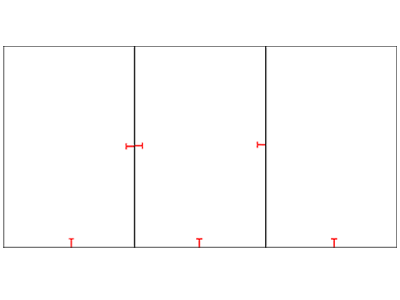
3. Understand T marks and H marks
Some property deeds or plans use T-shaped marks to indicate boundary-related responsibilities. An H-shaped mark may be used where a boundary feature is treated as shared. However, the marks are not conclusive proof of ownership or maintenance responsibility. Their meaning depends on the plan, deed and context in which they appear. There is no reliable universal rule that every T mark settles ownership or that every H mark creates shared responsibility.
If the documents are unclear, ask your conveyancer to explain the relevant wording and symbols before making assumptions about who owns or must maintain a fence or wall.
4. Consider a professional boundary survey
A chartered land surveyor with suitable boundary-dispute experience may be able to examine the available documents, survey the physical features and prepare a plan or report to assist with investigating the boundary.
The scope of the work matters. A survey showing the current position of a fence is not necessarily the same as an opinion on the legal boundary. The surveyor may need to interpret historical plans and deeds alongside on-site measurements.
If a dispute is already contentious, you may also need advice from a property litigation solicitor about the legal significance of the evidence and the most appropriate next steps.
While it can be useful, a survey is not automatically necessary in every case. The right approach depends on the nature of the disagreement, the documents available and whether the neighbours can reach an agreement.
Our property boundary survey cost starts from £995 Exc VAT.
Included in our Fixed Fee:
- Production of accurate topographical site survey plans.
- Evaluation of available boundary documentation and mapping.
- Digital overlay of boundary mapping onto topographical plan.
- Boundary reports compatible with Civil Procedure Rules part 35 (CPR35).
- RICS Registered Expert Witness for court proceedings.

Expert Tip: You don't need to figure it all out yourself
You do not need to establish the exact legal boundary yourself before seeking advice. If your documents are unclear or your neighbour disagrees with your interpretation, a suitably qualified professional at SAM Conveyancing can help you assess the evidence and decide what to do next.
CEO of SAM Conveyancing
What causes boundary disputes between neighbours?
Boundary disputes can arise for several reasons, particularly where the original property documents do not clearly identify the legal boundary or the physical layout has changed over time.
Disagreements about fences, walls and hedges
A dispute may begin when a neighbour replaces a fence in a different position, removes a hedge or installs a wall that the other owner believes encroaches onto their land. There is no general rule that the fence on the left or right of a property belongs to that owner. The position of fence posts and rails is not a reliable way to establish ownership, either.
Extensions and garden structures
A boundary dispute may arise when a neighbour builds an extension, garage, shed, or other structure close to or allegedly over the legal boundary.
Even where a structure appears to sit entirely on one owner's land, its position, foundations, roof overhang and other features can mean it is over the boundary line.
Unclear property documents or historic changes
Older properties may have deeds with plans that are difficult to interpret or that do not correspond neatly with modern mapping. A fence may also have been moved or replaced by a previous owner without a clear record of what was agreed. Where neighbouring properties have changed hands several times, the current owners may have different understandings of where the boundary lies.
Overhanging structures and vegetation
Overhanging branches, encroaching hedges, roof eaves or other structures may cause disagreements between neighbours. These issues can overlap with boundary disputes, but they do not always require determining the exact legal boundary.
For example, a disagreement about trimming a hedge may be easier to resolve than a dispute over ownership of a strip of land. The appropriate approach depends on the nature of the problem and the rights involved.
How do you resolve a dispute?
The best way to resolve a boundary dispute depends on the evidence, the nature of the disagreement and whether both neighbours are willing to cooperate. Where possible, it is sensible to explore proportionate solutions before starting formal legal proceedings. Boundary disputes can become expensive, particularly when the parties disagree about the evidence or need specialist surveying and legal advice.
Gather the relevant evidence
Start by collecting your title register, title plan, original deeds and any other documents that may help establish the boundary. Take photographs of the physical boundary and record any changes you believe have taken place. Keep copies of relevant correspondence and note when the problem first arose.
A clear record of the issue will help you explain the disagreement to your neighbour or a professional adviser.
Speak to your neighbour where appropriate
If it is safe and appropriate to do so, explain your concerns calmly to your neighbour and ask whether they are willing to review the available evidence with you.
You may discover that the disagreement results from a misunderstanding or that both parties are open to obtaining independent advice. Do not assume that a neighbour is acting deliberately or that your own interpretation is necessarily correct. An initial discussion may help you identify the actual point of disagreement.
While the matter remains unresolved, avoid moving a fence, removing a hedge or carrying out other work that could make the disagreement worse. If there is an urgent safety issue or a risk of damage, obtain appropriate advice about the immediate steps you can take.
Obtain the right professional advice
Different professionals can help with different aspects of a boundary dispute.
- Chartered land surveyor: Can assess the physical boundary, examine measurements and consider the available plans and other evidence.
- Property litigation solicitor: Can advise on your legal position, the strength of your case, possible claims and the options available if the disagreement cannot be resolved informally.
- Conveyancer: Can explain relevant title documents and advise on conveyancing issues where a boundary concern affects a sale or purchase. A conveyancer is not necessarily instructed or qualified to conduct contested property litigation.
- Mediator: Can help the parties discuss their differences and explore a settlement with the assistance of an independent third party.
You may not need all these professionals. The most appropriate starting point will depend on whether you need help interpreting documents, identifying the physical boundary, negotiating a solution or pursuing a legal claim.
Consider a written boundary agreement
If you and your neighbour agree on the position of the legal boundary, a written boundary agreement may help record what has been agreed. The agreement may identify the boundary line, explain which feature marks it and, where appropriate, record arrangements for maintaining a fence, wall or hedge.
A suitable plan may help make the agreement clearer, particularly where the disputed area is small or the boundary does not follow an obvious physical feature.
Professional advice can help establish whether a boundary agreement is appropriate, what it should contain and whether it should be recorded against the relevant registered titles.
An example of a Boundary Agreement
This agreement is made on 15th July 2026 between John Smith of 112 Juniper Avenue, title to which is registered under title number XX12345 and Mary Duggan of 111 Juniper Avenue, London title to which is registered under title number XX67891.
The parties agree that the legal boundary between the land within their respective registered titles and running from the point marked ‘A’ to the point marked ‘B’ on the plan attached is as shown by the red line drawn between those points.
Signed by Land Owner
[Witness (signature, name and address)]
Signed by Neighbouring Land Owner
[Witness (signature, name and address)]
Explore mediation or other dispute resolution options
If direct discussions have not resolved the disagreement, mediation may provide a way forward without immediately starting court or tribunal proceedings. A mediator helps the parties explore possible solutions but does not ordinarily decide who is right. Other options, such as expert determination, may be appropriate in some circumstances, depending on the nature of the dispute and the parties' agreement.
The Boundary Disputes Protocol provides a framework for exchanging information, obtaining relevant evidence and exploring resolution options. It may be useful where informal discussions have failed, and the parties need a more structured approach.
Understand the formal options if the dispute continues
If the neighbours cannot agree, formal legal or Land Registry procedures may need to be considered. One possibility is an application for a determined boundary. This is intended to show the precise boundary line of a registered property more clearly in the Land Registry records.
A determined-boundary application is not the same as asking HM Land Registry to decide a disagreement. The applicant needs evidence supporting the precise boundary claimed, and a suitable plan is generally required. A contested application can lead to further proceedings before the First-tier Tribunal (Property Chamber).
Depending on the circumstances, a dispute may instead require court proceedings. A property litigation solicitor can explain the available legal routes, the evidence required and the potential costs and risks.
Formal action should not be treated as an automatic next step simply because the title plan does not show an exact boundary. Many properties are registered with general boundaries, and a boundary agreement or another proportionate solution may be sufficient.
Consider any effect on a property transaction
If you are buying or selling a property, tell your conveyancer about a known boundary dispute or a concern that may affect the transaction. The conveyancer can help establish what information needs to be provided, what enquiries may be appropriate and whether the issue affects the legal work required before completion.
If you are a buyer, raise concerns about the physical boundary, title documents or any disagreement with your conveyancer as early as possible. If you are a seller, do not assume that a dispute can be ignored because you believe your position is correct.
Can you sell a house with a boundary dispute?
A property can potentially be sold even when a boundary dispute exists. However, the dispute may affect the conveyancing process, the information a buyer needs, and whether the transaction can proceed on the originally expected terms.
What must a seller disclose?
When selling a residential property in England and Wales, the seller will usually complete a TA6 Property Information Form as part of the conveyancing process.
Sellers should answer the questions accurately and in accordance with the applicable form and explanatory notes. If you are unsure how a question applies to your circumstances, ask your conveyancer before submitting your answers. You should not assume that a disagreement does not need to be disclosed simply because you believe the boundary is in the correct position or because the dispute has not resulted in legal proceedings.
How can a boundary dispute affect conveyancing?
A buyer who becomes aware of a boundary dispute may ask for further information before deciding whether to proceed. Their conveyancer may need to raise additional enquiries about the location of the boundary, the nature of the disagreement and any attempts to resolve it.
Depending on the circumstances, the buyer may want to see relevant correspondence, agreements, survey reports or other supporting documents. A mortgage lender may also need to consider the issue if it affects the property being offered as security or raises questions about its title. Whether further investigation or action is required depends on the particular property and the lender's requirements.
These enquiries can add work to the conveyancing process and may delay completion. However, a boundary dispute does not automatically prevent a sale, make a property un-mortgageable, or mean that a buyer will withdraw.
Case study: A boundary dispute between neighbouring cottages
In Miles and Faber v Reid [2025] EWHC 1347 (Ch), the High Court considered a dispute between the owners of two neighbouring cottages in Banbury, Oxfordshire. The owners became involved in a dispute after one couple replaced a fence between their properties. The other couple argued that the new fence crossed onto their land, obstructed their right of way and restricted access to a brick outbuilding they claimed was partly theirs.
The dispute also involved a patio and an oil pipe that had been installed over the right of way. The court considered historic conveyancing documents, old plans, expert survey evidence and physical features to establish the boundary and the extent of the access rights.
The court found that the fence followed the previous fence line, apart from a small section that extended 40cm into the right of way. However, this did not substantially interfere with the neighbours' use of the access route, so the court refused to order the fence to be moved. The outbuilding was found to belong to the owners of the neighbouring cottage, while the patio and oil pipe were found to trespass on their land. The court refused permission to appeal.
What can homeowners learn from this? If you are unsure where your boundary lies, gather the relevant title documents and historic plans before making changes to a fence or other boundary feature. Seeking appropriate professional advice early may help clarify your position and avoid unnecessary escalation.
How much does it cost to resolve a boundary dispute?
There is no fixed cost for resolving a property boundary dispute. The total depends on the complexity of the issue, the amount of evidence available, whether the neighbours cooperate and whether formal proceedings become necessary.
Potential costs may be:
- Document costs: Obtaining title registers, title plans, copies of deeds and other historic documents.
- Surveying costs: A boundary survey or report may cost around £700 to £2,500, depending on the complexity of the dispute, the evidence that needs to be reviewed and the work required.
- Legal advice: Obtaining advice on the legal boundary, the strength of your position and possible ways to resolve the dispute can cost you £150 to £400/hour.
- Mediation or other dispute resolution: Using an independent professional to help the parties reach an agreement may cost around £1,000 to £3,000 or more, depending on the mediator, the length of the session and how the fees are shared.
- Formal proceedings: Potential legal representation, expert evidence, application fees and other costs associated with court or tribunal proceedings can cost anywhere from £10,000 to £20,000, or significantly higher.
A straightforward disagreement that can be resolved through discussion may involve relatively limited expense. A contested dispute requiring extensive expert evidence and formal proceedings can be substantially more expensive.
You should also consider the potential costs and consequences of litigation. Depending on the circumstances and the outcome, you may incur costs beyond your professional fees.
Before instructing a surveyor or solicitor, ask for a clear explanation of the proposed work, the likely fees, any additional expenses and the circumstances in which further costs could arise.
Taking control: your boundary dispute checklist
- Title documents: Your title register, title plan and any original deeds or plans you can obtain.
- Photographs: Clear photographs of the disputed fence, wall, hedge or area of land, including any changes you have noticed.
- Historic evidence: Older photographs, plans or documents that may help explain the previous layout.
- Correspondence: Relevant emails, letters and messages exchanged with your neighbour or previous owners.
- Timeline: A short chronology of when the issue arose, what changed and what has happened since.
- Previous advice or agreements: Any existing survey reports, written agreements or relevant legal correspondence.
- Transaction information: If you are buying or selling, details of the transaction stage and any enquiries or deadlines that may be affected.
Keep copies of the evidence and organise it in a way that makes the history of the dispute easy to follow. Avoid altering the disputed boundary while the position remains unresolved without first obtaining appropriate advice.
Need help with a property boundary dispute?
A boundary dispute can complicate buying or selling a property, particularly if it raises questions about the title deeds, access rights, or information that needs to be disclosed during the conveyancing process. At SAM Conveyancing, our experienced team can help you understand the conveyancing implications and guide you through the next steps of your property transaction. Get in touch today to discuss your property sale or purchase.
- Expert advice to help you understand your options.
- Competitively priced services with no obligation to proceed.
- Support available nationwide.
- Free 15-minute meeting with a specialist SRA-regulagted property dispute solicitor.

Frequently asked questions

Ellie is a property content writer at SAM Conveyancing, specialising in guiding first-time buyers through the complexities of the UK property market. With experience translating intricate legal jargon into practical, actionable advice, Ellie has helped thousands of aspiring homeowners navigate everything from saving for a deposit to exchange and completion.
Beyond legal guides, her property and home-improvement insights have been featured in leading industry publications. Ellie is also a regular contributor to SAM Conveyancing’s professional network on LinkedIn, keeping buyers and industry pros updated on the latest market trends.

Amanda Ambler is a highly accomplished conveyancing specialist with over 15 years of dedicated experience across residential property law, legal compliance, and practice management. Having held senior roles, including Head of Legal Practice and Head of Conveyancing at established UK law firms, Amanda possesses a profound, hands-on understanding of the technical intricacies of the property market.
As the designated Legal Content Reviewer for SAM Conveyancing, Amanda ensures that every guide, legal update, and resource published meets the absolute highest standards of accuracy, regulatory compliance, and factual integrity. Her rigorous review process guarantees that complex property legislation and industry processes are communicated clearly, transparently, and safely for home buyers and sellers alike.
Latest Property Dispute Tips & Guides

Nightmare Neighbour? How to Stop Disruptive Building Work

Tree Pruning Laws: Rights and Rules in England and Wales

Do I Have Property Rights Over My Partner’s House?


Share of Freehold Nightmare: What Happens When Co-Owners Disagree?

Can a Neighbour Paint My Fence Without Permission?
Can a neighbour build a shed or pergola against your fence?


Can I Sue the Previous Owner for Property Misrepresentation?
TOLATA Claims: Resolving Property Ownership Disputes
How to Solve Joint Property Ownership Disputes Without Court