Noisy Neighbours: Is Your Home Value at Risk?

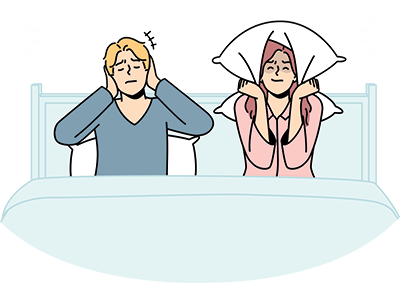
Few things are more frustrating than coming home to find your neighbour's music blaring through the walls, a dog barking for hours, or another late-night DIY job keeping you awake. Occasional noise is part of life, but when it becomes persistent and starts affecting your sleep, work, or enjoyment of your home, you may need to take action.
If a noise problem develops into a neighbour dispute, it could become relevant when you come to sell and complete the TA6 Property Information Form. Knowing how to handle the problem, keep the right evidence, and understand your disclosure responsibilities can help you resolve the issue without creating unnecessary problems further down the line.
This guide will help you identify what counts as a statutory noise nuisance, what your legal rights are, how to build a strong evidence trail, and what a dispute could mean for your future property sale.
- Know what counts as nuisance: Persistent, unreasonable noise may amount to a statutory nuisance.
- Keep detailed evidence: Record dates, times, noise levels, impacts and any steps you take to resolve the problem.
- Use the right escalation route: Start with your neighbour where appropriate, then consider your landlord, council, mediation or legal action.
- Consider your TA6 disclosures: Relevant neighbour disputes may need to be disclosed when you sell your property.
- Don't assume your home will lose value: Serious disputes can affect marketability, but the impact depends on the circumstances.
As seen in The Mirror
"Loud music, shouting, or midnight DIY can count as a statutory nuisance under Section 79 of the Environmental Protection Act 1990. If environmental health officers confirm the disturbance is unreasonable and substantially interferes with the enjoyment of your home, they can serve a legally binding Abatement Notice. Breaching that notice is a criminal offence that carries unlimited fines in a magistrates' court."
Andrew Boast FMAAT, CEO of SAM Conveyancing
What counts as a noise nuisance?
Not every irritating noise from next door will legally amount to a nuisance. Everyday sounds are part of living near other people. Children playing, footsteps, occasional DIY, or a one-off party may be frustrating, but that doesn't necessarily mean your neighbour is breaking the law.
The problem becomes more serious when noise is persistent, unreasonable and substantially interferes with your ability to use and enjoy your home. Common examples of potential noise nuisance include:
- Loud music played repeatedly or late at night
- Regular parties or gatherings
- Persistent shouting or arguing
- Barking dogs
- Repeated drilling, hammering or DIY
- Loud televisions, speakers or other equipment
- Machinery or other persistent mechanical noise
- Repeated banging or impact noise from an upstairs neighbour
The timing, frequency, duration, and nature of the noise can all be relevant when assessing whether it amounts to a statutory nuisance.
What are your legal rights against nuisance neighbours?
Under Section 79 of the Environmental Protection Act 1990, certain types of noise can amount to a statutory nuisance where they meet the relevant legal test:
A nuisance is an activity that substantially interferes with the ordinary comfort physically of human existence, not merely according to elegant or dainty modes of living, but according to plain, sober, and simple notions.
Local authorities have powers to investigate suspected statutory nuisances. If Environmental Health officers are satisfied that a statutory nuisance exists, they can serve an Abatement Notice requiring the person responsible to stop or restrict the nuisance.
If the recipient of an Abatement Notice fails to comply without a reasonable excuse, they can commit a criminal offence.
What happens if an Abatement Notice is breached?
If a person on whom an Abatement Notice has been served fails to comply with its requirements, they may face prosecution and potentially significant financial penalties. This is set out in Section 80 of the Act.
This means that contacting Environmental Health isn't simply about asking the council to tell your neighbour to turn the music down. Where a statutory nuisance is established, the council has formal enforcement powers.
What about noise at night?
The Noise Act 1996 provides a separate legal framework for certain complaints about excessive noise during night hours, which are generally 11pm to 7am. This legislation allows local authorities to deal with certain night-time complaints and provides a system involving permitted noise levels and enforcement.
However, noise nuisance is more complicated than a single number. The circumstances of the noise and the way it is assessed also matter.
Therefore, if you're dealing with repeated late-night noise, keep a detailed record and check how your local authority wants complaints and evidence to be submitted.
How can you prove noise is a nuisance?
Searching for a decibel meter can be a good starting point if you're trying to understand how loud a disturbance is. A decibel meter or suitable recording app can help you keep a record of noise levels, but it shouldn't be treated as definitive proof that your neighbour has committed a statutory nuisance.
There isn't one universal decibel threshold that automatically determines whether residential noise is a statutory nuisance. Instead, it is a good idea to keep your evidence broader. Keep a record of:
- The date of each incident
- The time the noise started and stopped
- What type of noise it was
- How frequently it happens
- How loud it appeared to be
- How the noise affected your use of the property
- Any steps you took to resolve the problem
- Any responses from your neighbour, landlord, or council
A detailed noise diary can therefore be much more useful than simply collecting a series of decibel readings.
Should you resolve noise issues before listing your property?
Handling a neighbour dispute correctly can protect both your everyday life and your future conveyancing process. Unresolved noise issues can derail transactions, shrink your buyer pool, and drastically reduce your final sale price. There are multiple reasons to deal with noise nuisance before putting your house on the market:
TA6 Property Information Form disclosures
The current TA6 Property Information Form contains a disputes section covering past and current disputes. The Law Society specifically gives disputes about noise or other disturbances as an example of a neighbour dispute that may be relevant.
The TA6 requires sellers to answer questions truthfully, completely, and as accurately as they can from their own knowledge. If you're unsure whether a particular disagreement needs to be disclosed, speak to your conveyancer rather than guessing.
Avoiding problems after completion
The information a seller provides during conveyancing is important to a buyer's decision to purchase. If a seller deliberately or inaccurately conceals a relevant dispute, it could lead to legal problems after completion, including a claim for misrepresentation, depending on the circumstances.
That is why it's better to deal with disclosure openly with your conveyancer rather than assume that an issue will never come to light.
Protecting your property's marketability
An unresolved neighbour dispute doesn't automatically mean a buyer will walk away or a mortgage lender will withdraw its offer. However, serious and ongoing disputes may make a property less attractive to buyers. A buyer may request evidence that the issue has been resolved, reconsider their offer, or, in serious cases, decide not to proceed.
There is no standard percentage reduction in value that applies to every neighbour dispute. The impact will depend on the severity of the problem, the property's location, the buyer and the circumstances of the dispute.
Step-by-step process of dealing with noisy neighbours
The right approach will depend on the type of noise, how often it happens, and whether your neighbour is aware they are causing a disturbance. In some cases, a friendly conversation may be all it takes. In serious circumstances, keeping a clear record and knowing when to involve authorities can help you take the next step.
Talk to your neighbour
If the problem is occasional or relatively minor, try speaking to your neighbour first. Often, they may not realise how much noise is travelling into your property. A polite conversation or note can sometimes resolve the problem much faster than immediately escalating the situation.
For example, if you're having a party yourself, letting your neighbours know beforehand and being mindful of late-night noise can help prevent disagreements from developing in the first place.
Expert Tip: Make sure there actually is a problem
Don't assume your neighbour knows they're causing a nuisance. Sound can travel surprisingly far between properties, particularly in flats and terraced houses. Politely let them know how the noise is affecting you. They may not be aware of the impact and might be willing to make changes.
MSc, BSc (Hons), AssocRICS Surveyor
Keep an exact written log
If the problem continues, start keeping a detailed noise diary. For every incident, record the date, time, where the noise appears to be coming from, and how frequently they occur. Make sure your records are factual rather than emotional. For example: 'Loud music continued from 11.45pm until 1.20am and prevented me from sleeping' is more useful than 'They are being completely unreasonable again'.
Capture date-stamped evidence
Where appropriate, gather supporting evidence alongside your noise diary. This could include decibel readings, copies of correspondence to your neighbour or council, and details of any previous complaints.
The goal isn't to create hours of recordings. It's to build a clear picture of what is happening, how often it happens, and how it affects your home.
Involve your landlord or housing association
If either your property or your neighbour's property is rented, check whether a landlord, managing agent, or housing association has a role in dealing with the problem. Your tenancy agreement may also contain rules relating to excessive noise or anti-social behaviour. Keep copies of anything you submit and any response you receive.
Contact your local council's environmental health team
If informal discussions haven't resolved a persistent problem, contact your local authority. Your council may ask you to provide recordings, provide the details of the person responsible, and allow officers to investigate the complaint.
If Environmental Health officers determine that a statutory nuisance exists, the council may have powers to serve an Abatement Notice.
Expert Tip: Don't avoid reporting a nuisance
Don't avoid reporting a serious nuisance simply because you're worried about selling your property in the future. Instead, keep accurate records and speak to your conveyancer about any disclosure requirements when you come to sell.
CEO of SAM Conveyancing
Consider mediation
If communication has broken down but you want to avoid formal legal action, mediation may provide a middle ground. A mediator can help both sides discuss what noise is causing the problem, when it occurs, how it affects each household, and what practical changes could reduce the disturbance.
Mediation won't be appropriate in every situation, particularly where there are serious threats, harassment, or safety concerns, but it can be useful for disputes that have become long-standing.
Consider legal action
If other routes fail, legal advice may be appropriate. Section 82 of the Environmental Protection Act 1990 provides a route for individuals to take action in the Magistrates' Court where they believe a statutory nuisance exists. Private nuisance claims may also be relevant depending on the circumstances. However, it is important to consider that legal action can be expensive and carries risks, so homeowners should obtain appropriate legal advice before proceeding.
What happens when you involve the authorities?
Making a formal complaint doesn't automatically mean your neighbour will be prosecuted or that the council will immediately serve an Abatement Notice. The council will normally need to investigate the circumstances and determine whether the relevant legal test has been met.
This is why detailed evidence matters. Submitting incomplete or poorly documented complaints may make it harder for the council to understand what is happening.
At the same time, don't assume that making a complaint automatically creates a "permanent legal dispute record" that will make your property impossible to sell. It is just that you will need to answer questions about relevant neighbour disputes accurately when you eventually sell.
Do you have to tell buyers about noisy neighbours?
This is one of the most important questions to consider if you're dealing with a neighbour problem and planning to sell. The answer isn't simply "yes, because you complained to the council" or "no, because the council never issued an Abatement Notice".
The TA6 asks sellers about disputes, including relevant disputes involving neighbours and disturbances such as noise. This means a seller should consider the nature of the problem, whether it amounts to a dispute, and what information they have when completing the form. While an occasional conversation with your neighbour isn't necessarily the same thing as a formal dispute, a council complaint may be relevant to the information you provide when selling. This is particularly true if it forms part of an ongoing or historic dispute. Keep copies of the complaint, correspondence, and any outcome so your conveyancer has an accurate record.
If a dispute has been resolved, it may still be relevant to questions about past disputes. Don't assume that because the neighbour has stopped making noise, the issue automatically disappears from the conveyancing process. Again, your conveyancer can advise you on the appropriate disclosure based on the circumstances. However, you shouldn't try to decide what is legally significant based purely on whether there is a paper trail. If you're unsure, tell your conveyancer what happened and ask them to advise you on how to deal with it in the transaction.
What happens if you don't disclose a neighbour dispute?
The TA6 is an important part of the information a buyer receives about a property. Giving an inaccurate or incomplete answer can create problems if the buyer later discovers information that should have been disclosed.
Depending on the circumstances, the buyer may potentially have a claim against the seller. This is why trying to hide a neighbour dispute to make your property appear more attractive is risky. The better approach is to be open with your conveyancer.
A disclosed and resolved dispute is not necessarily a deal-breaker for a buyer. What can cause much bigger problems is a buyer discovering after completion that important information was withheld.
Can noisy neighbours reduce your house value?
A serious neighbour dispute can potentially affect a property's marketability and value, but there is no universal percentage that can be applied to every case. This will depend on the seriousness of the nuisance, whether it is ongoing, the type of property, and how the dispute has been disclosed to potential buyers. A minor disagreement about occasional noise is very different from years of harassment, persistent nuisance or court proceedings.
Case study: when a neighbour dispute can affect property value
In Raymond v Young, the homeowners experienced serious and prolonged problems with their neighbours, including harassment, trespass, obstruction and nuisance. The dispute was so severe that the homeowners had already made an unsuccessful attempt to sell their farmhouse. The court accepted that a future buyer would need to know about the dispute and could seek a lower price as a result. Evidence suggested that the property could be worth around 20% less because of the ongoing dispute, amounting to a £155,000 reduction in value. The Court of Appeal upheld the £155,000 award.
While this was an extreme case, involving years of serious harassment and nuisance, not every noisy neighbour dispute will reduce a property's value. However, it shows that persistent neighbour problems can have consequences beyond day-to-day frustration. Where a dispute is serious enough to affect the use, enjoyment or sale of a property, it can have a real financial impact.
How long does it take to resolve a noise complaint?
There is no single timeframe for resolving a nuisance neighbour complaint. The process can depend on how quickly the council can investigate, whether officers need to monitor the noise, an Abatement Notice is required, and if further enforcement is necessary. It is advisable to check your local authority's process when making a complaint.
Action checklist for noisy neighbours
Follow these practical steps if you're dealing with persistent nuisance noise:
- Assess the nuisance: Consider how often the noise occurs, how long it lasts and how it affects your home.
- Talk to your neighbour: Where safe and appropriate, explain the problem politely and ask if they can reduce the noise.
- Keep a noise diary: Record dates, times, types of noise and how each incident affects you.
- Gather evidence: Keep relevant recordings, messages and correspondence, using decibel readings as supporting evidence where useful.
- Contact Environmental Health: If the problem continues, submit your evidence to your local council and follow its investigation process.
- Keep records for conveyancing: Retain complaints and correspondence, and tell your conveyancer about relevant neighbour disputes when selling.
Selling your home with a neighbour dispute?
Neighbour problems can be stressful enough without worrying about what they mean for your conveyancing journey. Whether you're dealing with an ongoing noise dispute, a historic complaint, or you're simply unsure what needs to be disclosed to a buyer, our specialist conveyancing team can help you understand your options and keep your sale moving.
Frequently asked questions

Ellie is a property content writer at SAM Conveyancing, specialising in guiding first-time buyers through the complexities of the UK property market. With experience translating intricate legal jargon into practical, actionable advice, Ellie has helped thousands of aspiring homeowners navigate everything from saving for a deposit to exchange and completion.
Beyond legal guides, her property and home-improvement insights have been featured in leading industry publications. Ellie is also a regular contributor to SAM Conveyancing’s professional network on LinkedIn, keeping buyers and industry pros updated on the latest market trends.
Latest Property Dispute Tips & Guides
Can a Neighbour Paint My Fence Without Permission?

Do I Have Property Rights Over My Partner’s House?


Nightmare Neighbour? How to Stop Disruptive Building Work


Selling or Transferring Property After a Divorce: A Conveyancing Guide
Share of Freehold Nightmare: What Happens When Co-Owners Disagree?

How to Solve Joint Property Ownership Disputes Without Court

Tree Pruning Laws: Rights and Rules in England and Wales

Can a neighbour build a shed or pergola against your fence?

Can I Sue the Previous Owner for Property Misrepresentation?