15 things that devalue a house the most

When preparing to market a home, most property owners focus on cosmetic upgrades designed to maximise profit. However, understanding what devalues a house can be just as important. Unaddressed structural defects, legal complications, environmental risks or poor buyer appeal can all reduce what someone is willing to pay for your property.
Not every problem will lead to a significant reduction in value. The impact depends on the severity of the issue, the property's location, and whether it could affect a buyer's mortgage or insurance. Some problems are relatively easy to resolve, while others can delay a sale or significantly reduce the pool of potential buyers.
What can devalue a house?
There are four broad areas that can affect how much a buyer is prepared to pay for a property: structural problems, legal issues, environmental risks, and the property's condition and overall appeal.
Serious structural or legal problems can have a greater impact than cosmetic issues because they may create uncertainty around the property's safety, mortgageability, insurance or future resale. By contrast, issues such as dated decoration or poor kerb appeal may simply give buyers more room to negotiate.
Category | Examples | Why it can affect value |
|---|---|---|
| Structural problems | Subsidence, damp, timber decay and structural defects | Can create substantial repair costs and, in serious cases, affect mortgageability and the ability to sell. |
| Legal issues and property disputes | Boundary disputes, unapproved alterations, restrictive covenants and short leases | Can create uncertainty for buyers and their solicitors, delay a transaction or reduce the number of interested buyers. |
| Environmental risks | Japanese knotweed, flood risk, contamination, radon and nearby infrastructure | Can affect insurance, future costs, buyer confidence and the property's desirability. |
| Condition, energy efficiency and buyer appeal | Poor maintenance, low energy efficiency, dated interiors, odours and impractical layouts | Can increase the amount buyers expect to spend after completion and make the property less appealing compared with similar homes. |
Structural problems that can devalue a house
Structural problems tend to be among the most concerning issues for buyers because they can involve significant repair costs and uncertainty about the long-term condition of the property.
Active structural subsidence and foundation movement
Subsidence occurs when the ground beneath a property moves or sinks, causing the building's foundations to become unstable. It can result in cracking, distorted door and window frames and other signs of structural movement.
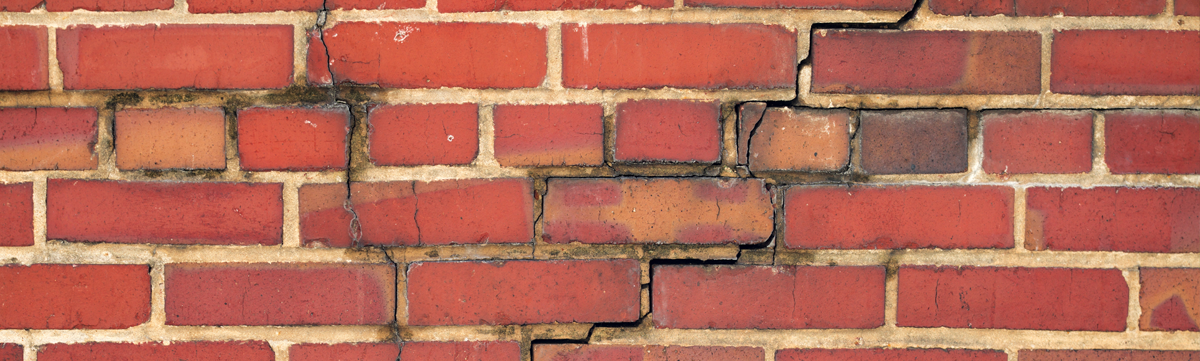
The effect on value depends heavily on whether the movement is historic, ongoing, or severe. Minor historic movement that has been investigated and stabilised may have a relatively limited impact, while active subsidence can make buyers and mortgage lenders much more cautious. In serious cases, the cost of remedial work and difficulty obtaining suitable insurance can significantly affect the property's value.
If you suspect structural movement, getting the problem investigated is usually more useful than trying to hide visible cracks. A structural engineer's report can establish whether movement is active and what remedial work, if any, is required. Keeping reports, completion documentation, and relevant guarantees can also give future buyers greater confidence.
Unaddressed pest infestations and timber decay
Problems such as woodworm, dry rot, wet rot, and active rodent infestations can affect the condition of a property and, in more serious cases, damage timber, joists, or other parts of the building.
The financial impact will depend on the extent of the problem. A small, treatable infestation may be relatively straightforward to resolve, whereas extensive timber decay can result in significant repair costs and cause a buyer to renegotiate or delay the purchase.
If a survey identifies pest or timber problems, a specialist inspection can establish the cause and extent of the damage. Completing appropriate treatment before marketing the property and keeping a clear record of the work can make the issue much easier to explain to prospective buyers.
Roof, foundation, and other structural problems
Not all structural concerns are caused by subsidence. Defective roofs, failing foundations, significant cracks, damaged lintels, and other structural defects can all affect how buyers assess a property's condition.
Visible signs of deterioration can make buyers assume that the eventual repair bill will be higher than it actually is. This can give them a reason to reduce their offer, particularly if they cannot establish how serious the problem is.
Where a significant defect has already been identified, obtaining a professional assessment and an indication of the likely repair costs can help remove some of this uncertainty. It is often easier for a buyer to assess a known, documented problem than an unexplained one.
Legal issues and property disputes
Legal problems can be particularly damaging because they can affect whether a buyer is willing or able to proceed with the purchase. Even when a property is in excellent condition, unresolved legal issues can complicate a transaction.
Boundary and neighbour disputes
Disagreements over boundaries, such as party wall disputes, shared or blocked driveways, overhanging trees or other property matters can make buyers nervous about taking on a property.
Known disputes generally need to be disclosed during the conveyancing process. Sellers should provide accurate information when completing the TA6 Property Information Form, including relevant historic issues where the form requires them.
A dispute does not automatically mean a property will lose a particular percentage of its value. However, an unresolved disagreement can reduce buyer confidence, particularly if it creates uncertainty over access, boundaries, or future legal costs. Resolving the issue before marketing, where practical, can make the property easier to sell.
Unauthorised building alterations and missing sign-offs
Home improvements are generally intended to increase a property's value, but alterations carried out without the necessary local authority approvals can have the opposite effect. Removing load-bearing walls, converting lofts, or constructing extensions without appropriate building regulations approval can create additional questions during conveyancing.
Buyers may be concerned about whether the work complies with the relevant requirements, whether remedial work will be needed, and whether their mortgage lender or insurer will have any concerns. Depending on the nature and extent of the work, this uncertainty can result in a lower offer. A reduction of around 5% to 10% may happen where substantial unauthorised work creates significant uncertainty, although the actual impact will vary.
If you are selling a property with historic unauthorised work, speak to your conveyancer before contacting the local authority. In some circumstances, an indemnity policy may be available, but contacting the relevant authority can affect whether this option remains available. Your conveyancer can explain the appropriate route based on the circumstances.
Restrictive covenants and title restrictions
Restrictive covenants can limit what an owner is allowed to do with a property or how the land can be used. For example, a covenant might restrict alterations, additional buildings, or certain types of use.
The existence of a covenant does not necessarily reduce a property's value. However, restrictions that prevent a buyer from carrying out planned improvements or using the property in their preferred way can make it less attractive.
If you are concerned about a restriction affecting your property, ask your conveyancer to review the title and explain what the covenant means in practice. Where appropriate, it may be possible to investigate whether a restriction can be varied, released, or insured against.
Expiring short leases under 80 years
Lease length can have a significant effect on the value and saleability of a leasehold property. As the remaining term becomes shorter, buyers may face a higher cost and greater complexity when extending the lease.
A lease with fewer than 80 years remaining has historically been a particularly important threshold in lease extension calculations, although the rules governing lease extensions are changing. Short leases can therefore reduce the number of potential buyers and make some mortgage lenders more cautious.
The effect on value becomes more significant as the lease term falls. Rather than relying on a fixed percentage reduction, sellers should obtain specialist advice on the likely cost of extending the lease and how the remaining term may affect their particular property.
If you are considering selling a leasehold property with a short lease, speak to a conveyancer early. Depending on your circumstances and the legislation in force, there may be options to start the lease extension process before the sale and to transfer the benefit of that process to the buyer.
Other leasehold problems
A short lease is not the only leasehold issue that can affect value. High service charges, major works, complicated lease terms, disputes with a managing agent, or uncertainty around building works can all make a leasehold property less attractive.
Buyers and their mortgage lenders will usually want to understand the financial and legal obligations attached to the property before committing to a purchase. Unexpected costs can therefore become a significant negotiating point.
If you are selling a leasehold property, having your management information, service charge details, and other relevant documents ready can help prevent avoidable delays. Your conveyancer can also identify potential issues before the property reaches the market.
Environmental risks
Environmental factors can affect a property's value even when there is nothing physically wrong with the building. Buyers may be concerned about future costs, insurance availability, health risks or the desirability of the location.
Japanese knotweed and invasive plants
Japanese knotweed is a fast-growing invasive plant that can cause concerns for property owners and buyers. Its extensive root and rhizome system can grow through cracks and affect structures, drainage, and hard surfaces.

The presence of Japanese knotweed does not automatically mean a property has lost a fixed percentage of its value. However, buyers may be concerned about treatment costs, future spread, and whether a mortgage lender or insurer will have additional requirements. In some circumstances, a reduction in value can be significant, particularly where the infestation is extensive or close to the property.
If Japanese knotweed has been identified, a specialist assessment and appropriate management or treatment plan can help demonstrate that the problem is being dealt with. Keeping documentation and any relevant guarantees can also give buyers greater confidence.
Designated high flood risk classifications
Flood risk can affect buyer demand because it may influence insurance costs, mortgageability, and the perceived long-term risk of owning the property. River, coastal, and surface-water flooding can all be relevant when assessing a property's environmental risk.
A high flood risk can reduce a property's appeal and, in more serious cases, can have a material effect on its value. Flooding can cut your house value by 8% to 20% on average, and if you’re in a very high-risk flood zone, that number can reach a 31.3% loss. This, however, should be treated as an indication rather than a universal rule, as the impact varies significantly between properties and locations.
Sellers can help address concerns by understanding the property's actual flood risk and keeping records of any flood-resilience measures installed. Your conveyancer can also advise on the searches and information that may be relevant to the transaction.
Brownfield soil contamination and radon risks
Properties built on or near former industrial land can sometimes be affected by environmental concerns such as contaminated land. Radon, a naturally occurring radioactive gas, can also be relevant in areas where levels are higher.
Environmental concerns do not necessarily mean that a property is unsafe or difficult to sell. However, uncertainty around contamination, remediation or radon levels can make buyers more cautious and may lead to additional investigations.
Where an environmental search identifies a potential issue, obtaining appropriate professional advice and keeping evidence of any testing or remedial work can help establish the actual level of risk. The effect on value will depend on the specific circumstances rather than a fixed percentage.
Proximity to heavy infrastructure and energy projects
Some factors affecting property value are outside the property's boundaries. High-voltage pylons, major roads, railway lines, wind turbines, and other large infrastructure projects can influence buyer demand because of noise, appearance, traffic, or perceived disruption.
The impact is highly location-specific. A property directly overlooking a major development may experience a different effect from one that is several streets away, while good transport links may actually make some infrastructure desirable to certain buyers.
Where a planned development is identified during the conveyancing process, buyers may want to understand what is proposed and how it could affect the property. Existing measures such as suitable glazing, insulation or other noise-reduction improvements may help with some of the practical effects, although they cannot remove the underlying location factor.
Condition, energy efficiency, and buyer appeal
Not every factor that devalues a house is a major legal or structural problem. Sometimes buyers simply offer less because they can see that the property needs work or because it does not compare favourably with other homes on the market.
Neglected kerb appeal and exterior maintenance
First impressions can influence how buyers feel about a property before they have even stepped through the front door. Peeling paintwork, cracked rendering, dirty paving, damaged fencing or an overgrown front garden can make a property appear poorly maintained.
Poor kerb appeal is unlikely to have the same financial impact as subsidence or a serious legal problem, but it can affect buyer demand and the offers you receive. Rather than relying on a fixed percentage reduction, think about how much the property's appearance is likely to influence the number of viewings and the competition between buyers.
Simple improvements such as cleaning the driveway, repainting the front door, clearing gutters and tidying garden borders can make a noticeable difference without requiring a major investment.
Dated interiors and ageing utilities
Outdated kitchens, bathrooms, flooring, and decoration can make buyers feel that a property needs more work than they had expected. Some buyers actively want a renovation project, but others are looking for a home that requires little work after completion.
Where substantial modernisation is needed, buyers may reduce their offers to account for the expected cost and inconvenience. The impact will depend on the property's condition and what comparable homes in the area offer.
You do not necessarily need to replace an entire kitchen or bathroom before selling. Painting dark cabinetry, replacing tired handles, repairing visible defects, and using clean, neutral finishes can improve presentation without taking on a major renovation project.
Sub-standard energy efficiency and low EPC grades
Energy efficiency has become increasingly relevant to buyers because it can affect household running costs and the overall comfort of a property. A poor EPC rating can therefore make a home less attractive when buyers are comparing it with similar properties.
Energy efficiency is not simply about the EPC band, however. Buyers may also consider the age of the heating system, insulation, and windows, as well as expected energy bills, when deciding what a property is worth to them.
Relatively straightforward improvements can include topping up loft insulation, draught-proofing, improving heating controls, and upgrading inefficient lighting. Larger improvements, such as replacement windows or renewable energy systems, may also improve the property's long-term efficiency, but sellers should consider the likely return before committing to major expenditure.
Overly custom floor plans, impractical layouts, and other buyer turn-offs
Personalising a home can make it work brilliantly for the current owner, but unusual alterations can sometimes reduce the number of people who see the property as suitable for them. For example, removing a bedroom to create a very large living space may make sense for one household but reduce the appeal of a family home.
Similarly, awkward room layouts, unusual bathroom arrangements or poor-quality DIY alterations can make buyers think about the cost of putting the property back to a more conventional configuration.
Other buyer turn-offs can include strong pet or tobacco smoke odours. These smells can become embedded in carpets, curtains, and walls and may be difficult for homeowners to notice themselves. Professional cleaning, replacing heavily affected flooring, and ensuring the property is well ventilated before viewings can help.
Location also matters. Factors such as local crime levels, school catchment areas, traffic, and changes to nearby amenities can influence demand even when the property itself is in excellent condition. These external factors cannot always be changed, so the focus should be on presenting the property honestly and making the aspects you can control as attractive as possible.
Can you increase your home's value after it has been devalued?
In many cases, yes. The best approach depends on what is causing the reduction in value. For serious structural or legal problems, resolving the underlying issue is usually more valuable than simply improving the property's appearance. A structural report, treatment plan, building regulations documentation, lease advice, or evidence of dispute resolution can give buyers greater confidence and reduce uncertainty.
For cosmetic problems, relatively inexpensive improvements can make a property more appealing. Decluttering, cleaning, repainting, improving kerb appeal, and addressing obvious maintenance issues can all help a property compete with similar homes.
However, it is important to consider your likely return before spending money. Not every improvement will add as much value as it costs, particularly if you are preparing to sell in the near future.
What should you do if you are worried about your property's value?
If you suspect that your property has an issue that could affect its value, deal with the uncertainty as early as possible. Leaving a problem until a buyer's survey or conveyancing inquiries can make it much harder to manage.
Start by identifying the issue and getting the right professional advice. Depending on the problem, this could mean speaking to a structural engineer, a surveyor, a specialist contractor, a managing agent, or a conveyancer.
Keep copies of reports, certificates, guarantees, invoices, and correspondence relating to any work. When you eventually sell, having clear documentation available can help your buyer understand the issue and demonstrate that it has been properly investigated or resolved.
Essential seller checklist: spotting red flags early
If you are preparing to sale, keep this practical checklist in mind:
- Exterior masonry: Look for significant cracks in rendered or brick walls, particularly diagonal cracks or cracks that appear to be changing.
- Grounds and boundaries: Check garden borders for signs of Japanese knotweed or other invasive plants and look carefully at boundary features.
- Internal joinery: Check whether doors or windows stick, or whether there are unusual gaps around frames that could warrant further investigation.
- Legal documentation: Ask whether relevant approvals and completion certificates are available for extensions, loft conversions or structural alterations.
- Lease length: If the property is leasehold, check how many years remain on the lease and ask about any planned lease extension.
- Damp and ventilation: Look for musty smells, peeling wallpaper, condensation, or dark patches around skirting boards, ceilings, and external walls.
- Energy efficiency: Check the EPC and ask about insulation, heating systems, windows, and typical running costs.
- Location: Consider flood risk, nearby roads, railways, planned developments, local amenities, and other factors that could affect future demand.
Need help selling a property with an issue?
Worried that a structural problem, short lease, dispute, or missing paperwork could affect your sale? Getting advice early can help you understand your options before the issue becomes a last-minute obstacle.
Our panel of specialist conveyancers are on hand to help you increase the value of your property.
Frequently Asked Questions

Andrew Boast FMAAT is a qualified accountant, conveyancing specialist and author with over 25 years of experience in the UK property sector. Since beginning his career in 2000 within established SRA and CLC-regulated conveyancing solicitor firms, Andrew has overseen the legal journeys of more than 75,000 clients.
He is the self-published author of the first-time buyer guide: How to Buy a House Without Killing Anyone, and a frequent contributor to mainstream UK media on legislative updates, property law, first-time buyer guides, conveyancing best practices, and stamp duty changes. Andrew specialises in resolving complex title issues, property conflict disputes, and property tax options, streamlining the enquiry process to reduce transaction times and maintaining a client-friendly focus.

Amanda Ambler is a highly accomplished conveyancing specialist with over 15 years of dedicated experience across residential property law, legal compliance, and practice management. Having held senior roles, including Head of Legal Practice and Head of Conveyancing at established UK law firms, Amanda possesses a profound, hands-on understanding of the technical intricacies of the property market.
As the designated Legal Content Reviewer for SAM Conveyancing, Amanda ensures that every guide, legal update, and resource published meets the absolute highest standards of accuracy, regulatory compliance, and factual integrity. Her rigorous review process guarantees that complex property legislation and industry processes are communicated clearly, transparently, and safely for home buyers and sellers alike.