Energy and Infrastructure Search

- Recent energy and infrastructure developments have the purpose of benefiting local communities, but they can actually impact property values with things like noise pollution.
- An energy and infrastructure search is an additional conveyancing search, but you can order it if you suspect any developments in the area could affect your home.
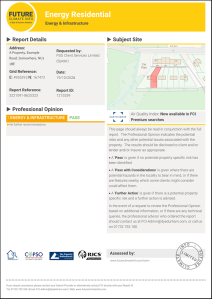
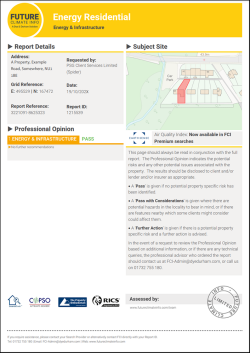
- This search covers any developments listed in the surrounding area of your property and an assessment of their risks. You can read an example report below.



New energy and infrastructure developments are being done with the purpose of benefiting the locals, but they can also negatively impact the value of their properties. An Energy and Infrastructure Search indicates if a property you're buying is likely to be impacted by factors like oil, gas or other infrastructure projects.
|  |
What is an energy and infrastructure search?
The report includes:
- Any identified impact (visual, noise, etc.) has the potential to affect nearby property values. Sometimes, this impact might be positive: a new rail link can boost values.
- The information for renewable energy developments comes from local council planning application data and includes ALL applications, whether granted, active or inactive (refused, withdrawn or abandoned).
You can get an Energy and Infrastructure Search for either:
- Commercial properties
- Residential properties
Most mortgage Lenders do not require you to book an energy and infrastructure search. You can find out if this is a requirement by viewing the guidance on lending for conveyancers. However, it is still recommended to get a report.
There are many factors that can decrease the value of your property. For example, wind farms are a great source of renewable energy, but they cause excessive noise, which can impact your day to day life as resident, or your ability to sell. In Barrow, locals have made several complaints about the wind turbines causing too much noise.
- 1
Risk assessment is done by being granted a mark, as follows:
Pass
Pass with considerations
Further action
The first section of this report contains all energy and infrastructure developments that are located near your property. Irrespective of type, the report will analyse all risks, including:
- Oil and gas exploration, including areas licensed for hydraulic fracturing (fracking);
- Wind energy
- Solar energy
- Other renewable energy, including the location of existing and proposed wind farms and wind turbines
- High Speed 2 (HS2) rail network
- Crossrail
- Yorkshire and Humber CCS pipeline
To prove the validity of the assessment, sources will be listed underneath every development and project subjected to investigation.
The report then explains how to use it and, most importantly, explains that there will only be further detail regarding a particular development if an impact is listed as identified. So if all the developments are listed as not identified, your report will be short and, in most cases, sweetly received!
Thinking about buying a house with spray foam insulation?
It might be marketed as an energy saver, but it could block your mortgage application!
Read our article on whether you should buy a house with foam insulation or not.
- 2
Your energy and infrastructure search will analyse the distance from your property to each type of development listed. This is measured in either kilometres or metres, and the distance can range from 100 metres to up to 5000.
- 3
Should anything pose a threat to the value of your property, then you will find a "Considerations" section in the report. This includes an explanation of how your house can be affected, as well as a list of names and contact details of the developments involved.
Lastly, advice on how to best manage this situation is provided to you. For example, either you get referred to specialists who can help, or you receive advice on solutions you can do yourself.
Fixed fee of £79 INC VAT | Delivered within 2 working hours(i)

Andrew Boast FMAAT is a qualified accountant, conveyancing specialist and author with over 25 years of experience in the UK property sector. Since beginning his career in 2000 within established SRA and CLC-regulated conveyancing solicitor firms, Andrew has overseen the legal journeys of more than 75,000 clients.
He is the self-published author of the first-time buyer guide: How to Buy a House Without Killing Anyone, and a frequent contributor to mainstream UK media on legislative updates, property law, first-time buyer guides, conveyancing best practices, and stamp duty changes. Andrew specialises in resolving complex title issues, property conflict disputes, and property tax options, streamlining the enquiry process to reduce transaction times and maintaining a client-friendly focus.

Amanda Ambler is a highly accomplished conveyancing specialist with over 15 years of dedicated experience across residential property law, legal compliance, and practice management. Having held senior roles, including Head of Legal Practice and Head of Conveyancing at established UK law firms, Amanda possesses a profound, hands-on understanding of the technical intricacies of the property market.
As the designated Legal Content Reviewer for SAM Conveyancing, Amanda ensures that every guide, legal update, and resource published meets the absolute highest standards of accuracy, regulatory compliance, and factual integrity. Her rigorous review process guarantees that complex property legislation and industry processes are communicated clearly, transparently, and safely for home buyers and sellers alike.