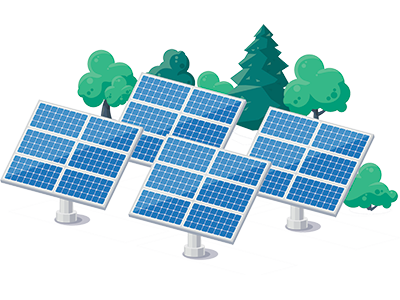
Living Near a Solar Farm

- The risks of living near solar farms are minimal and comparatively lower than other forms of power plants.
- Some people believe the low-level electromagnetic field may be harmful to certain people, but there is no conclusive evidence to support this.
- House prices within one mile of a wind or solar farm may be negatively affected, but the dominant form of property (detached homes) shows no price impact.
What are the dangers of living near a solar farm?
Electromagnetic fields
The electromagnetic field generated by a solar farm is low-level, similar in strength to household appliances, like a toaster. The 'theory' that solar farms can cause long-term harm to people with electromagnetic hypersensitivity is generally considered an urban myth.
Glare and reflection
Some solar panels reflect light, which may cause glare to those with a direct line of sight to the solar farm. However, modern cells are designed to absorb as much light as possible, minimising reflection. Proper placement and orientation should prevent any problems.
Chemical exposure
The risk of exposure to some of the materials used in the construction of solar cells is highest during production, disposal, and recycling. When the panels are manufactured and installed, the risk to residents is negligible.
Noise pollution
There is some low-level noise detectable from the inverters and transformers. If these are to be located near your home, planning requirements will ensure that potential noise is mitigated through proper placement and the use of sound barriers.
Impact on local wildlife
There is some concern that natural habitat will be destroyed to make way for solar farms. The majority of solar farms, however, are built on agricultural land, which is usually not very ecologically diverse.
The grass or ground cover must be kept short so as not to interfere with panels. Many solar farmers are experimenting with grazing sheep or geese to manage the land (reducing the impact of 'lost' grazing pasture), or low-growing plants such as clover, which are excellent for pollinators.
Fire risk
There is a small risk of electrical fire from any large-scale electrical equipment, but this risk is mitigated by proper design and maintenance. The management of a large fire at a solar farm would, in theory, be easier than managing a large fire at a fossil fuel or nuclear power plant, where the risk of explosion would be catastrophic.
Aesthetics
Some people consider solar farms to be a blight on the landscape. They can be an abrupt change to otherwise green landscapes, but are usually only visible from passing roads or country walks.
They are low, at hedge level, so have a fairly minimal visual impact, especially compared to the chimneys of traditional power plants, or wind turbines, which can be seen for miles around.
Are there any health risks of living near a solar farm?
A detailed analysis from North Carolina State University concluded that there is “no conclusive and consistent evidence” of “negative health impact[s] from the EMF produced in a solar farm.”
Noah Kittner, PhD, at the University of North Carolina, stated: "There is no evidence that solar panels are causing cancer". He adds that solar energy may help to reduce the risk of lung cancer overall by offsetting other electricity-generating sources that can contribute to air pollution.
Are property prices affected by proximity to solar farms?
The Royal Institute of Chartered Surveyors (RICS), in conjunction with Oxford Brookes University, found initial evidence suggesting property prices of terraced and semi-detached homes within one mile of a wind or solar farm were negatively affected. However, other factors were much more significant to property value. "Detached property, the dominant form of housing near wind and solar farms showed no price impact."
What are the benefits of living near a solar farm?
- Solar farms have a very low impact, so it is preferable to live near a solar farm rather than other types of power plants.
- The power grid in the area is likely to be upgraded, meaning a more efficient and reliable electricity supply to your home.
- Low upkeep means relatively less maintenance disturbance versus alternative sources of energy, including less heavy machinery wear on the local roads.
- They are much quieter than other forms of electricity generation.
- Job opportunities in the green energy sector.
How can I determine if a house is located near a solar farm?
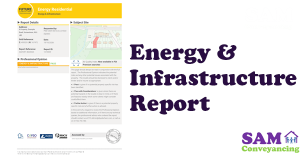
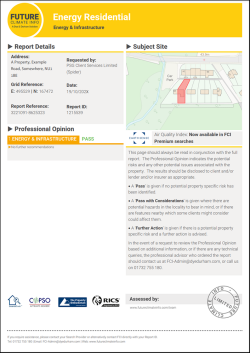
Order an energy and infrastructure report today, for just £79 INC VAT.
|  |



Andrew Boast FMAAT is a qualified accountant, conveyancing specialist and author with over 25 years of experience in the UK property sector. Since beginning his career in 2000 within established SRA and CLC-regulated conveyancing solicitor firms, Andrew has overseen the legal journeys of more than 75,000 clients.
He is the self-published author of the first-time buyer guide: How to Buy a House Without Killing Anyone, and a frequent contributor to mainstream UK media on legislative updates, property law, first-time buyer guides, conveyancing best practices, and stamp duty changes. Andrew specialises in resolving complex title issues, property conflict disputes, and property tax options, streamlining the enquiry process to reduce transaction times and maintaining a client-friendly focus.

Amanda Ambler is a highly accomplished conveyancing specialist with over 15 years of dedicated experience across residential property law, legal compliance, and practice management. Having held senior roles, including Head of Legal Practice and Head of Conveyancing at established UK law firms, Amanda possesses a profound, hands-on understanding of the technical intricacies of the property market.
As the designated Legal Content Reviewer for SAM Conveyancing, Amanda ensures that every guide, legal update, and resource published meets the absolute highest standards of accuracy, regulatory compliance, and factual integrity. Her rigorous review process guarantees that complex property legislation and industry processes are communicated clearly, transparently, and safely for home buyers and sellers alike.