Property Settlement Agreement for Co-Owners: Protecting Your Equity

When you buy a home with a partner, friend, or family member, you rarely plan for the day you might part ways. Yet, if you decide to separate or buy each other out, dividing your single largest financial asset can quickly turn an amicable situation into a complex legal battlefield.
Without a formal contract in place, you risk facing a costly, stressful property dispute under the Trusts of Land and Appointment of Trustees Act 1996 (TOLATA).
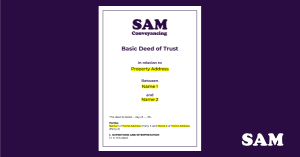
A Property Settlement Agreement is the definitive legal solution to secure your financial exit. This legally binding deed locks in your equity split, solidifies buyout terms, and provides a clean financial break, ensuring neither party can return years down the line to claim a share of your property's future growth.
What this agreement is (and is not)
To ensure total legal clarity, it is important to distinguish this document from other common legal agreements:
- It IS: A dedicated residential property contract designed to finalise equity shares, protect financial deposits, and formalise buyouts between joint landowners.
- It IS NOT an Employment Agreement: It has absolutely no relation to workplace disputes, redundancy terms, or HR termination settlements.
- It IS NOT a Divorce Consent Order: While it perfectly protects unmarried cohabiting couples or friends, married couples should ultimately formalise this agreement into a court-approved Consent Order to secure an absolute clean break under the Matrimonial Causes Act 1973.
Expert Tip: A Transfer of Equity is not a 'clean break'
If you simply agree on a buyout figure and complete a transfer of equity without a formal deed, the remaining owner is left completely exposed. Without a written waiver, the departing party could legally return years later to claim a share of the property's increased value.
A verbal agreement or a basic bank transfer offers almost zero defence in court. Under UK law, contracts concerning land must be in writing. A Property Settlement Agreement guarantees your clean break by explicitly waiving their right to make any future financial claims against your home.
CEO of SAM Conveyancing
Whether you are preparing to sell up and divide the proceeds, or you are executing a buyout to take sole ownership of the mortgage, a robust property agreement ensures your hard-earned equity stays exactly where it belongs: with you. Our expert team of solicitors can help you draft a watertight Property Settlement Agreement to ensure you can part ways knowing no one can come back for a second bite of your home.
Get a Property Settlement Agreement
- Drafted by our specialist panel solicitor.
- Used for joint owners to set out their split in a property.
- Includes clean break provisions to avoid "second bites".
- We provide independent legal advice to one of the owners.
- Competitive Fees: Settlement Agreement £399 INC VAT and ILA for £300 INC VAT.

What is included in a watertight agreement?
To ensure a Property Settlement Agreement is robust, watertight, and leaves no room for future litigation, it must contain specific legal clauses. Because this contract effectively overrides or finalises beneficial interest claims under the Trusts of Land and Appointment of Trustees Act 1996 (TOLATA), the drafting must be precise.
Here are the essential legal clauses required in a UK Property Settlement Agreement for co-owners:
Recitals and definitions (the background)
This clause sets the scene and establishes the facts before the core terms are laid out. It prevents any future arguments about what the parties intended or understood at the time of signing. It includes:
- the full names of the co-owners, the property address, the Land Registry title number, and the current legal ownership structure (i.e., whether held as Joint Tenants or Tenants in Common).
- It must state the current estimated market value of the property and details of any outstanding liabilities, such as the current balance of the existing mortgage.
The consideration (the equity split or buyout sum)
This is the core financial clause of the agreement. For a contract to be legally binding, there must be consideration (an exchange of value). It includes:
- The exact lump sum being paid by the buying co-owner to the departing co-owner, or the precise percentage split of the net sale proceeds if the property is being sold on the open market.
- If it is a buyout, it must explicitly specify the timeframe for payment and the mechanism for transferring the funds (usually via solicitors on completion of the equity transfer).
Expert Tip: Consideration isn't just money
Consideration can be anything of value, and in a transfer of equity as part of a separation, the consideration could include:
- money;
- being released from the mortgage; or
- expensive chattels.
There are other types like doing work for someone for free, but that isn't really going to happen in this scenario.
CEO of SAM Conveyancing
Indemnity and release of mortgage liability
It is a common pitfall for a departing co-owner to sign an agreement, but remain financially liable on the mortgage. This clause protects both parties with respect to the debt. A covenant (a legal promise) from the remaining owner to take over all future mortgage payments, council tax, and maintenance costs from the agreed handover date.
An indemnity clause ensuring that if the lender pursues the departing owner for any arrears, the remaining owner must compensate them in full. It should also state that the agreement is conditional upon the mortgage lender consenting to release the departing party from the mortgage.
Mutual release and waiver of future claims (the clean break)
This clause is arguably the most critical because it prevents any future legal battles under TOLATA or the Law of Property Act 1925. It is an explicit statement that the departing owner accepts the buyout sum in full and final settlement of all claims against the property, its proceeds of sale, or any beneficial interest therein.
It must contain a waiver where both parties agree that they have no further financial or property claims against one another arising from their co-ownership, preventing either party from coming back for another bite of the cherry later.
Outgoings and maintenance pending completion
If there is a delay between signing the agreement and the actual completion of the buyout or sale, this clause governs who pays for what in the interim. This clause needs to set out who is responsible for the mortgage payments, utility bills, and buildings insurance during the transition period. Plus, it needs to outline who bears the cost if an emergency repair (such as a broken boiler) is required before the transaction finalises.
Wrapping up the conveyancing to finalise the transfer can drag on, especially if things aren't amicable, so having this properly mapped out avoids unfair or unplanned expenditure on any one person.
Costs and Independent Legal Advice
To prevent a co-owner from later claiming they did not understand what they were signing, or that they were pressured into it, this clause solidifies the agreement's enforceability. This clause confirms that each party has sought and received independent legal advice from separate, qualified solicitors regarding the terms and effect of the agreement.
It should explicitly state how the legal costs of preparing and executing the agreement are to be split (e.g., each party pays their own, or one party covers both). We provide this type of independent legal advice and use video calls so you can receive it from work or the comfort of your own home. Give us a call today to find out more - 0333 344 3234 (local call charges apply).
- Panel of specialist ILA solicitors.
- Video conference to your home/work.
- Including settlement agreements, mortgage ILA, and occupier waivers.
- Available from 14/10/2026.

Sarah Haller
Partner & Solicitor providing ILA
What relationships need an Equity Settlement Agreement?
A property settlement agreement is highly effective for specific co-ownership structures, but it carries distinct risks if used in the wrong legal context. Here is exactly when you should use one, and when you need to take further action:
Buying out a co-owner, friend, or unmarried partner
This agreement is perfectly suited for unmarried co-owners, friends, or family members. If you separate or decide to buy a joint owner out, and you cannot agree on how to split the equity, disputes are governed by the Trusts of Land and Appointment of Trustees Act 1996 (TOLATA).
A watertight Property Settlement Agreement allows you to resolve the equity split by mutual consent. Provided both parties receive independent legal advice and sign the deed in front of a witness, it guarantees a clean break and completely bypasses the need for a costly, high-risk court application.
Married couples and civil partnerships (use with caution)
If you are married or in a civil partnership, a standalone property agreement provides a strong record of your intentions, but it is not absolute. Financial arrangements during a divorce are governed by Section 34 of the Matrimonial Causes Act 1973.
While a family court judge will consider your signed settlement agreement during divorce proceedings, they have the ultimate power to overrule or set it aside entirely if they deem the split unfair. If you are divorcing, the only way to 100% guarantee that your ex-partner cannot challenge your agreed property split in the future is to have the family courts formalise your agreement into a legally binding Consent Order.
Expert Tip: The biggest dispute is about the money
The primary dispute with a co-owner is how much they are due from the property. Some just want their original deposit back (this is covered under trust law as a Resulting Trust), and others want the money they've paid toward the mortgage or home improvements (this is covered under trust law as a Constructive Trust).
That's why I've written this comprehensive guide on: How to calculate buying someone out of a house.
Andrew Boast FMAAT
CEO of SAM Conveyancing
Frequently Asked Questions About Property Settlement Agreements

Andrew Boast FMAAT is a qualified accountant, conveyancing specialist and author with over 25 years of experience in the UK property sector. Since beginning his career in 2000 within established SRA and CLC-regulated conveyancing solicitor firms, Andrew has overseen the legal journeys of more than 75,000 clients.
He is the self-published author of the first-time buyer guide: How to Buy a House Without Killing Anyone, and a frequent contributor to mainstream UK media on legislative updates, property law, first-time buyer guides, conveyancing best practices, and stamp duty changes. Andrew specialises in resolving complex title issues, property conflict disputes, and property tax options, streamlining the enquiry process to reduce transaction times and maintaining a client-friendly focus.

Amanda Ambler is a highly accomplished conveyancing specialist with over 15 years of dedicated experience across residential property law, legal compliance, and practice management. Having held senior roles, including Head of Legal Practice and Head of Conveyancing at established UK law firms, Amanda possesses a profound, hands-on understanding of the technical intricacies of the property market.
As the designated Legal Content Reviewer for SAM Conveyancing, Amanda ensures that every guide, legal update, and resource published meets the absolute highest standards of accuracy, regulatory compliance, and factual integrity. Her rigorous review process guarantees that complex property legislation and industry processes are communicated clearly, transparently, and safely for home buyers and sellers alike.