Leasehold Flat Survey: Do You Need One?

Just like purchasing a house, obtaining an independent RICS Home Survey on a flat is not a mandatory legal requirement. Because a flat is typically smaller in size, and because buyers often mistakenly assume the freeholder is entirely responsible for the building's structural health, many people feel it isn't worth getting a survey.
When you combine this with the dangerous misconception that a basic mortgage lender's valuation will flag any major defects for you, it is incredibly common for leasehold buyers to question whether they need an independent inspection at all.
The fact is, a survey is your only line of defence against the strict property laws of caveat emptor (buyer beware). If you complete your purchase and subsequently discover severe dampness, outdated wiring, or a failing communal roof, you have no legal recourse against the seller. According to RICS, buyers who rely purely on a mortgage valuation and skip their own survey face an average unexpected repair bill of £5,750 once they move in. Whether you are buying a sprawling detached house or a one-bedroom leasehold flat, a professional survey is a vital financial safeguard that frequently pays for itself.
In this guide, we explain the specific survey you need for a leasehold flat, the typical costs involved, the financial benefits of booking an inspection, and whether you get a Level 2 or Level 3 Home Survey, and a helpful checklist if you ultimately decide to proceed without one.
Why a leasehold flat survey is essential
While paying for a RICS Home Survey is not a strict legal requirement in England and Wales, your conveyancing solicitor will highly recommend that you commission one. Buying a flat introduces highly complex financial liabilities. You are not just taking on the internal demise of your specific apartment, but you are also assuming joint financial responsibility for the external building structure, the communal areas, and the ongoing service charges required to maintain them.
Damp
Unscrupulous sellers often try to conceal penetrating or rising damp behind a fresh coat of paint or strategically placed heavy furniture. An independent RICS surveyor uses a specialised damp meter to thoroughly test the walls throughout the property, ensuring you do not inherit a severe moisture problem that could cost thousands of pounds to eradicate.
Windows & Doors
The legal ownership of windows in a block of flats is notoriously complicated. Your lease will strictly determine whether you or the freeholder is responsible for their repair. A surveyor will check the condition of the seals, the glazing, and the frames. If they discover blown double glazing or rotting timber frames, your solicitor can use this evidence to determine exactly who is liable to pay for the replacements before you commit to the purchase.
Gas & Electrics
While a RICS surveyor will not conduct an invasive electrical or gas safety test, they are highly trained to spot the visual warning signs of dangerous installations. They will immediately flag outdated fuse boards, scorch marks on plug sockets, and poorly ventilated boilers. Identifying these hazards early allows you to demand a formal Electrical Installation Condition Report or a Gas Safe certificate from the seller to guarantee the property is safe for habitation.
Communal area damage
This is where an independent survey on a flat becomes absolutely crucial. The surveyor will inspect the shared hallways, exterior brickwork, roofline, and shared stairwells for signs of structural movement or neglect. If the freeholder has allowed the main building to fall into disrepair, you risk moving in just before a massive service charge bill for major works is issued to all the leaseholders.
Japanese Knotweed
Even though the garden may not belong exclusively to you, the presence of an invasive species like Japanese Knotweed anywhere on the communal grounds is a severe financial threat. If a surveyor spots this highly destructive weed near the building, many mortgage lenders will instantly refuse to approve a loan for any flat in the block until a professional eradication plan is fully funded and legally guaranteed.
A defect may not affect your flat, but you are still liable
As a leaseholder, your financial obligation is not limited to the four walls of your own apartment. Under the terms of most leases, the cost of repairing the wider building falls entirely on you and the other leaseholders to be covered by your service charges or through unexpected Section 20 notices. These communal repairs include replacing a damaged roof, even if you live on the ground floor, fixing structural subsidence that affects only the opposite side of the block, or replacing a broken lift you never use. A surveyor will identify these building-wide defects, so you are not caught out by massive unexpected repair bills.
Expert Tip: Mortgage valuations are not enough
A mortgage valuation is a mandatory step for your lender, but you must never treat it as a substitute for an independent house survey. Many valuations are now conducted entirely remotely using an Automated Valuation Model. This digital tool relies on mathematical algorithms and local market data, meaning it entirely ignores the actual physical condition of your flat.
Even if a valuer physically visits the property, their sole job is to confirm that the flat offers adequate financial security for the bank. They will only flag obvious major defects that drastically impact the market value, such as severe structural movement, a failing roof, or the removal of a load-bearing wall. They will not diagnose the root cause, and the bank will rarely even send you a copy of the report. To protect your own finances, you must instruct your own independent surveyor.
CEO of SAM Conveyancing
Professional indemnity insurance protection
If you commission an independent RICS surveyor when buying a flat, you benefit from their adherence to strict professional standards and the protection of their professional indemnity insurance.
- Reliable expertise: RICS surveyors are highly trained and regulated, ensuring their expert inspection is completely impartial and reliable.
- Financial safeguard: In the unlikely event that a significant fault is missed due to surveyor negligence, and it ends up costing a large sum, you may be able to claim against their professional indemnity insurance. This provides a crucial layer of financial safety that you would not have if you relied solely on your own visual inspection.
- We offer RICS Level 2 or 3 Home Surveys.
- National coverage with local RICS surveyors.
- Same week availability.
- Reports delivered within 5 working days.

What type of survey do you need for a leasehold flat?
The Royal Institution of Chartered Surveyors (RICS) offers different levels of surveys, each tailored for varying property types, ages, and conditions. For a leasehold flat, you should only instruct a RICS Level 2 Home Survey. It is best suited for the age and construction of leasehold flats.
A Level 3 Home Survey is suitable for older, larger and/or more unique properties. In most circumstances, a Level 3 Home Survey is not suitable for a leasehold flat. You can read in more detail: What is the difference between a Level 2 and a Level 3 Home Survey?
In our recent survey, 16% of homeowners found defects; including 2% who were able to pull out of a bad purchase, 7% who were able to negotiate a better price, and sadly, 7% of homeowners who did not get a survey and discovered defects after the purchase.
12 of the 39 who remembered how much these defects cost to remedy spent over £5,000
Don't burn your money, book a survey.

Using your flat survey to negotiate
One of the most practical benefits of commissioning a flat survey is the negotiation power it provides. If your survey uncovers defects, unexpected repairs, or potential future service charge burdens within the broader building structure, these findings form a strong, evidence-based argument for renegotiating the property price with the seller.
You should also closely observe the state of upkeep in communal areas, including any shared gardens. If they are poorly looked after, this indicates a severe lack of maintenance by the building manager, which can be used heavily in your price negotiations.
How survey findings aid negotiation
- Objective evidence: A professional RICS survey provides impartial, expert evidence of issues that might reduce the value of the flat or incur future costs, moving the negotiation completely beyond subjective opinions.
- Quantifying costs: The survey can highlight or estimate the costs of necessary repairs, such as to the roof, external walls, or communal heating system, giving you concrete figures to present to the estate agent.
- Reducing your risk: By identifying problems upfront, the survey allows you to factor these upcoming repair bills into your offer, reducing your financial risk and preventing unexpected out of pocket expenses after completion.
- Valuation included: A Level 2 Home Survey can include a RICS property valuation. If the surveyor downvalues the property, this report becomes critical evidence to prove to the seller that the flat is overpriced.
If your RICS surveyor deems the property to be worth less than your original offer due to issues highlighted in the report, you can work directly with your solicitor to help you negotiate a revised purchase price.
This factual evidence could lead to a reduction in the asking price, a cash contribution towards the repair costs, or a strict agreement for the seller to carry out the necessary repairs at their own expense before completion.
Do you need to negotiate your house price?
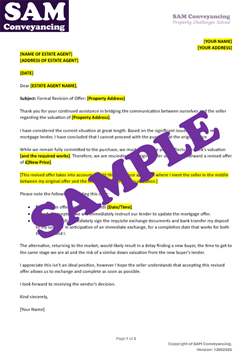
- Suitable for negotiating offers with the seller post home buyer survey, or a down-valued mortgage valuation.
- Instant download.
- Easy to fill in.
Checklist: Buying a flat without a survey
If you ultimately decide to take on the financial risk and proceed without an independent RICS inspection, you must conduct a rigorous visual check yourself. Use this checklist to spot the most common and expensive defects found in leasehold flats.
- Damp and mould: Look closely at ceilings, exterior walls, and around all windows for peeling paint or dark patches, which often indicate poor ventilation or penetrating damp.
- Water pressure and plumbing: Run the taps, flush the toilets, and check the pipework under the kitchen sink for any signs of dripping or historical water damage.
- Communal areas: Inspect the shared hallways, staircases, lifts, and the exterior roof from the ground, as any required repairs in these spaces will be billed directly to you through your service charges.
- Electrics and heating: Check the age of the consumer unit (fuse box), look for scorch marks on plug sockets, and ask the estate agent to provide the most recent boiler service certificate.
- Windows and glazing: Open and close every window to ensure they function correctly, and look for condensation trapped between double-glazed panes, which indicates the glass seal has completely failed.
- Structural alterations: Ask the seller if they have removed any internal walls, changed the layout, or replaced the flooring, as these require formal consent from the freeholder.
High Risk: You are liable for all missed defects
Remember, failing to spot an issue during your viewing does not protect you. Once contracts are exchanged, any repair costs fall entirely on you.
Frequently Asked Questions

Andrew Boast FMAAT is a qualified accountant, conveyancing specialist and author with over 25 years of experience in the UK property sector. Since beginning his career in 2000 within established SRA and CLC-regulated conveyancing solicitor firms, Andrew has overseen the legal journeys of more than 75,000 clients.
He is the self-published author of the first-time buyer guide: How to Buy a House Without Killing Anyone, and a frequent contributor to mainstream UK media on legislative updates, property law, first-time buyer guides, conveyancing best practices, and stamp duty changes. Andrew specialises in resolving complex title issues, property conflict disputes, and property tax options, streamlining the enquiry process to reduce transaction times and maintaining a client-friendly focus.

Amanda Ambler is a highly accomplished conveyancing specialist with over 15 years of dedicated experience across residential property law, legal compliance, and practice management. Having held senior roles, including Head of Legal Practice and Head of Conveyancing at established UK law firms, Amanda possesses a profound, hands-on understanding of the technical intricacies of the property market.
As the designated Legal Content Reviewer for SAM Conveyancing, Amanda ensures that every guide, legal update, and resource published meets the absolute highest standards of accuracy, regulatory compliance, and factual integrity. Her rigorous review process guarantees that complex property legislation and industry processes are communicated clearly, transparently, and safely for home buyers and sellers alike.