Damage to Property Before Exchange of Contracts

If damage to a property occurs before the exchange of contracts, the seller is legally responsible for repairs. Because the buyer is not yet contractually bound, they are not liable for costs and can renegotiate the price or withdraw from the sale if the damage is significant.
The conveyancing process can be long and complicated, and often throws up unexpected road bumps. One situation that may catch you off guard is if there’s damage to the property before the exchange of contracts.
Accidental damage caused by the current owner can cause major issues, as can storms, floods, and fire. Even if the seller is willing to remedy the problem before exchange, repairs can delay the timeline and may give rise to disagreements over spec or quality.
While it doesn’t happen often, it can happen to anyone. So, read on to learn what your next steps are if you face property damage at this stage.
Who is responsible for damage to property before exchange of contracts?
Before the exchange of contracts takes place, the legal position is fairly straightforward. The seller still owns the house, so is still responsible for damage to property before exchange of contracts.
Once you get an offer accepted, it's easy to start thinking of the property as yours, but legally, nothing is committed until the exchange occurs. If damage happens before that point, it's the seller's problem, not the buyer's.
- The seller remains solely responsible for any damage occurring before exchange, so it's generally on them to deal with repairs themselves or make an insurance claim. Either way, it complicates things.
- The property should stay in broadly the same condition as when the offer was accepted. Buyers are entitled to expect the home to be handed over in the same state they agreed to buy it in.
- Buyers are not responsible for repair costs. Because contracts have not yet been exchanged, the buyer is not legally liable for damage to the property.
Serious damage during a transaction doesn't happen often, but when it does, it tends to create a lot of confusion, and fast.
The buyer becomes responsible for property damage from the point of exchange
If you are buying a new home, do your research and have a building insurance policy in place to begin on the date of exchange.
If you are purchasing a leasehold, the building will usually be insured by the freeholder, in which case, you don't need your own building insurance, but you may want to arrange contents cover from the point of completion.
RISK, INSURANCE AND OCCUPATION PENDING COMPLETION
5.1.1 The property is at the risk of the buyer from the date of the contract
5.1.2 The seller is under no obligation to the buyer to insure the property unless:
(a) the contract provides that a policy effected by or for the seller and insuring the property or any part of it against liability for loss or damage is to continue in force, or
(b) the property or any part of it is let on terms under which the seller (whether as landlord or as tenant) is obliged to insure against loss or damage.
Source:Law Society Contract of Sale
Click to compare up to 50 Building Insurance Quotes
Common examples of last-minute property damage
Broken windows
Windows can be broken by an errant ball or while the seller is moving awkward furniture out of the property.
Storm damage
Storms can lift roofing tiles, knock down fences, or tip a nearby tree into a collision with the roof.
Burglary
The property may be vandalised or the front or back door and frame may be damaged by a break-in.
Leaks
Pipes can burst or spring a leak unexpectedly, particularly in the winter months, if the house is unoccupied.
Fire
In the UK, there is one house fire every 15 minutes, usually caused by cooking appliances.
Flooding
In England, approximately 6.3 million properties (including both homes and businesses) are currently at risk of flooding from rivers, the sea, or surface water. This represents roughly 1 in 5 properties (Source: Environment Agency). In Wales, approximately 275,000 properties are at risk, which equates to roughly 1 in 7 properties (Source: Natural Resources Wales).
What happens when you discover damage before exchange?
If you’re the buyer and you become aware of damage to property before the exchange of contracts, it’s important to know what happens next. Basically, it’s a question of contacting your solicitor to ask the seller what they wish to do about it - repair it themselves or drop the asking price.
The seller has a duty of care to maintain the property in the same condition it was in when you made your offer. But how it gets resolved depends on the damage. Minor issues can usually be handled quickly, but anything more significant will either slow things down or prompt both sides to renegotiate the price, if that’s possible.
Here are a few things to avoid:
- Ignoring the damage. It will affect the property, may affect the mortgage offer, and could halt the whole transaction.
- Exchanging contracts before the problem is resolved. Once the contract is signed, responsibility for the property and the damage moves to the buyer.
- Relying on informal agreements with the buyer or seller. You can't rely on a 'gentleman's agreement' that the seller will fix anything between exchange and completion.
Both sides need to keep their solicitors in the loop so that everything gets properly documented. If you don’t and it’s not included in the draft contract you ultimately sign, you can be left with a huge bill to pay for repairs.
Will I lose my mortgage offer?
If the damage to the property is more than superficial, it must be reported to the lender. They may reduce or withdraw their offer. The seller will need to remedy the problem or negotiate to adjust the sale price in line with the lender's new offer.
What happens if the buyer wants to renegotiate the price due to pre-exchange damage?
If damage becomes apparent unexpectedly, the buyer is no longer stuck with their original offer. Nothing is legally binding at that point, so going back to renegotiate is perfectly reasonable, and it’s something the majority will pursue.
The buyer might want the price reduced to cover the work, or the seller might just get it fixed themselves and keep the sale moving at the original figure. The way things go will depend very much on how bad the damage is and how much desire there is from both parties to continue. To ensure you’re properly prepared, be sure to use our helpful pre-exchange checklist.
When should my buildings insurance start as the buyer?
With all this talk about who’s responsible for what, it’s completely normal to then wonder when you should have building insurance in place. You want to be covered against all eventualities, right? Well, if you’re the buyer, you’ll need it in place from the exchange onwards, i.e. once there’s a risk.
If something happens to the property between exchange and completion, it's your problem as the buyer, which is why it’s vital.
- Buildings insurance is typically arranged from exchange of contracts. Most mortgage lenders require it at this stage precisely because the buyer is about to take on legal responsibility for the property.
- The policy should reflect the full rebuild value of the property. This isn't the same as the purchase price, as the two figures can be quite different, so it's worth double-checking before settling on cover.
- Getting it sorted before the exchange means one less thing to think about when everything starts moving quickly at the end. It's easy for insurance to slip down the list when completion is approaching.
Leaving it until moving day means you’re not properly covered and in trouble if something goes wrong. Want to know how else you can protect yourself financially during a purchase? Check out our homebuyer’s protection insurance page.
Need advice about damage to property before exchange of contracts?
Damage before exchange always throws up a lot of questions, and panic…and the answers aren't always easy to get your head around. It’s then that you’ll be glad that you have a great team of conveyancing solicitors in your corner.
You should speak to your instructed conveyancer as soon as you learn of damage to the property. At Sam Conveyancing, we’ve dealt with thousands of buyers and sellers in exactly this kind of situation and know how to get things moving again when a transaction hits a problem.
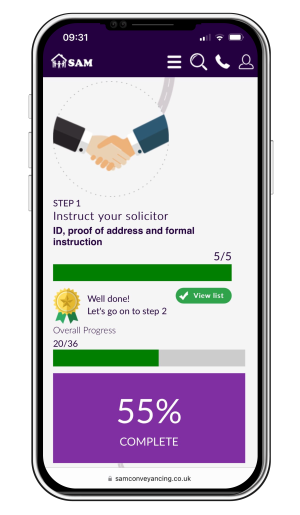
Our conveyancing process area includes:
- online checklists
- videos
- free downloads
- useful tips
It is completely free to use - from start to finish - and saves your progress along the way.
Bonus: Get a FREE book: House to Buy a House without Killing Anyone (Value £9.99).

Andrew Boast FMAAT is a qualified accountant, conveyancing specialist and author with over 25 years of experience in the UK property sector. Since beginning his career in 2000 within established SRA and CLC-regulated conveyancing solicitor firms, Andrew has overseen the legal journeys of more than 75,000 clients.
He is the self-published author of the first-time buyer guide: How to Buy a House Without Killing Anyone, and a frequent contributor to mainstream UK media on legislative updates, property law, first-time buyer guides, conveyancing best practices, and stamp duty changes. Andrew specialises in resolving complex title issues, property conflict disputes, and property tax options, streamlining the enquiry process to reduce transaction times and maintaining a client-friendly focus.

Amanda Ambler is a highly accomplished conveyancing specialist with over 15 years of dedicated experience across residential property law, legal compliance, and practice management. Having held senior roles, including Head of Legal Practice and Head of Conveyancing at established UK law firms, Amanda possesses a profound, hands-on understanding of the technical intricacies of the property market.
As the designated Legal Content Reviewer for SAM Conveyancing, Amanda ensures that every guide, legal update, and resource published meets the absolute highest standards of accuracy, regulatory compliance, and factual integrity. Her rigorous review process guarantees that complex property legislation and industry processes are communicated clearly, transparently, and safely for home buyers and sellers alike.