
Gifted Deposit or Family Loan: A First-Time Buyer’s Complete Guide

Owning your first home is an unforgettable milestone. But if you are relying on the 'Bank of Mum and Dad' to cross the finish line, navigating the legal framework correctly is essential. Overlooking the distinction between a gifted deposit and a family loan can lock you into a legal and financial catastrophe. While a gifted deposit is an unconditional transfer with no repayments or property rights for your parents, a loan is treated as a financial liability.
Failing to declare the true nature of this financial boost can instantly derail a mortgage application, trigger fraud investigations, or even expose your family to unexpected tax traps. Your conveyancing solicitor will guide you smoothly through the process and show you how to meet your lender's requirements. This guide explores the legal realities of gifted deposits versus family loans, how they impact your purchase, and how to protect your family's investment.
- Gift vs loan: Gifted deposits are non-repayable gifts with no property rights; family loans are liabilities that cut borrowing power.
- Fraud risk: Hiding a loan as a gift violates anti-money laundering laws and can trigger immediate mortgage revocation.
- Lender refusal: Most mainstream lenders accept gifted deposits, but strictly limit or reject parental loans.
- Stamp Duty trap Structuring a loan via a Deed of Trust can trigger extra Stamp Duty and cancel first-time buyer relief.
- Legal proofs: Solicitors require 3 to 6 months of bank statements, ID checks, and a signed Gifted Deposit Letter.
What is a gifted deposit vs a family loan?
Within a family property purchase, the money provided by parents or a family member must fall into one of two categories:
Gifted deposit
This is money given to you with absolutely no expectation of repayment and no claim of ownership over the property. Your parents explicitly waive all rights to the money and the home. Lenders are particular about where the money comes from and usually outright refuse a deposit from someone who isn't immediate family.
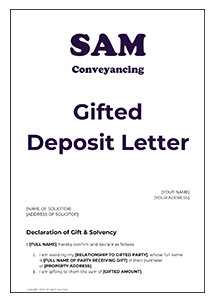
The donor will need to provide a Gifted Deposit Letter, which is a formal declaration, proof of ID and address, and proof of funds. It's important to note that the donor will need to provide 3 to 6 months of bank statements, and delays can occur if these are not prepared.
You don't need to pay tax on a gift immediately, and you can be gifted any amount of money tax-free at the point of transfer.
Download a gifted deposit letter template, free from hassle.
- Instant download
- Easy to fill in
- Suitable for mortgage lenders
- Sign, witness and gift the money
The templates will be attached to your confirmation email after payment. Please allow a couple of minutes for the email to arrive.
£4.99 INC VAT
Family loan
This is when money is provided under an agreement that it will be repaid at some point in the future, either in regular instalments, after a set number of years, or when the property is eventually sold.
Lenders treat this like any other loan, so it can reduce your borrowing amount when applying for a mortgage.
If parents don't have a formal legal document, they can't protect their money. Usually, they will sign either a:
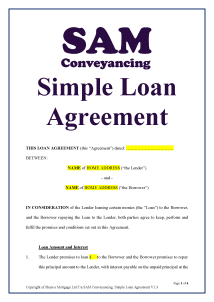
Download a loan agreement free from hassle that is legally binding* in England & Wales.
- Instant download in Word and PDF format.
- Suitable for cash loans to friends/family.
- Legally binding.*
- Sign, witness and lend the money.
The templates will be attached to your confirmation email after payment. Please allow a couple of minutes for the email to arrive.
Whether you have a gifted deposit or loan completely changes the way mortgage lenders look at the situation, so it is important to understand the differences:
Feature | Gifted deposit | Parental loan |
Repayment | Never repaid. No monthly or future obligation. | Must be repaid, either monthly or upon the sale of the house. |
Impact on mortgage borrowing | None. It can actually help you secure better interest rates by lowering your Loan-to-Value (LTV) ratio. | Reduces your borrowing amount. Lenders factor the loan repayment into your monthly outgoings, lowering your affordability. |
Legal stake | The parent signs away all rights to the property. | The parent may secure the loan against the property (a second charge), meaning they have a legal claim to its value. |
Lender acceptance | Universally accepted by almost all mainstream lenders. | Strictly restricted. Many high street lenders will outright refuse a loan that requires a deposit. |
Tax | Falls under the 7-year rule for IHT. | No tax is payable if the loan is repaid. If interest is paid on top, then tax is payable on the interest earned. |
Expert Tip: Be careful of the Additional Rate of Stamp Duty trap
A deed of trust can be used to retain control of the gift you are providing to your children; however, you could be hit by the Additional Rate of stamp duty and lose out on the First-Time Buyer Relief.
- Additional Rate: This is currently 5% of the property price and is applicable if any of the beneficial owners, not the legal owners, the people who hold money in the property, own another property, then they are liable to pay the Additional Rate.
- First-Time Buyer Relief: You lose the benefit of the first-time buyer relief if any of the beneficial owners, as above, have bought a property before.
A deed of trust is the worst way to protect the repayment of a gift to your children because of these stamp duty implications.
CEO of SAM Conveyancing
Why can a parent's loan complicate a mortgage?
Lenders have two major issues when it comes to parent loans:
Bankruptcy risk
Banks want to know that if a house is repossessed, they can get 100% of their money back. If parents have a legal agreement stating they are owed money from the property, it creates a legal conflict. They prefer that parents agree to pay you back only when a house is sold, because it won't affect cash flow.
Loan agreement
You must have a Loan Agreement or a Directors' Loan (if borrowing from a family business) stating repayment terms, interest rates, and a plan for what happens if things go wrong.
Parents can charge interest, but if they are charging high rates, they will be considered a commercial lender, and your application will be blocked.
Why do you need to declare it?
As a home buyer, you must understand that complete transparency is mandatory. If you try to pass off a family loan as a gift, or simply fail to log the funds altogether, you risk committing mortgage fraud.
Your mortgage lender bases its interest rates and lending risks on your financial profile. If they uncover an undeclared financial string attached to your deposit late in the conveyancing process, they will immediately revoke your mortgage offer.
What does the law say?
Hiding the true nature of your funds lies in UK anti-money laundering laws and strict lender criteria. Under UK Council of Mortgage Lenders rules and SRA standards, a conveyancing solicitor has an absolute legal duty to verify the source of all funds used in a transaction.
Failing to tell your lender that a deposit is actually a loan that needs to be paid back falls squarely under Section 3 of the Fraud Act 2006, which states:
A person is in breach of this section if he dishonestly fails to disclose to another person information which he is under a legal duty to disclose, and intends, by failing to disclose the information to make a gain for himself or another, or to cause loss to another."
Source: Fraud Act 2006
How does the process work?
When you have parental funds, your conveyancing solicitor must execute a formal verification process across several key legal sections:
Conveyancing stage | Area inspected | Documentation required |
Stage 1: Source of funds | Parent's financial profile | 3–6 months of certified bank statements showing how the money was accumulated. |
Stage 2: Anti-money laundering | Parent's identity verification | Digital ID checks, certified passports, and proof of address for the parents. |
Stage 3: Legal intention | The nature of the capital | A formally signed, witnessed Gifted Deposit Deed / Letter confirming no repayment is required. |
Stage 4: Loan structuring | Alternative legal setup | If it is a loan, drafting a formal Deed of Trust or Second Charge (if approved by the lender). |
What are the risks?
Parents need money back
With average UK life expectancies climbing, a parent who generously gives away £50,000 today might find themselves facing steep local authority care home fees 10 or 15 years down the line.
If a parent gifts money, but later goes into care, the local authority will look back at their financial history. If they deem the gift was made intentionally to reduce their capital assets to qualify for state-funded care, it can be flagged as a Deprivation of Assets.
The Inheritance Tax 7-year rule
Gifts to children are classified as Potentially Exempt Transfers. If the parent passes away within 7 years of making the gift, the deposit amount could be included in their total estate and subject to up to 40% Inheritance Tax.
If a parent gifts money, but later goes into care, the local authority will look back at their financial history. If they deem the gift was made intentionally to reduce their capital assets to qualify for state-funded care, it can be flagged as a Deprivation of Assets.
Case study: The £8,500 silent loan collapse
A first-time buyer couple in East London found a property and successfully secured a mortgage offer. Their parents had provided £35,000 to top up their deposit, which the buyers told the mortgage broker was a gift.
Two weeks later, the conveyancing solicitor noted a casual comment in an email that the couple would "start paying Mum and Dad back £200 a month" once they moved in, which altered the fund status from a gift to an undisclosed loan.
The solicitor was legally obligated to inform the mortgage lender, leading to the file being frozen, monthly debt ratios being recalculated, and the mortgage offer was entirely withdrawn.
The house chain collapsed, and the buyer lost the property and was left with a non-refundable bill of £8,500 for the survey costs, structural reports, and abortive legal fees.
This case shows how uncoordinated parental contributions and failure to follow processes correctly can turn a house-buying journey into a legal disaster.
What does it cost?
The cost depends on if the money is a gift or a loan.
- Gift: The conveyancing solicitor will normally charge an additional fee for handling the administrative work involved in reviewing the parents' ID, source of funds, and the Gifted Deposit Letter.
- Loan Agreement: A Simple Loan Agreement you can download online for INC VAT. More complex loan agreements can cost upwards of £600 EXC VAT.
- Deed of Trust: As a deed gives a beneficial interest in property that could trigger the Additional Rate of SDLT, it is unlikely you'll draft the arrangement in a deed. If you do, the basic deed of trust starts from £304 INC VAT
First-time buyer's deposit checklist
If you are using family money to purchase your first home, follow these steps immediately to ensure a seamless transaction.
Your gifted deposit action plan:
- Identify the true nature: Sit down with your parents and explicitly establish: is this a 100% unconditional gift, or does money need to return to them later?
- Inform your broker early: Tell your mortgage broker the exact source of your deposit before they submit your formal application.
- Prepare the paperwork trail: Gather your parents' photo ID, proof of address, and 6 months of bank statements showing the clear build-up of the funds.
- Draft the gifted letter: Have your parents sign a comprehensive Gifted Deposit Declaration confirming they hold no equitable interest in the property.
- Instruct a specialist solicitor: Secure a proactive conveyancer who can confidently draft protective measures, such as a Deed of Trust, to keep family money secure.
- Get a transparent quote upfront: Avoid surprise compliance add-on fees by instructing a firm that provides clear, fixed costs for gifted deposit processing from day one.
Frequently Asked Questions

Andrew Boast FMAAT is a qualified accountant, conveyancing specialist and author with over 25 years of experience in the UK property sector. Since beginning his career in 2000 within established SRA and CLC-regulated conveyancing solicitor firms, Andrew has overseen the legal journeys of more than 75,000 clients.
He is the self-published author of the first-time buyer guide: How to Buy a House Without Killing Anyone, and a frequent contributor to mainstream UK media on legislative updates, property law, first-time buyer guides, conveyancing best practices, and stamp duty changes. Andrew specialises in resolving complex title issues, property conflict disputes, and property tax options, streamlining the enquiry process to reduce transaction times and maintaining a client-friendly focus.

Amanda Ambler is a highly accomplished conveyancing specialist with over 15 years of dedicated experience across residential property law, legal compliance, and practice management. Having held senior roles, including Head of Legal Practice and Head of Conveyancing at established UK law firms, Amanda possesses a profound, hands-on understanding of the technical intricacies of the property market.
As the designated Legal Content Reviewer for SAM Conveyancing, Amanda ensures that every guide, legal update, and resource published meets the absolute highest standards of accuracy, regulatory compliance, and factual integrity. Her rigorous review process guarantees that complex property legislation and industry processes are communicated clearly, transparently, and safely for home buyers and sellers alike.