
New Build vs Period Property: Which Should You Buy?

When you are hunting for a home, you aren't just choosing a layout; you're choosing a lifestyle, a budget, and a completely unique legal journey. The new build vs period property debate usually pits the modern, energy-efficient convenience of a blank canvas against the character, history, and architectural charm of an older home.
But beyond the immediate aesthetics, there are also major structural, financial, and hidden legal differences that many buyers overlook until they are locked into a contract, trapped in a broken chain, or facing unexpected developer fees.
- Energy vs. Space: New builds offer top energy efficiency but smaller plots, while period homes offer grander proportions but higher utility bills.
- The right survey: Snagging Surveys are used in new builds for developer defects, whereas period properties need a RICS Level 3 Survey to catch structural risks.
- Essential safeguards: Off-plan buyers need a Long-Stop Date to protect deposits, while period buyers must verify planning sign-offs for past renovations.
Main differences between a new build vs period property
To compare different property types accurately, it can help to understand what defines them under UK housing standards:
- New builds: These are modern homes, often sold off-plan (when you sign a contract before or during construction), made to strict, modern Building Regulations and are sold alongside a structural warranty.
- Period properties: These are homes built before WW1 and are typically from the Georgian, Victorian, or Edwardian eras. They lack a rigid legal definition and are characterised by traditional construction methods and heritage materials.
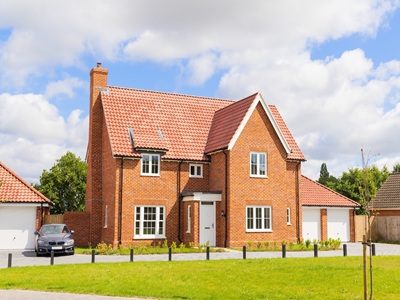


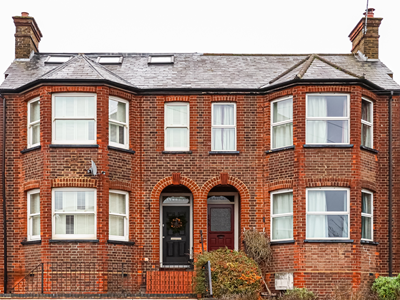
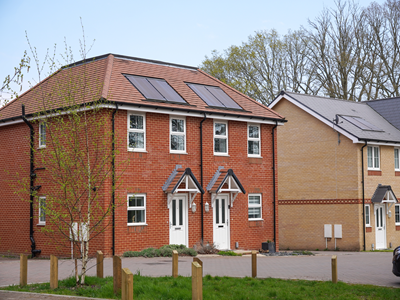

The spatial showdown
It's no surprise: modern new builds are structurally smaller than period homes.
As land values rise and developers maximise plot efficiency, the average square footage of a new build property has steadily decreased.
While new builds excel at optimising space with open-plan and multi-purpose rooms, built-in storage, and en-suite bathrooms, they cannot compete with the sheer volume of a period home.
On the other hand, period homes were built at times when land was cheaper and high ceilings were a status symbol. They offer grand sash windows, thick structural walls, and significantly larger garden plots.
Expert Tip: Things aren't always as big as they seem
Be aware of the Show Home Trap when viewing a new build. Developers will often use smaller, custom-scale furniture and omit internal doors to make rooms feel larger than they are. It's always worth double-checking the actual blueprint dimensions against any physical tape measure.
CEO of SAM Conveyancing
The leasehold vs freehold nuance
When comparing houses, period homes are almost universally freehold, meaning you own the building and the land it sits on completely. Thanks to the Leasehold and Freehold Reform Act, modern new-build houses are now legally required to be sold as Freehold too, eliminating old leasehold scams. However, watch out for 'fleecehold' - many new developments still carry private estate management fees for the upkeep of shared roads, green spaces, or drainage systems.
Council tax bands
New builds are notoriously difficult for local councils to band immediately. Many buyers move in on a provisional band, only to be hit with an unexpected backdated bill a year later when the Valuation Office Agency (VOA) formally assesses the plot. However, for period properties, the band is fixed and public knowledge from day one, allowing you to budget perfectly with no nasty historical surprises.
While size is important, the age of your home impacts many other factors, from its architectural style to its energy efficiency, so it is important to be aware of the differences.
Feature | New build property | Period home (pre-WW1) |
Average age | Built within the last 0 to 2 years | Built before 1914 (Georgian, Victorian, Edwardian) |
Construction style | Cavity walls, modern insulation, standardised timber/block | Solid brick/stone masonry, timber framing, lime mortar |
Structural integrity | Settling hairline cracks, subject to snagging | Settled foundations, subject to historic movement/rot |
Energy target | Typically EPC Grade A or B | Typically EPC Grade D, E, or F |
Expert Tip: Beware the freeholds that have an Estate Management Company
It is more common than not for new build freeholds to be bound, like a leasehold, to a Freehold Management Company. This means you pay a third-party company, often set up by the developer, to maintain the local area.
CEO of SAM Conveyancing
The efficiency divide: new build EPC rating vs historic charm
Energy efficiency is no longer just a checkbox for environmental peace of mind; it is a major driver of monthly living costs. The divide between old and new systems can be stark.
The systematic new build approach
Modern developers must satisfy strict, continuously updated Building Regulations. They achieve premium energy efficiency ratings through a multi-layered, integrated approach. Often, to achieve this, new builds will have advanced cavity wall insulation, airtight construction techniques, and highly efficient modern heating systems.
Data from the Ministry of Housing, Communities and Local Government reveals that over 85% of new-build homes in the UK achieve an EPC rating of A or B.
The period property dilemma
By contrast, fewer than 5% of period properties achieve this standard, with the vast majority sitting at a D or E rating.
Upgrading a century-old home is a delicate science. These properties were originally designed to breathe, and they were constructed from highly porous materials such as lime mortar and soft brick. Open fireplaces naturally draw airflow through the structure.
Attempting to force a period home to meet modern, airtight thermal standards is highly risky. Installing solid wall insulation, confronting strict conservation glazing restrictions, and blocking natural ventilation can trap moisture and rapidly cause severe damp issues.
Critical regulations to keep in mind
Every property type has its structural and financial pitfalls; being aware of the regulations and how they may affect a property before making an offer can save you tens of thousands of pounds.
- The new-build premium depreciation: Brand-new homes carry a price premium. Like a new car driven off the forecourt, as soon as you unpack your bags, the value of your house can go down. If you try to sell within the first few years of buying a new build, you may experience immediate short-term depreciation of 10% to 15% in the resale value.
- Structural failure risk: Properties constructed before 1870 do not have physical damp-proof courses. Under UK Building Regulations Part C (Site preparation and resistance to contaminants and moisture) and Historic England guidance, applying modern, impermeable damp-proofing materials to these structures is a regulatory risk. These buildings rely entirely on structural breathability to stay dry so modern materials can trap moisture, accelerate timber rot, and cause structural failure - potentially breaching conservation or listing laws and leaving you liable for expensive restorative work.
- Legal incentives and mortgages: Under UK tax law, if a developer offers to pay your Stamp Duty as an incentive, this must be declared to your mortgage lender. Failure to do so can negatively affect your loan-to-value (LTV) calculation and compromise your mortgage offer.
Why is it important to know the age of a property?
The age of your property the kind of home survey you need; it can also affect your day-to-day living. When deciding between buying a new build and a period property, it is important to research the key advantages and disadvantages of each.
Property Type | Advantages | Disadvantages |
New Build |
|
|
Period Home |
|
|
How does the age of a building affect the conveyancing process?
The journey from your initial viewing to getting your keys can follow entirely different procedural and legal rules depending on the property's age.
For a new build, you pay a reservation fee (which may only be partially refundable if you withdraw), usually between £500 and £2,000, directly to the developer to take it off the market. For a period home, you make a formal offer via an estate agent. This remains entirely non-binding and 'Subject to Contract' until contracts are exchanged.
Your solicitor handles custom checks for a new build, focusing on structural warranties, planning permissions, road adoption agreements, and developer engrossment fees. For a period home, traditional conveyancing takes centre stage, meticulously checking ancient title deeds, historical rights of way, boundary lines, and local conservation area rules.
A new build requires an independent snagging survey right before or after completion to spot building defects. A period home requires a comprehensive RICS Level 3 Building Survey to thoroughly evaluate the deep structural integrity of the foundations, walls, and timber.
Top tips to navigate the property traps
Buying a home is rarely smooth sailing, and whether you fall for the charm of the past or the shine of the new, there are hidden dangers built into both paths.
Off-plan trap
Developers of new builds frequently include strict clauses pushing for completion "on notice" the moment the building is certified as structurally safe. However, if construction lags and your mortgage offer expires (which typically happens after six months), a sudden spike in interest rates or a change in your financial circumstances could leave you unable to secure a new loan. In this scenario, you risk losing your deposit entirely and facing severe breach-of-contract claims from the developer.
Quick fix: Get a Long-Stop date
Instruct your solicitor to get a strict Long-Stop Date into the contract. If the developer fails to finish the property by this exact calendar date, you will retain the legal right to keep your full deposit completely intact.
The "flawless illusion" trap
Buyers often conflate brand new with perfect, assuming a pristine exterior guarantees flawless construction. In reality, developers working under tight deadlines frequently rush the finishing stages. Sometimes, serious defects, such as missing cavity barriers, poorly designed plumbing, or insufficient loft insulation, can be concealed, only for them to manifest as costly nightmares down the line.
Quick fix: Don't rely on standard structural warranties
Budget for an independent new build snagging survey to be conducted either pre-completion or during your first week in the property. Under developers' strict two-year builder liability, presenting an official, professional defect report forces them to remedy faults at no extra cost to the buyer.
The invisible alteration trap
In period properties, previous occupants may have mistakenly introduced incompatible modern materials to an old building. Making changes - such as replacing traditional, breathable lime mortar with modern Ordinary Portland Cement or coating exterior stone in waterproof plastic paint- is a recipe for disaster.
Quick fix: Never rely on a basic mortgage valuation survey
A basic home survey is little more than a superficial glance for the lender. Commission a comprehensive Level 3 RICS Home Survey executed by a specialist who understands historic construction techniques. This will help you know exactly what is happening beneath the plaster.
The rogue modernisation trap
The charm of an updated period home can actually mask severe legal liabilities. Extensions, loft conversions, or the removal of internal load-bearing walls may have been carried out by previous DIY enthusiasts or rogue contractors without ever obtaining local authority planning permission, building regulation sign-off, or Listed Building Consent.
Quick fix: Verify the paperwork
Have your solicitor meticulously verify the paperwork for every modification made to the property. If structural changes lack official sign-off, you risk inheriting a legally un-sellable asset - or worse, receiving an enforcement notice forcing you to undo the work at your own expense.
Case study: The power of due diligence
Sarah bought a modern townhouse off-plan. Her solicitor proactively identified a missing road adoption agreement and successfully renegotiated an extension of her mortgage expiry clause when construction was delayed by 2 months. Right after moving in, an independent new build snagging survey identified 42 defects, ranging from poorly fitted doors to minor plumbing leaks. The developer was legally bound to resolve the snags at no cost.
Tom fell in love with a charming Victorian terrace. Rather than cutting corners, he invested in a comprehensive RICS Level 3 home survey. The inspector uncovered a severely sagging roof frame and a hidden woodworm infestation beneath the floorboards. Armed with the detailed survey report, Tom successfully negotiated £12, 000 off the final purchase price to directly cover the necessary structural repairs.
Battle of the bills: Modern new builds vs period properties
When choosing between a modern development and a historic home, the decision often comes down to a balance of lifestyle preferences and ongoing financial commitments. While a fresh-out-of-the-box home offers predictable, efficient living, a historic property delivers unmatched architectural character.
To weigh up your options, it is important to consider how your purchase might impact your future finances.
Cost element | New build property | Period property |
Purchase price | Typically carries a 15% to 20% new build premium depreciation over similar older properties in the area. | Market value driven, but often easier to negotiate down if defects are found. |
Average energy bills | Average of £1,500 lower per year compared to older, un-retrofitted properties. | Significantly higher monthly utility costs due to heat loss. |
Survey requirements | Requires a new build Snagging Survey (£300 - £600) to catch cosmetic and minor builder defects. | Requires a RICS Level 3 Building Survey (£600 - £1,200+) to inspect foundations and structural integrity. |
Maintenance Costs | Near-zero for the first 5–10 years, though you may face ongoing development estate management fees. | Variable; an older property requires an ongoing maintenance fund for roof repairs, brick repointing, and damp management. |
Does property age affect how long buying takes?
The timeline from offering to moving in looks completely different for both parts.
- New builds: If the building is already complete, it can move quickly. However, if it is off-plan, it can take anywhere from 3 to 12 or more months, depending on construction schedules.
- Period properties: Typically takes 12 to 16 weeks from instruction to completion. This timeline is heavily dependent on the length and stability of the property chain.
Expert Tip: How to move fast in securing your property
If you are buying a new build, ensure your mortgage broker uses a specialist lender accustomed to new-build offers that can easily be extended 6 to 12 months without requiring a complete re-application. If you want to move fast with a period property, instruct your search providers on day one and choose a property with no onward chain.
CEO of SAM Conveyancing
Your buying checklist
Before you sign any paperwork or pay a non-refundable reservation fee, use this quick checklist to guide your next move:
You need to:
- Check the EPC: Ask to see the predicted or current EPC certificate to calculate your true monthly running costs.
- Book the correct survey: Secure a new build snagging survey for a new build, or a RICS Level 3 Building Survey for any period home.
- Review long-stop clauses (for new builds): Verify that your solicitor has implemented a strict long-stop date to safeguard your exchange deposit against lengthy developer delays.
- Inspect planning permissions (for period homes): Double-check that any existing extensions or loft conversions possess formal Building Regulations sign-off and planning permissions.
- Calculate estate management fees: Confirm whether the new build plot comes with ongoing private road, drainage, or green-space maintenance charges.
Ready to make a move?
Whether you decide on the pristine efficiency of a new build or the timeless character of a period home, securing your investment requires expert legal protection. Structural surprises, tricky developer contracts, and broken property chains can cost you thousands if handled incorrectly.
Don't leave your purchase to chance. Get a fast, transparent conveyancing quote from specialists who know how to protect your deposit.
Frequently asked questions

Andrew Boast FMAAT is a qualified accountant, conveyancing specialist and author with over 25 years of experience in the UK property sector. Since beginning his career in 2000 within established SRA and CLC-regulated conveyancing solicitor firms, Andrew has overseen the legal journeys of more than 75,000 clients.
He is the self-published author of the first-time buyer guide: How to Buy a House Without Killing Anyone, and a frequent contributor to mainstream UK media on legislative updates, property law, first-time buyer guides, conveyancing best practices, and stamp duty changes. Andrew specialises in resolving complex title issues, property conflict disputes, and property tax options, streamlining the enquiry process to reduce transaction times and maintaining a client-friendly focus.

Amanda Ambler is a highly accomplished conveyancing specialist with over 15 years of dedicated experience across residential property law, legal compliance, and practice management. Having held senior roles, including Head of Legal Practice and Head of Conveyancing at established UK law firms, Amanda possesses a profound, hands-on understanding of the technical intricacies of the property market.
As the designated Legal Content Reviewer for SAM Conveyancing, Amanda ensures that every guide, legal update, and resource published meets the absolute highest standards of accuracy, regulatory compliance, and factual integrity. Her rigorous review process guarantees that complex property legislation and industry processes are communicated clearly, transparently, and safely for home buyers and sellers alike.