Buying a House with a Tree Preservation Order: A Complete Guide

The presence of a Tree Preservation Order (TPO) can be a point of pride for a property, often indicating mature, beautiful greenery that enhances the local amenity value. However, for a prospective buyer, it also introduces a layer of legal complexity that could cause damage to your property and cost you.
A TPO makes it a criminal offence to cut down, top, lop, or wilfully damage the protected tree without written consent from the Local Planning Authority (LPA). Before you exchange contracts, it is vital to understand that you are not just buying a home; you are becoming the legal custodian of a protected natural asset, with all the responsibilities that entails.
You cannot ignore a TPO or claim ignorance because there are laws around the cutting of trees and if you get it wrong, you could receive a hefty fine, the cost to replace, and potentially a criminal record. This is a complete guide to finding out whether you have a protected tree, maintaining it, removing it, and what happens if you remove a protected tree without permission.
How to identify a TPO during conveyancing
There are two places where you'll find out if there are any trees that have a Tree Preservation order: the TA6 Property Information Form and the Local Authority Search.
TA6 Property Information Form
Section 5.9 of the Property Information Form requires the seller to confirm:
- Are any trees on or overhanging the property subject to a tree preservation order (TPO)?
- Are you aware of any works carried out on those trees?
- Give details and provide a copy of the TPO along with any relevant documents.
Local Authority Search
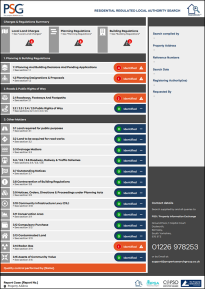
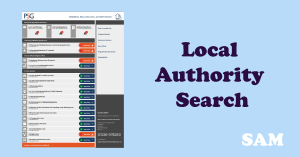
The Local Authority Search will state if any of the trees on your property are protected by a Tree Preservation Order. The search is ordered during the conveyancing process, and for most mortgage lenders, it is a mandatory search to obtain because of the information it contains.
Buy a Local Authority Search
- Professionally insured Regulated Local Authority Search.
- Available for any local authority in England & Wales.
- Ordered today, delivered in line with local authority timeframes.
- Fixed fee of £215 INC VAT
Expert Tip - Don't just focus on your garden
If there are any trees close to or overhanging your boundary, then you must check if the tree is protected before undertaking any pruning. You don't avoid penalties and risks if you are pruning your neighbour's protected tree.
CEO of SAM Conveyancing
What is the law about tree preservation?
In the United Kingdom, the law governing Tree Preservation Orders (TPOs) is primarily set out in the Town and Country Planning Act 1990 and the Town and Country Planning (Tree Preservation) (England) Regulations 2012. The law is designed to protect trees that provide significant amenity value to the public. If a tree is protected by a TPO, it is a criminal offence to carry out work on it without the express written consent of the Local Planning Authority (LPA).
The Core Legislation
- Town and Country Planning Act 1990 (Part VIII): This is the primary act that gives local authorities the power to make Tree Preservation Orders.
- The 2012 Regulations (England): These regulations streamlined the process, ensuring all TPOs, regardless of when they were created, follow the same rules regarding applications, appeals, and compensation
If it appears to a local planning authority that it is expedient in the interests of amenity to make provision for the preservation of trees or woodlands in their area, they may for that purpose make an order with respect to such trees, groups of trees or woodlands as may be specified in the order.
Source: Town and Country Planning Act 1990 - Section 198: Power to make tree preservation orders.
Prohibited Acts
Under Section 202 of the Act, you are prohibited from performing the following on a protected tree without permission:
- Felling or Uprooting: Removing the tree entirely.
- Topping or Lopping: Cutting off the top of the tree or significant side branches.
- Wilful Damage or Destruction: This includes damaging the root system (often during construction or landscaping) or "ringing" the bark.
Penalties & Risks
The legal consequences for breaching a TPO are severe and are categorised by the intent and result of the action:
Offence | Risk | Maximum Penalty |
Felling or Total Destruction | Critical | An unlimited fine in the Crown Court, or up to £20,000 per tree in a Magistrates' Court. |
Unauthorised Pruning (Lopping) | High | Fines up to £2,500 (or higher if the tree's health is significantly compromised). |
Criminal Record | Critical | Conviction for a TPO breach results in a permanent criminal record. |
Compulsory Replacement | High | You will be legally required to plant a replacement tree of a similar size/species at your own cost. |
How do you maintain the tree?
With the penalties and risks of getting it wrong, how do you maintain a tree protected by a TPO? The answer is that all maintenance, from safety inspections to pruning, must be paid for by the homeowner using a qualified arboriculturalist (aka a Tree Surgeon). Plus, you need the LPA's consent before undertaking any work on the tree.
For some buyers, this may be a consideration of whether they are prepared to take on this additional admin/cost and how often the sellers undertake the work.
Expert Tip - Ask the seller how often they prune the tree
If there is a TPO, you should ask your solicitor to raise the following legal enquiries:
- When did the seller instruct a qualified arborist to prune the tree?
- What was the cost of the arboriculturist to prune the tree?
CEO of SAM Conveyancing
Applying for consent to carry out works
As a buyer, you need to know what you are taking on with a protected tree. Each time you need any work completed, you must apply for consent to work. It is not as simple as hiring a tree surgeon; you must receive a Decision Notice from your Local Planning Authority (LPA) before any tools touch the tree.
Step 1. Preparation and evidence gathering
Before applying, you should consult a qualified Arboriculturalist (tree surgeon). The council will reject vague requests, such as trimming or lopping. You need to provide a lot more detail than that, including:
- Specify the Work: Use precise terms such as "Crown Reduction by 2 metres" or "Crown Lifting to 4 metres".
- Provide a Reason: You must explain why the work is needed (e.g., to improve light, to not breach a neighbour's right to light, for safety, or to clear a structure).
- Gather Evidence: If you are claiming the tree is causing structural damage (subsidence) or is diseased, you must provide a technical report from a structural engineer or a tree expert.
Step 2. Submit application
Most applications are submitted online through the Planning Portal using the national 1APP form, officially titled Application for Tree Works.
- Sketch Plan: You must include a simple map showing the tree's position in relation to your house and the road.
- Photographs: Clear photos of the tree and the specific branches you wish to prune are highly recommended.
- Cost: There is no fee for a standard TPO application.
Step 3. Visit from a Tree Officer
Once submitted, the council will validate your application to ensure all information is correct. A Tree Officer from the council will usually visit your property to inspect the tree from the ground. They do not always need you to be present if they can see the tree from a public area or your front garden.
Step 4. The decision period
The council has a statutory 8-week period to make a decision. If it is granted, you receive a Decision Notice. It may include "conditions" (e.g., the work must be completed within 2 years or in accordance with a specific British Standard). If it is refused, it is usually because the works would harm the area's "amenity value".
Which types of trees are protected?
In England and Wales, the law does not provide a list of the types of trees it classifies as a protected species. Instead, any species of tree can be subject to a Tree Preservation Order (TPO) if it meets the criteria of providing significant public amenity value.
While the species is not the deciding factor, the local planning authority (LPA) uses a specific set of criteria to determine if a tree is worthy of legal protection. To be granted a TPO, a tree is typically assessed against four main pillars. If a tree scores low in these areas, it is unlikely to be protected.
Public Visibility
The most important factor is that the tree must be visible from a public place, such as a road, a footpath, or a park. A tree in a front garden or a large tree towering over a boundary is much more likely to be protected. Trees hidden in a large back garden, completely obscured from public view, rarely qualify for a TPO as they do not provide a public amenity.
Individual or Collective Impact
The LPA looks at the tree's physical characteristics:- Size and Form: Is it a particularly fine example of its species?
- Rarity: Is it a rare species in that specific local area?
- Future Potential: Even a sapling can get a TPO if it has the potential to become a significant landmark.
- Group Value: Sometimes trees aren't special individually, but they form a group or woodland that defines the character of the local area.
Historic or Cultural Importance
Trees with a documented history, such as those planted to commemorate an event or those associated with a historic figure or building, are often prioritised for protection. A famous tree like this is the Sycamore Gap Tree Near Crag Lough, Northumberland.
Expediency
The council must believe that there is a risk to the tree. If a developer plans to clear a site or a new homeowner expresses intent to cut down a prominent tree, the council may issue an emergency TPO to protect it.
Expert Tip - Big tree, no TPO, the council could still issue one
If you are buying a property without a TPO but the garden has trees that could add amenity value, the council could still issue a Tree Preservation Order.
CEO of SAM Conveyancing
What is NOT covered by a TPO?
As we've seen above, the law isn't clear on exactly what trees are included; it is, however, very clear on what cannot be protected:
Plant Type | Why is it not covered? |
Bushes and Shrubs | TPOs apply strictly to trees. Common garden shrubs like Laurel or Buddleia cannot have a TPO. |
Hedges | A formal, managed hedge cannot have a TPO. However, an ancient hedge that has grown out into a line of tall trees can sometimes be protected. It is important to note the 2 metre rule when it comes to hedges. |
Commercial Tree Orchards | Trees grown specifically for commercial fruit production are generally exempt, though private fruit trees in a garden can be protected. |
Wisteria | Wisteria is fundamentally a vigorous, woody vine (a climbing shrub), not a tree, so it cannot have a TPO. Wisteria can, however, cause damage to your property. |
What could be covered by a TPO?
The council can choose any tree they like, but here are some standout ones that could have a TPO (even if they don't have one now):
Tree Type | Why could it be covered? |
Ancient Oak/Beech | High heritage and amenity value; prominent in the landscape. |
Ornamental Front Garden Tree | Highly visible to the public. |
Self-seeded "Weed" Tree (e.g. Sycamore) | Can be protected if it provides the only greenery in a barren street. |
Expert Tip - A TPO isn't needed in a conservation area
If you are buying a house in a Conservation Area, any tree with a trunk diameter greater than 75mm (measured 1.5m above ground) is automatically protected with a similar level of strictness as a TPO, regardless of its species or visibility.
The conservation area is in itself a valuable amenity.
CEO of SAM Conveyancing
How do you remove a tree with a TPO?
You cannot remove a tree that has a TPO unless:
- Dead or Dangerous Trees: If a tree is dead or presents an immediate risk of serious harm. Caution: You must still give the Local Planning Authority five days' notice unless the danger is an absolute emergency, and you must provide evidence (photos/expert report). The Local Planning Authority may decide that pruning is required instead of total removal.
- Detailed Planning Permission: If a tree stands in the way of a development that has already received full (not outline) planning permission.
How can a tree be dangerous?
Trees are beautiful, but can be very dangerous and damaging to property, and here's why:
- Roots: Tree roots can penetrate the foundations of the property or loosen the soil, causing movement known as subsidence.
- Falling Over: A tree could be blown over, causing physical damage to the property. As this isn't something you can plan for, the LPA would only likely intervene if a tree surgeon confirmed the likelihood of the risk that the tree will fall.
- Debris: Pine needles, sap, or other debris can litter and damage the property's roof. It is unlikely the LPA would agree to remove the tree because of this, but they may grant removal of some branches.
Summary before Buying
- Check for TPOs: Check the seller's Property Information Form, and the Local Authority Search for confirmation of any TPOs.
- Tree Preservation Order: Ensure you receive a TPO for all trees from the seller.
- Maintenance: Ask the seller whether they have applied to maintain the tree. If they have used a tree surgeon, ask the seller for their details.
- Find out the cost of a tree surgeon: If you buy the property, you are entirely responsible for the cost of maintaining a protected tree. Even though the council protects it, they will not provide financial assistance for its upkeep or for any damage caused by falling leaves or blocked gutters. You should find out the cost from a local tree surgeon for maintaining it.
- Tree debris: Will the tree cause property damage, for example, by blocking your gutters with excess pine needles? You'll have to factor in regular property maintenance.
- RICS Surveyor: Get a Level 2 or 3 Home Survey to provide an expert opinion on whether the tree is likely to cause damage to the foundations of the property.
- We offer RICS Level 2 or 3 Home Surveys.
- National coverage with local RICS surveyors.
- Same week availability.
- Reports delivered within 5 working days.

Frequently Asked Questions About Tree Preservation Orders

Andrew Boast FMAAT is a qualified accountant, conveyancing specialist and author with over 25 years of experience in the UK property sector. Since beginning his career in 2000 within established SRA and CLC-regulated conveyancing solicitor firms, Andrew has overseen the legal journeys of more than 75,000 clients.
He is the self-published author of the first-time buyer guide: How to Buy a House Without Killing Anyone, and a frequent contributor to mainstream UK media on legislative updates, property law, first-time buyer guides, conveyancing best practices, and stamp duty changes. Andrew specialises in resolving complex title issues, property conflict disputes, and property tax options, streamlining the enquiry process to reduce transaction times and maintaining a client-friendly focus.

Amanda Ambler is a highly accomplished conveyancing specialist with over 15 years of dedicated experience across residential property law, legal compliance, and practice management. Having held senior roles, including Head of Legal Practice and Head of Conveyancing at established UK law firms, Amanda possesses a profound, hands-on understanding of the technical intricacies of the property market.
As the designated Legal Content Reviewer for SAM Conveyancing, Amanda ensures that every guide, legal update, and resource published meets the absolute highest standards of accuracy, regulatory compliance, and factual integrity. Her rigorous review process guarantees that complex property legislation and industry processes are communicated clearly, transparently, and safely for home buyers and sellers alike.
Local Authority Searches: The Ultimate 2026 Guide to Costs & Timescales

Buying a House with Japanese Knotweed: The Complete Guide