
The Ultimate Guide to Buying a Leasehold

Buying a leasehold is one of the most popular ways to step onto the property ladder. While the legal structure differs from buying a freehold, the process of buying a leasehold is straightforward when you have a clear roadmap.
From urban flats to managed houses, leasehold ownership offers a low-maintenance lifestyle and a more accessible entry point to the property market. It is important to understand the differences between freehold vs leasehold to help you make a smart investment for your future.
This guide provides the expert roadmap you need to master the leasehold process, protect your equity, and buy with confidence.
As seen in The Negotiator
"We are seeing transactions stall on a daily basis because of delayed leasehold reforms and the sheer complexity of Building Safety Act compliance, ground rent clauses, lease terms and mortgagee protection clauses. Buyers are no longer just looking at the asking price, they are actively factoring in the legal risks and future liabilities."
Andrew Boast FMAAT, CEO of SAM Conveyancing
What does buying a leasehold actually mean?
Buying a leasehold means you are purchasing temporary ownership of a property for a fixed period, known as the tenure. These terms are long and can range from 99 to 999 years, but it is vital to remember the land remains the property of the freeholder (the landlord).
The reversion rule
The most crucial distinction of a leasehold is the reversion rule. When the lease term expires, the property and all associated rights revert entirely to the freeholder. While you have the right to live there and even mortgage the property, you are essentially a long-term tenant.
Value | Freehold | Leasehold |
|---|---|---|
Value What do I own? | Freehold You own the property and the land it’s on | Leasehold You don’t own the land, but the right to live in a property for a fixed tenure |
Value What is the tenure? | Freehold It is indefinite. You have complete ownership | Leasehold It is dependent on the lease (ranging from 0 to 999 years) |
Value What are my duties? | Freehold You’re responsible for maintenance and property repairs | Leasehold Responsible for maintenance inside the property, ground rent and service charges. A leaseholder must obtain consent before making alterations and/or subletting. |
Value What about property value? | Freehold Property normally holds its value better over time | Leasehold Property value may decrease as the lease shortens |
What are the pros and cons of a leasehold property?
Leasehold ownership offers a mix of advantages and trade-offs that every buyer should understand before making a decision. While it can provide a more affordable route onto the property ladder, it can also come with ongoing obligations and restrictions that don't always apply to freehold homes.
Understanding both the benefits and the potential drawbacks will help you decide whether a leasehold property is the right fit for your budget, lifestyle, and long-term plans.
The benefits:
- Affordability: Leasehold properties, particularly flats, often havce a lower purchase price than freehold houses in the same area, making them an accessible entry point for first-time buyers.
- Reduced maintenance stress: The freeholder is typically responsible for major structural and external maintenance, including roof repairs, external painting, and structural maintenance. You only need to worry about the interior.
- Shared amenities: Many modern leasehold developments offer perks you may not find with a standalone house, such as communal gardens, gyms, concierge services, and enhanced security.
- Building insurance: This is usually arranged centrally by the freeholder, meaning one less administrative task for you (though you still have to pay for it via service charges.
The potential drawbacks:
- Ongoing costs: You are liable for service charges and (potentially) ground rent, which can increase over time.
- Limited autonomy: You often need a License for Alteration (and to pay a fee) just to move an internal wall or change a window.
- The ticking clock: Unlike a freehold, the value of a leasehold can depreciate as the lease term gets shorter, eventually requiring a costly extension.
Common types of leasehold property
While most people associate leaseholds with flats, the process for buying a leasehold can vary depending on the property type:
Property Type | Key Buying Insights |
Purpose-Built Flats | The most common leasehold type. Management is typically handled by a professional company with clearly defined service charges, though you should check for high management fees. |
Converted Flats | Often found in period houses. These can be trickier as management may be handled informally by a neighbor who owns the freehold; ensure there is a clear plan for structural repairs. |
Leasehold Houses | Rare in the modern market. Buyers must be extra vigilant as there is often no communal benefit to justify the leasehold structure; ensure ground rent terms are not predatory. |
Retirement Living | Includes specialised services like onsite wardens. These often carry much higher service charges. Always check for "exit fees" that may be triggered when you eventually sell. |
Shared Ownership | You purchase a percentage of the lease and pay rent on the remainder. This requires a solicitor experienced in "staircasing" and specific mortgage lender approval. |
The process of buying a leasehold property
The conveyancing process for a leasehold is significantly more complex than a freehold because your solicitor must investigate not just the property, but the management of the entire building.
Because of this, there are a number of specific things to look for before you commit to the purchase.
The Leasehold Information Pack (LPE1 form)
It is the seller's responsibility to provide and pay for the Leasehold Information Pack (also known as the Management Pack).
Most solicitors and lenders will accept a pack that is up to six months old. If there have been significant changes to the building's management, service charge budgets, or planned major works within this time period, updated information will likely be required.
This pack must include:
- Three years of management company accounts
- Building insurance details
- Service charge and ground rent statements
- Details of any planned major works
Post-completion requirements
The work doesn't end on moving day. Your solicitor must serve a Notice of Transfer and Notice of Charge to the landlord or managing agent. This ensures you are correctly registered for future billing.
Furthermore, many titles require a Certificate of Compliance from the landlord before the Land Registry will officially register you as the new owner.
Costs and fees unique to leasehold buyers
Beyond your mortgage, you will face ongoing financial obligations to the freeholder or their appointed management company.
Service charges:
These cover the maintenance of communal areas, such as hallways, gardens, and the external building structure.
They are made to a managing agent, council, or the freeholder if they self-manage the freehold. This covers:
- Lighting, walkways, and roof servicing
- Lift maintenance
- Estate staff
- Cleaning communal areas
- Gardening
- Building Insurance
Sinking funds:
This is also known as a reserve fund, and is a long-term savings pot collected from all leaseholders to cover any infrequent, expensive repairs, like a new roof or lift.
A healthy fund is a sign of a well-run building. It means that if major works are needed, you won't need to pay a sudden supplementary charge. If a building needs repairs soon, but the sinking fund is empty, this can be a major negotiation point.
Ground rent and the peppercorn rule:
Freehold properties don't involve ground rent. By contrast, under the Leasehold Reform (Ground Rent) Act 2022, most new residential leases that are granted after 30 June 2022 must charge a "peppercorn" ground rent , which is effectively £0.
Older leasehold properties may still include ground rent clauses that escalate, which can affect affordability and mortgage eligibility.
Critical checks before you sign the contract
Before you exchange contracts and commit your finances, you must ensure you aren't inheriting any immediate, costly liabilities. It is important to check that your investment is protected and that the property remains marketable when it's time to sell.
The 80-year warning and mortgage limits
The length of the lease is the most important metric for the buyer. Once a lease falls below 80 years, it is classified as a short lease . At this threshold, 'marriage value' applies. In simple terms, this means you must pay a share of the increase in the property's value to the freeholder, making the extension of the lease significantly more expensive.
Most mortgage lenders require at least 70 years remaining. As a general rule, lenders expect 25 years to be left on the lease after your 25-year mortgage has been fully repaid.
Major works and Section 20 consultations
Freeholders have a legal duty to consult you if major works will cost any individual leaseholder more than £250. They also need to let you know if a long-term service agreement (over 12 months) costs more than £100 per year. This is known as a Section 20 consultation.
Restrictive covenants
Always review the lease wording for "lifestyle" restrictions.
Common checks include:
- Pets: Are they permitted, or do they require written consent?
- Subletting: Are there restrictions on renting the property to others?
- Floor coverings: Many leases mandate that floors remain carpeted to prevent noise complaints
The Building Safety Act: Navigating the two tracks
Since 2022, the Building Safety Act has transformed how we buy leasehold properties. It's important to understand that there isn't just one set of rules. The purchase will fall into one of two tracks depending on the age and height of the building.
Track 1: Leaseholder Protections (exisiting buildings)
This track focuses on legacy issues. More specifically, who pays for cladding and fire safety defects in exisiting blocks.
It applies to buildings over 11 meters or more than 5 storeys. If you are a qualifying leaseholder (the property was your main home or you owned fewer than 3 properties on 14 February 2-22), you are legally protected from most remediation costs.
Your solicitor will require a Leaseholder Deed of Certificate and a Landlord's Certificate to prove your protection status.
Track 2: New building control regime (post-October 2023)
A common misconception is that new builds are exempt from the Building Safety Act. In fact, all new builds fall under stricter building control regimes, especially for higher-risk buildings. These are any residential blocks at least 18 meters or more than 7 storeys tall, with 2 or more homes.
For these buildings, the Building Safety Regulator is in charge, and the process for sign-off is much tougher.
The 'golden thread' of information
For new higher-risk buildings, the developer must maintain a golden thread, which is a digital safety record that follows the building for its entire life. This isn't just a manual but a living data file that includes:
- Building Safety Regulator registration: Proof the building is registered with the regulator.
- Gateway approval: Official sign-offs during design, construction, and completion.
- Completion certificate: For higher-risk buildings, you cannot lawfully occupy the property without this final sign-off.
Why isn't the leasepack enough?
The standard Leasehold Information Pack (LPE1) was not designed to carry these digital files. Because this data lives with the developer, separate, specific enquiries need to be made to verify compliance before your title can be safely verified.
Navigating the risks of buying a leasehold property
While most transactions are straightforward, buying a leasehold requires a solicitor who can identify and resolve specific complications before they become your problem. Two of the most common hidden challenges involve the landlord's status and the finality of the building's accounts.
Absentee freeholders
An absent landlord can devalue a property and make it difficult to get insurance. In these cases, you may need to apply for a Vesting Order from a court to proceed with legal changes or extensions.
The retention strategy
If there is an ongoing dispute or a pending service charge deficit, it is often advised to request a retention. This involves retaining a specific sum of the seller's money after completion to cover potential future liabilities that haven't yet been finalised.
Buyer | Seller |
| Buyer’s solicitor has a duty to request a retention to cover pre-agreed future liabilities. | Major works planned, but costs aren’t finalised. The seller maybe hoping to avoid liability. |
| The buyer's solicitor can request major works funds up to the retention amount agreed before exchange. | The seller's solicitor holds the retention funds after completion, releasing the agreed funds to the buyer and any remaining funds back to the seller. |
Many conveyancing solicitors prefer to settle based on a pre-agreed projected allowance. This is a deduction from the full purchase price, considering future liability the seller may owe.
Your rights as a leaseholder
If you are unhappy with the management of your building, you have the Right to Manage (RTM), which allows leaseholders to collectively take over management duties.
Alternatively, through collective enfranchisement, a group of leaseholders can join together to buy the freehold of the building outright.
Buying a Leasehold checklist
Leasehold properties can be more complex than they first appear. There are ongoing costs, legal details, and potential future expenses to consider. This checklist will help you stay on top of the essentials and spot any red flags early.
You need to:
- Check remaining years left on lease. Ensure extension is agreed if less than 85 years.
- How much is the service charge and ground rent, and when is it paid?
- Request the Leasehold Information Pack
- Ensure ground rent and service charges are allocated to prevent leasehold registration delays.
- Are there planned major works?
- Agree retention for future liability for major works, service charge, or ground rent.
- Is a parking space included?
- If you have pets, check that they are permitted on the lease
Ready to move forward with your leasehold purchase?
Don't let hidden clauses or short lease traps derail your home-buying journey. At SAM Conveyancing, our specialist solicitors dive deep to ensure your investment is protected.
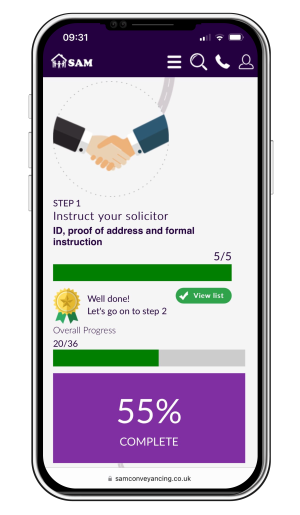
Our conveyancing process area includes:
- online checklists
- videos
- free downloads
- useful tips
It is completely free to use - from start to finish - and saves your progress along the way.
Bonus: Get a FREE book: House to Buy a House without Killing Anyone (Value £9.99).
Frequently Asked Questions

Andrew Boast FMAAT is a qualified accountant, conveyancing specialist and author with over 25 years of experience in the UK property sector. Since beginning his career in 2000 within established SRA and CLC-regulated conveyancing solicitor firms, Andrew has overseen the legal journeys of more than 75,000 clients.
He is the self-published author of the first-time buyer guide: How to Buy a House Without Killing Anyone, and a frequent contributor to mainstream UK media on legislative updates, property law, first-time buyer guides, conveyancing best practices, and stamp duty changes. Andrew specialises in resolving complex title issues, property conflict disputes, and property tax options, streamlining the enquiry process to reduce transaction times and maintaining a client-friendly focus.

Amanda Ambler is a highly accomplished conveyancing specialist with over 15 years of dedicated experience across residential property law, legal compliance, and practice management. Having held senior roles, including Head of Legal Practice and Head of Conveyancing at established UK law firms, Amanda possesses a profound, hands-on understanding of the technical intricacies of the property market.
As the designated Legal Content Reviewer for SAM Conveyancing, Amanda ensures that every guide, legal update, and resource published meets the absolute highest standards of accuracy, regulatory compliance, and factual integrity. Her rigorous review process guarantees that complex property legislation and industry processes are communicated clearly, transparently, and safely for home buyers and sellers alike.