What Can Hold Up Exchange of Contracts?

Waiting to exchange contracts is undoubtedly the most stressful part of the conveyancing process. Under English and Welsh property law, until this legal milestone is reached, either party can withdraw from the transaction without penalty. Consequently, when unexpected delays occur, the risk of a transaction collapsing spikes, and frustrated buyers are more likely to gazunder, and impatient sellers are more tempted to gazump.
During these tense periods, it is crucial that you understand exactly what is causing the delay and what your legal team is doing to resolve it. In this article, we examine the most common roadblocks that hold up a purchase, what can be done to proactively overcome them, and how to accelerate your journey to the exchange of contracts (and finally getting your keys!).
- Legal enquiries: Unanswered questions are one of the most common causes of delays.
- Property issues: Short leases, survey problems, and search red flags can all hold up exchange.
- Mortgage delays: Valuation or underwriting issues can put your purchase on hold.
- Property chains: Delays further up the chain can prevent you from exchanging, even if you are ready.
- Stay proactive: Keep your solicitor and estate agent updated and tackle problems as soon as they arise.
Why is there a delay in exchanging contracts?
The conveyancing process generally takes several months to progress from having an offer accepted to reaching the point of exchange. The exact reason for a delay can vary widely from case to case, but rest assured, there is always a logical reason and, most of the time, a legal solution.
We cover the most common roadblocks that hold up the exchange of contracts and explain what you can do about them, including:
- Waiting on replies to legal enquiries.
- The seller needs to extend a short lease.
- Delays with a mortgage offer or valuation.
- Major problems flagged in your Home Survey.
- Red flags within the conveyancing searches.
- The seller is deciding to delay finding an onward purchase.
- Your solicitor is drafting the final Report on Title.
- Waiting for the original signed documents in the post.
- Damage to the property occurred after the offer was agreed.
11 common issues that hold up the exchange of contracts
Let's dive into the top 11 reasons a conveyancing transaction cannot exchange and give you a solution to get your process moving again.
Unanswered legal enquiries
This is comfortably the most common hold-up for the exchange of contracts. A legal enquiry is a technical question your solicitor has sent to the seller's solicitor that has not yet been answered. It can take weeks for complex enquiries to be resolved, especially if the answer relies on a slow third party. Here are some of the most common legal enquiries and how to answer them.
To answer the question, the seller's solicitor must obtain information from their client, the local authority, the Land Registry, the freeholder or managing agent, or even the solicitor who acted for the seller when they originally bought the property. Where information simply cannot be found, the buyer must decide whether to progress without it. If the buyer has a mortgage, the solicitor must obtain formal lender consent to proceed with the defect, which usually requires obtaining an indemnity insurance policy to protect the lender's financial security.
Expert Tip: Lender-referred enquiries are a pain
If the seller cannot provide a satisfactory answer to a critical legal enquiry, such as missing building regulations or a defective lease, and you are buying with a mortgage, your solicitor is legally obligated to refer the defect to your lender.
This is where transactions often grind to a halt. You lose control of the timeline because your file is placed in the lender's legal queue, which can take 5 to 15 working days for a response.
The best way to mitigate this delay is to ensure your solicitor submits a fully packaged referral (including any proposed indemnity insurance quotes) the very first time, so it doesn't bounce back and reset the clock. Read our complete guide to solicitor-referred legal enquiries.
CEO of SAM Conveyancing
The seller is extending the lease
Buying a leasehold property from a seller who needs to extend a short lease can add months to your timeline. If the property has an absent freeholder, the delay is even more severe, as the seller will need to apply to the courts for a vesting order before the sale can proceed.
To establish a realistic timeframe, you need to find out if the seller has already agreed on a premium with the freeholder and whether they are pursuing a formal (statutory) or informal lease extension. Read more: How do you buy a property with a short lease?
Mortgage offer delays and valuations
A buyer's mortgage offer can be delayed for several reasons, but the most common hurdle is when the bank undervalues the property in its valuation survey, or when unexpected affordability issues arise during underwriting. If you are using a mortgage broker, they are your best asset here; they can speak directly to the lender's Business Development Managers (BDMs) to guide you on how best to overcome the issue and keep the chain intact.
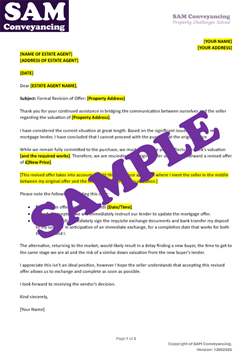
Do you need to negotiate your house price?
- Suitable for negotiating offers with the seller post home buyer survey, or a down-valued mortgage valuation.
- Instant download.
- Easy to fill in.
Problems flagged on your home survey
A severe defect flagged in the buyer's Home Survey will immediately hold up the exchange of contracts until further specialist investigations or repairs are negotiated. Here is a list of common, high-impact survey issues and how best to handle them:
- Non-standard concrete construction
- Structural roof damage
- The presence of asbestos
- Severe rising damp
- Subsidence and structural movement
Many of the above are potential deal-breakers. Refusing to exchange contracts until the exact cost of remediation is known (and potentially deducted from the purchase price) is always in the buyer's best financial interest.
Delays With or Issues Found in Conveyancing Searches
Conveyancing searches present a frustrating two-part hurdle that can significantly hold up your exchange of contracts. The delay usually stems from one of two completely different problems:
1. Local Authority Backlogs: Before your solicitor can even review the results, they have to wait for the local council to process and return the Local Authority Search. Depending on the specific council's staffing and current workload, this wait time can range from a few days to over a month. Unfortunately, there is very little anyone can do to speed up an under-resourced local authority.

How long are local searches taking at the moment?
(in Working Days)
Expert Tip: You could risk using delayed local search indemnity insurance
If your local council is taking weeks to return their results, you do not necessarily have to just sit and wait. You can ask your conveyancer about obtaining Delayed Search Indemnity Insurance.
This policy allows you to exchange contracts before the official search results arrive. It is designed to protect you (and your mortgage lender) against financial loss if the delayed search eventually reveals a detrimental issue, such as a compulsory purchase order or a lack of planning permission.
However, it is called a "risk" for a reason. The insurance only covers financial loss; it will not stop a new bypass from being physically built at the bottom of your garden. Furthermore, if you are buying with a mortgage, your lender must explicitly agree to accept the policy before you can proceed.
CEO of SAM Conveyancing
2. Red Flags in the Search Results: Once the searches are finally completed, the data they contain might uncover unexpected legal or environmental risks. Here are some critical search results that will immediately pause the exchange process while your solicitor investigates:
- Property built on contaminated land
- A high risk of flooding
- Section 106 agreements not being discharged
- Missing or disputed rights of way
Most issues found within the conveyancing searches can be resolved with indemnity insurance or further legal digging, but this investigative work will inevitably push back the exchange date.
The seller delays in finding an onward purchase
Sometimes, a seller who initially agreed to break the chain (by moving into rented accommodation) changes their mind and decides to delay the exchange until they find a new property to buy. This abruptly creates a new property chain above you, adding weeks or even months to the timeline while their onward purchase catches up to the point of exchange. Read more: What to do if you have a property chain.
Drafting the report on the title
Once all legal enquiries are satisfied, your solicitor must draft a comprehensive Report on Title. This document translates all the complex legal findings into plain English, so you know exactly what you are buying, its risks, and its conditions. The report includes all the final documents requiring your signature. Because this is a highly detailed, liability-heavy document, it can take a few days to draft, as solicitors must prepare them meticulously in order of priority.
Waiting for Original Signed Documents
Your solicitor must have the physical, ink-signed original contracts and mortgage deeds in their possession before they can legally exchange contracts. You can easily hold up your own transaction if you return these documents by standard first or second-class post. To prevent unnecessary delays, you should always return signed legal documents via Royal Mail Special Delivery to guarantee they arrive safely on the next working day.
Building Safety Act (BSA) compliance delays
If you are buying a leasehold flat in a building that is over 11 metres (or five storeys) tall, your transaction is subject to the strict regulations of the Building Safety Act 2022. This legislation was introduced to protect leaseholders from historical cladding and fire safety remediation costs.
While this offers excellent buyer protection, it has created a massive administrative bottleneck. Your solicitor must obtain a Landlord's Certificate and a Leaseholder Deed of Certificate to satisfy your mortgage lender that the building is compliant. Managing agents and freeholders are notoriously slow to produce this complex paperwork, which can easily add weeks, or even months, to your transaction timeline.
Grant of Probate
Where the seller has passed away, and the property is being sold by their family, you may have to wait up to 16 weeks for the grant of probate (if there is a will) or Letters of Administration (if there is no will). You can read our guide here: How to sell a probate property.
Slow or inefficient conveyancing solicitors
In many cases, this is the most frustrating issue of all. You can find that someone in the chain, whether it is your buyer, your seller, or even your own conveyancer, has a solicitor who is overworked, unresponsive, or heavily reliant on outdated postal systems.
You can avoid this locally by thoroughly checking reviews before instructing a firm and asking about their current caseload. If you are currently suffering due to poor communication from your legal team, read our guide on how to put pressure on an incompetent conveyancing solicitor.
What happens if the property chain is holding up the exchange?
Sometimes you can be sitting in a property chain, completely ready to go, but you cannot exchange contracts because someone further up or down the line is dragging their heels. This is arguably the most frustrating part of the conveyancing process because you feel entirely out of control. However, you do not just have to sit and wait; there are several strategic options you can deploy to force the issue.
Leverage your estate agent
This is where a good estate agent is truly worth their weight in gold. A proactive agent (or their dedicated sales progressor) will systematically ring up and down the entire property chain to pinpoint exactly whose solicitor is causing the bottleneck. Often, simply uncovering the truth and communicating the issue transparently helps keep the chain together, manages everyone's expectations, and prevents other frustrated parties from pulling out.
Ask the seller to break the chain
If the delay is further up the chain (for example, your seller is waiting for their onward purchase to be ready), you can ask them to break the chain. This means asking them to complete on the sale of their house to you now, and move into rented accommodation or stay with family until their new home is ready. While many sellers are reluctant to do this, reminding them that they risk losing you as a buyer entirely can sometimes be the push they need.
Break the chain yourself
Alternatively, if your buyer is ready but your onward purchase is delayed, you could choose to break the chain yourself to secure your sale. You would move into rented accommodation or sofa-surf until your new property is ready to complete. While this protects your sale, it is a significant hassle: you will need to pay to move twice, arrange storage for your belongings, and find a short-term rental tenancy of less than six months, which is notoriously difficult. You must also ensure your mortgage offer is extended so it does not expire while you wait.
Set a strict ultimatum
If the chain has been stalled for weeks with no end in sight, you can apply extreme pressure by issuing an ultimatum. You instruct your solicitor and estate agent to communicate a strict deadline for the exchange of contracts, making it clear that you will withdraw your offer if the deadline is missed. This tactic is risky, you must be genuinely prepared to walk away—but the threat of a collapsed chain is often the only way to shock a sluggish party into action.
Explore bridging finance
If you are selling a property to fund your new one, and your buyer drops out or is massively delayed, you risk losing your dream home. In extreme cases, some buyers use a short-term bridging loan to bypass their buyer entirely, allowing them to complete on their purchase while they wait for their original property to sell. This is a highly specialised and expensive route, but a mortgage broker can advise if it is a viable option to save your transaction.
What happens once the hold-up is cleared?
Once the specific delay is resolved and the hold-up clears, your conveyancing solicitor will move quickly to finalise the paperwork. Here is what happens next:
For the buyer:
- Report on Title: Your solicitor will draft the final Report on Title. This comprehensive document details all the legal information they have uncovered about the property, outlining exactly what you are buying, including any conditions or risks.
- Documents for Signing: You will be sent the final legal documents to sign. This typically includes the Contract of Sale, the TR1 Form (Transfer Deed), your Mortgage Deed, the SDLT (Stamp Duty) Return Form, and any specific leasehold deeds.
For the seller:
- Documents for Signing: Your solicitor will send you the final documents requiring your ink signature, which primarily include the Contract of Sale and the TR1 Form.
With the legal hurdles finally cleared, you can now start discussing potential completion dates with the rest of the property chain. If you are unsure of the standard timelines, read our guide on how long you should leave between exchange and completion.
Up next: the Exchange of Contracts
Once you have successfully navigated all the frustrating delays and your solicitor finally has everything they need, you are ready for the most important milestone of the conveyancing process: the exchange of contracts.
Discover exactly what happens on the day of exchange, how your deposit is securely transferred up the property chain, and when you can legally set your final moving date in our comprehensive guide.
What is the complete conveyancing process for the buyer?
Log in for FREE to use our interactive online conveyancing platform. Watch expert videos, utilise our step-by-step checklists, and make your move as stress-free and transparent as possible.
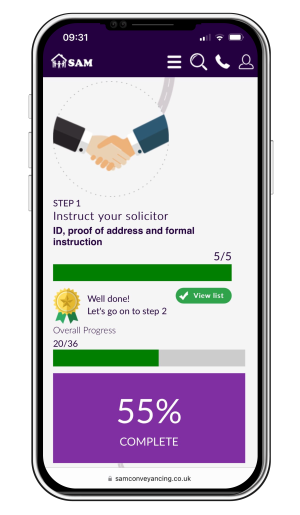
Our conveyancing process area includes:
- online checklists
- videos
- free downloads
- useful tips
It is completely free to use - from start to finish - and saves your progress along the way.
Bonus: Get a FREE book: House to Buy a House without Killing Anyone (Value £9.99).
Frequently Asked Questions

Andrew Boast FMAAT is a qualified accountant, conveyancing specialist and author with over 25 years of experience in the UK property sector. Since beginning his career in 2000 within established SRA and CLC-regulated conveyancing solicitor firms, Andrew has overseen the legal journeys of more than 75,000 clients.
He is the self-published author of the first-time buyer guide: How to Buy a House Without Killing Anyone, and a frequent contributor to mainstream UK media on legislative updates, property law, first-time buyer guides, conveyancing best practices, and stamp duty changes. Andrew specialises in resolving complex title issues, property conflict disputes, and property tax options, streamlining the enquiry process to reduce transaction times and maintaining a client-friendly focus.

Amanda Ambler is a highly accomplished conveyancing specialist with over 15 years of dedicated experience across residential property law, legal compliance, and practice management. Having held senior roles, including Head of Legal Practice and Head of Conveyancing at established UK law firms, Amanda possesses a profound, hands-on understanding of the technical intricacies of the property market.
As the designated Legal Content Reviewer for SAM Conveyancing, Amanda ensures that every guide, legal update, and resource published meets the absolute highest standards of accuracy, regulatory compliance, and factual integrity. Her rigorous review process guarantees that complex property legislation and industry processes are communicated clearly, transparently, and safely for home buyers and sellers alike.