Local Authority Searches: The Guide to Costs & Timescales

The local authority search is the most fundamental search purchased by the buyer during the conveyancing process. It includes information that the seller may not have, and, as such, is a mandatory document if you are buying with a mortgage; although cash buyers are warned not to ignore this search.
Whether you are buying or remortgaging, the local authority records provide up-to-date factual evidence regarding planning permissions, building regulations, and local land charges that could significantly impact the property’s value or your future use of the land.
This article explains the complete process, including when to order your search, factoring in the different turnaround times of the councils, what the cost is, how to get a cheaper search by opting for a regulated one rather than an official one, and why lenders make it mandatory to get one.
What is a Local Authority Search?
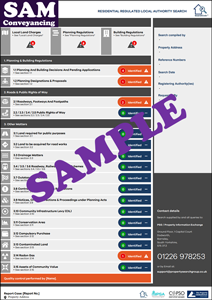
The local authority search contains the LLC1: Local Land Charges Register (Part 1) and CON29: Enquiries of the Local Authority (CON29 stands for Conveyancing Form 29).
What is an LLC1 Form?
The LLC1 part of the local authority search identifies any "charges" or restrictions that are binding on successive owners. In a regulated search, the agent will extract the following from the register:
- Financial Charges: Any money owed to the council by previous owners (e.g., for emergency repair work) that could be recovered from you.
- Planning Charges: Restrictions on how the property can be used, such as Listed Building status or being located within a Conservation Area.
- Tree Preservation Orders (TPOs): Confirmation of any trees on the property that you are legally prohibited from pruning or felling without council consent.
- Conditional Planning Permissions: Any specific conditions imposed on previous planning approvals that you must continue to follow.
- Enforcement Notices: Any active notices for breaches of planning or building regulations.
What is a CON29 Local Search Form?
CON29 (Enquiries of the Local Authority) is a standard form used by conveyancers/solicitors to request specific information about a property from the local council. While the LLC1 (the first half of a local authority search) focuses on legal restrictions already registered against the land, the CON29 focuses on future or hidden risks that may affect your enjoyment of the property.
It is a comprehensive questionnaire that provides factual evidence on the following areas:
- 1
Planning and Building Regulations
This is often the most critical section for buyers. It reveals:
- Whether planning permission or building regulation approval has been granted for extensions or alterations.
- If there are any outstanding enforcement notices for work carried out without permission.
- The status of any pending planning applications that might affect the property.
- 2
Highways and Infrastructure
The CON29 confirms the legal status of the roads and footpaths surrounding the house.
- Road Adoption: Indicates whether the road is publicly maintained. If it is not and the road is private, you may be liable for future repair costs and if someone injures themselves on your road.
- New Schemes: It identifies whether there are any approved plans for new motorways, bypasses, or railway projects (such as HS2) nearby.
- 3
Traffic Schemes
It details any traffic-calming measures, one-way systems, or residents' parking zones that have been approved but may not yet have been implemented in the immediate vicinity.
- 4
Other Environmental & Legal Enquiries
- Radon Gas: Whether the property is in an area affected by radon gas.
- Compulsory Purchase Orders: If the council has any plans to acquire the land or property for public projects.
- Contaminated Land: Whether the land has been identified as contaminated under the Environmental Protection Act.
Buy a Local Authority Search
- Professionally insured Regulated Local Authority Search.
- Available for any local authority in England & Wales.
- Ordered today, delivered in line with local authority timeframes.
- Fixed fee of £215 INC VAT
What is the difference between a Regulated or Official Search?
It is important to understand the two types of reports available:
Regulated Personal Search:
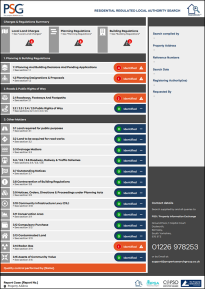
A Regulated Search that complies with the Search Code (which SAM Conveyancing searches do) will answer all the standard LLC1 and CON29 questions, including planning history, road adoption, and nearby infrastructure. Your solicitor orders this through a search company that is specialised in obtaining the search data from the public records.Official Search:
Provided by the local authority and contains all the information the council holds about the property. The cost is often much higher than the regulated search. Your solicitor orders this by sending the LLC1 and Con29 Form to the council and paying the fee.
If you're trying to choose between a Regulated or an Official Local Authority Search, you should know that all the information you need is included in the personal search. The only difference is that the personal search (also known as a Regulated Search) is conducted by an employee of a search provider, who visits the council office to inspect and record the information held by the council.
Select your lender from the dropdown and check whether they accept regulated searches or require official searches from the Local and Water Authorities.


Expert Tip - Most mortgage lenders accept the cheaper regulated search
Most mortgage lenders accept regulated searches, but a small minority require Official searches. Your solicitor will check the UK Finance Handbook to ensure the correct version is ordered for your specific lender.
You can check this yourself by going to:
- UK Finance mortgage lenders' handbook for conveyancers.
- Select England & Wales
- Select your lender
- Select Parts 1 & 2
- Go to section 5.4.5 Does the lender accept personal searches
The majority of lenders allow regulated searches as long as the search firm subscribes to the Search Code, as monitored and regulated by the Property Codes Compliance Board (PCCB).
Which lenders don't accept regulated searches in 2026?
Bank of China, Buckinghamshire Building Society, CHL Mortgages, DB UK Bank Ltd, Hinckley and Rugby Building Society, Investec Bank plc, Keystone Property Finance, LendInvest, LiveMore Capital, Molo Finance, Mortgage Agency Services, MPowered Mortgages, New Street Mortgages, Paragon Buy to Let Mortgages, Paragon Residential Owner-Occupied Mortgages, Parity Trust, Pepper Money, State Bank of India UK, Vida Homeloans and Nedbank Private Wealth Ltd.
CEO of SAM Conveyancing
Local Authority Search timescales & delays
The time it takes to receive your local authority search results is often the primary bottleneck in the conveyancing process. While the national average for 2026 is approximately 10 working days, the reality on the ground is highly fragmented. Depending on the council, you may receive results in as little as 48 hours or wait several months.
Why do delays occur?
Several factors influence how quickly a council can finalise your enquiries:
- Council Staffing Levels: Many departments are currently managing backlogs due to a national shortage of experienced conveyancing staff.
- Digitisation Status: Modern councils with fully digitised Land Charges Registers (LLC1) return results almost instantly. Older systems require manual inspection of physical records, which is significantly slower.
- Transaction Volume: Seasonal spikes in the property market can overwhelm specific local authorities, causing turnaround times to double or triple without warning.
Current council performance in 2026
Below is an overview of the performance landscape across England and Wales:
Speed | Examples of Councils (2026 Data) | Typical Timescale |
Fastest | East Suffolk, Basingstoke, Barnet | Same Day – 5 Working Days |
Average | Bristol, Birmingham, Leeds | 8 – 12 Working Days |
Slowest | Hackney, Bournemouth, Derby | 30 – 180+ Working Days |
Expert Tip - Can you get delayed search insurance when dealing with a slow council?
When you have an exchange deadline you are going to miss and risk losing your property, a delay in your local search can be highly stressful. There is a potential solution, although it is highly risky and reliant on your mortgage lender agreeing.
Some mortgage lenders allow you to buy Delay Search Indemnity Insurance, which covers risks that would have been revealed in a search, such as future planning applications, building regulations issues, or financial charges against the property. It usually covers up to £3m, acting as a safeguard for both purchasers and lenders. The problem is that not all mortgage lenders allow it.
You can check this yourself by going to:.
- UK Finance mortgage lenders' handbook for conveyancers.
- Select England & Wales
- Select your lender
- Select Parts 1 & 2
- Go to section 5.4.6 Does the lender accept search insurance
Unlike regulated searches above, there are a lot more lenders and more high street names that don't allow search indemnity insurance.
Why won't they accept insurance?
It boils down to the risk, and why the local search is so critical. Some mortgage lenders simply don't want to risk the potential issues found in the local search by not having a solicitor review it before the transaction is completed.
Which lenders don't accept Local Search Indemnity Insurance in 2026?
Adam & Company, Adam & Company International, Britannia, a trading name of The Co-operative Bank plc, CHL Mortgages, Coutts, Hampden & Co. plc, Keystone Property Finance, M&S Bank, Mortgage Agency Services, Parity Trust, Swansea Building Society, Monmouthshire Building Society, Hinckley and Rugby Building Society, Principality Building Society, LendInvest, Bank of China, JPMorgan Chase Bank, ModaMortgages, Topaz Finance Ltd, Kensington Mortgage Company Ltd, Paragon Residential Owner-Occupied Mortgages, New Street Mortgages, Platform (a trading name of The Co-operative Bank p.l.c.), Paragon Buy to Let Mortgages, Pepper Money, Progressive Building Society, Danske Bank, Better HomeOwnership, and The Mortgage Lender Limited.
CEO of SAM Conveyancing
When do you order the local search when buying a home?
The timing of when to order your local search is critical during the conveyancing process. If you order it too early, you risk the search expiring or losing your money if the purchase falls through. The best time to order your local authority search is when the seller's solicitor sends the complete contract pack. This is because:
- It proves the seller is committed to the sale, has paid to instruct their solicitor, and has completed all of their paperwork.
- It happens around 2 weeks into the process, which allows some of the slower local authorities to send the search and does not hinder the exchange of the contract deadline.
How long do local authority searches last?
The data contained within the local authority can change the day after the search is issued. This is why most mortgage lenders consider a local authority search valid for only 6 months. If your property transaction takes longer than this to reach completion, you may need to:
- buy a new search; or
- (if lenders allow it) Obtain search indemnity insurance. This protects the lender from financial loss if the information in the search changes, but it doesn't insure you.
For a leasehold, you could delay it further by ordering when the leasehold pack is sent in by the seller, but you may then risk a delay to the process.
Conveyancing risks: Local Authority Search findings
We've seen that as a cash buyer, you can skip the local authority search, and buyers with a mortgage may even be able to skip it and buy indemnity insurance instead. But what are the real-life risks of not having the local search when buying a property? And how would these affect you now and in the future?
Planning Enforcement Notices
Enforcement notices run with the land, meaning the buyer inherits the legal obligation to remedy breaches. Lenders typically refuse to finalise mortgages until the notice is withdrawn.
- Unauthorised Structural Changes: These often require reversal works, which can be expensive and physically disruptive. Common ones are building an extension that exceeds "Permitted Development" limits (e.g., too high or too deep) without express planning permission, or installing a dormer window on a front-facing roof slope or adding a balcony/roof terrace where planning permission was required but not obtained.
- Change of Use: For example, converting a family home into a House in Multiple Occupation (HMO) without the necessary "Sui Generis" permission or in an Article 4 area, or persistently using a residential flat as an Airbnb or short-term holiday rental in areas where this constitutes a "material change of use" (common in London).
Financial Charges
Enforcement notices run with the land, meaning the buyer inherits the legal obligation to remedy breaches. Lenders typically refuse to finalise mortgages until the notice is withdrawn.
- Community Infrastructure Levy (CIL): CIL is a charge on new building projects (extensions, new builds) used to fund local infrastructure. If a developer or previous owner fails to pay the CIL or breaches the commencement notice, the outstanding balance is registered as a land charge and is payable by any future buyer.
- Works in Default (Emergency Repairs): If a property falls into disrepair and the owner ignores a formal notice to fix it (e.g., a dangerous structure or a leaking pipe affecting neighbours), the council may step in to do the work. The council registers the cost of the builders, materials, and administrative fees as a financial charge.
- Mandatory Improvement Grants (Repayment): In some cases, the council provides grants for property improvements (e.g., disabled adaptations or energy efficiency upgrades). These grants often come with a clawback condition. If the property is sold within a certain period (typically 5–10 years), the grant must be repaid.
- Road and Highway Charges: If the council carries out street works—such as paving a previously unadopted road or installing street lighting—under the Private Street Works Code. The council can apportion the cost among the fronting property owners.
Missing Building Regulations
This is the most common risk that resonates with buyers. If the property has had work without a completion certificate, it poses structural and safety concerns and is in breach of the Building Regulations. This causes delays while seeking indemnity insurance, may lead lenders to withhold funds, and could even mean your property isn't worth what you're paying.
- Loft Conversion: A loft conversion without building regulations means that the loft can't be used or advertised as a bedroom.
- Load-bearing wall removal: If a load-bearing wall has been removed, the structure of the house can be compromised.
Proposed Road Schemes
The discovery of planned infrastructure can 'blight' a property, reducing its market value. The risk of future compulsory purchase often leads buyers to withdraw.
Contaminated Land Designation
If land is formally designated as contaminated, the new owner may be liable for remediation costs. This often makes the property un-mortgageable and virtually unsellable. It is rare that the property will be built on contaminated land; you'll need the local authority to confirm if the developer did the required works and registered them before building.
Summary for Local Authority Searches
- Check turnaround time: Find out the turnaround time for your local authority.
- Don't order too soon: Only order your search once the transaction has progressed.
- Order Regulated: They are cheaper, contain the LLC1 and CON29 data, and are accepted by the majority of big mortgage lenders.
- Use Indemnity carefully: It is unwise not to get a local authority search, so don't allow speed to get in the way of good due diligence because it'll cost you in the future when you try and sell..
Are
Property
Searches?
By Andrew Boast, CEO of SAM Conveyancing
Frequently Asked Questions About Local Authority Searches

Andrew Boast FMAAT is a qualified accountant, conveyancing specialist and author with over 25 years of experience in the UK property sector. Since beginning his career in 2000 within established SRA and CLC-regulated conveyancing solicitor firms, Andrew has overseen the legal journeys of more than 75,000 clients.
He is the self-published author of the first-time buyer guide: How to Buy a House Without Killing Anyone, and a frequent contributor to mainstream UK media on legislative updates, property law, first-time buyer guides, conveyancing best practices, and stamp duty changes. Andrew specialises in resolving complex title issues, property conflict disputes, and property tax options, streamlining the enquiry process to reduce transaction times and maintaining a client-friendly focus.

Amanda Ambler is a highly accomplished conveyancing specialist with over 15 years of dedicated experience across residential property law, legal compliance, and practice management. Having held senior roles, including Head of Legal Practice and Head of Conveyancing at established UK law firms, Amanda possesses a profound, hands-on understanding of the technical intricacies of the property market.
As the designated Legal Content Reviewer for SAM Conveyancing, Amanda ensures that every guide, legal update, and resource published meets the absolute highest standards of accuracy, regulatory compliance, and factual integrity. Her rigorous review process guarantees that complex property legislation and industry processes are communicated clearly, transparently, and safely for home buyers and sellers alike.