
Buying a House For the First Time: The Ultimate Guide

Buying a house for the first time is exciting, but is often seen as one of the most stressful things you can do. The process can feel like a minefield of legal jargon and unexpected problems. But, it doesn't have to be.
For first-time buyers, success depends on three things: securing a Mortgage in Principle (MIP) , hiring a fixed-fee conveyancing solicitor , and conducting a Home Buyer's survey and legal searches.
It is also a good time to be a first-time buyer, as in early 2026, first-time buyers accounted for 34.3% of all home sales, which is the highest share recorded in 20 years (Source: Connells Group).
From tax reliefs to unique ownership options, you hold more cards than you realise. This guide is your roadmap to navigating the legal journey and avoiding the hidden costs - helping you move from "offer accepted" to "keys in hand" with total confidence.
- Zero chain delays: No property to sell means faster completion, lower fall-through risk, and stronger negotiating power.
- Save up to £5,000 in Stamp Duty: Higher tax-free thresholds save first-time buyers thousands in SDLT costs.
- Access to government incentives: First-time buyers have exclusive perks such as the First Homes Scheme, LISA bonus, and deposit mortgages.
- Higher deposit and LTC costs: Smaller deposits can trigger higher Loan-to-Value ratios, leading to elevated interest rates and stricter mortgage underwriting.
- Cash buyer competition: Buyers can face tough competition from swift cash buyers and buy-to-let investors.
Why being a first-time buyer is your superpower
In a market often dominated by complex property chains, being a first-time buyer is your greatest negotiating tool. While it may feel like you are at the bottom of the ladder, from a seller's perspective, you are a desirable type of buyer, and there are actually lots of benefits of being a first-time buyer.
- You are chain free
- The 'first-time buyer' discount
- Record-breaking market share
- Improving affordability
The UK property market relies on chains, but as a first-time buyer, you have no property to sell. This makes you a low-risk, high-certainty candidate. You can move as quickly or as slowly as the seller needs. If they want to complete fast to secure their next home, you are their best friend.
You offer speed and certainty, so you can often negotiate a better price. Recent market polls show that 74% of sellers would accept an offer 5% below the asking price if the buyer was chain-free and ready to move. Therefore, on a £300,000 home, your status could literally save you £15,000.
In early 2026, first-time buyers accounted for the highest share of buyers in 20 years. This surge has led lenders to become more innovative, offering lower deposit products and more flexible criteria specifically designed for you.
For the first time in years, the affordability gap is narrowing. In 2026, average wage growth has begun to outpace house price increases. Combined with mortgage rates that are more stable than the volatility of 2024/25, your "buying power" is stronger today than it has been in nearly a decade.
Useful First-Time Buyer Mortgage Facts
- 97% of First-time buyers have a repayment mortgage.
- 62% of First-time buyers take a mortgage of 30 years or more.
Source: English House Survey 2024-25
How to become a successful buyer
Before you step foot in a viewing, you must be "battle-ready". In the market, sellers don't just want a buyer; they want a guaranteed exit. To reap the benefits of being a first-time buyer, you need to prove you are the path of least resistance.
- Securing your 'Mortgage in Principle' (MIP)
Before you view a single property, the priority is proving you can afford it. The MIP is your most important document as it shows sellers and estate agents you are a serious, financially qualified buyer.
However, you need to ensure your MIP is no more than 30 days old. Sellers in a fast-moving market may see an old certificate as a sign of outdated financial health.
Expert Tip - Green mortgages
Look for 'green mortgages'. Many lenders are now offering lower interest rates for first-time buyers purchasing homes with an EPC rating of C or above.
While these incentives are available for any energy-efficient property, they are naturally most common for new-build homes, which are constructed to meet modern environmental standards.
CEO of SAM Conveyancing
- The fixed-fee legal advantage
Legal costs can balloon if you aren't careful. Hiring a fixed-fee conveyancing solicitor early is a strategic move.
By having a solicitor already onboarded, with ID checks done and terms signed, you can tell the estate agent you are ready. Also, a fixed fee protects you from per-hour billing, which is essential if the seller's side has complex probate or leasehold issues.
- The survey strategy
Your lender will do a valuation, but this is for them, not you. The RICS homebuyer's survey (Level 2) is essential for 2026 buyers. It highlights any silent issues, like damp or structural movement.
The survey also gives you negotiation fuel. For example, if the survey finds £5,000 worth of necessary roof repairs, you can use this, in addition to your 5% chain-free discount, to further adjust your offer.
A standard RICS survey is visual and does not fully check the boiler or central heating system.
If the property is old, consider a specialist survey for mechanical and electrical systems.
You need to have:
- Proof of deposit: A first-time buyer deposit in the UK is 10% which equates to £28,795 (June 2026) of the average priced home of £287,949 (June 2026). However, you can secure a mortgage with a 5% deposit, which is £14,397 (June 2026).
- ID and proof of address: You will need savings or a letter confirming a Gifted deposit from family.
- A property wishlist: This helps keep you focused. Think about The Three L's: Location, Lease length, and Light (natural energy efficiency).
Decoding the market: choosing the right property and finding the right deal
Now you have your power buyer status and paperwork ready, you need to match the right property type with the right seller motivation. In 2026, targeting these specific gold mine opportunities is how first-time buyers are securing homes.
Property Type | Why it’s a "Gold Mine" | 2026 Strategy Tip |
| Freehold (Probate Sales) | No onward chain. Executors often prioritise a clean, guaranteed break over the final £5,000 to settle an estate. | Position yourself as the "hassle-free" choice. Offer a 21-day exchange to the executors. |
| Leasehold (Investor Exits) | Landlords liquidating due to rental reforms. Empty flats cost them money in service charges every day. | Look for "Vacant Possession." Remind the agent your chain-free status stops their "profit bleed" immediately. |
| New build stock | Developers have strict quarterly targets and hate "stuck" inventory sitting on their books. | Look for "Ready to Move" plots. Ask for incentives like flooring, stamp duty, or energy-bill contributions. |
| Maisonettes (or property chain-breakers) | Sellers in collapsed chains. These owners have often found their next home and are desperate to replace a buyer who pulled out. | Frame your offer as the "completion guarantee." Remind the agent that unlike the previous buyer, you have no chain to break. |
Freehold vs leasehold: the legal difference
While hunting for deals, remember the legal basics: With a Freehold, you own the building and land. With a Leasehold, you own the right to live there for a set term (aim for 90+ years) and will pay monthly service charges. Your solicitor will verify these details during the "Investigation" phase of the roadmap below.
By targeting motivated sellers, specifically executors, liquidating landlords, and developers, you can secure significant value by acting as the path of least resistance.
Financial boosts: maximising your 2026 buying power
While your chain-free status is your biggest negotiating tool, these financial incentives are the "fuel" that gets you to completion. In 2026, first-time buyers have access to specific reliefs and schemes designed to bridge the affordability gap.
- Stamp duty relief (The £300,000 Threshold)
For most first-time buyers in England and Wales, Stamp Duty isn't an issue as you pay 0% on properties priced up to £425,000 (as long as the total price doesn't exceed £625,000).
For properties under that £500,000 limit, the following 2026 rates apply:
- The Lifetime ISA (LISA) bonus
If you are aged 18–39, the LISA remains the most effective way for first-time buyers to save for their first home and for retirement. It works on a simple principle: you save, and the government adds a 25% bonus on top (up to £1,000 per year).
- First homes scheme
If the "affordability gap" still feels too wide, the First Homes Scheme offers homes at a discount of at least 30% compared to market prices. These are local-market specific and aimed at key workers and local residents.
- No sale, no fee conveyancing
An estimated 1 in 3 home moves don't complete - and that's where no sale, no fee conveyancing comes in. If your property transaction falls through, you won't have to pay your solicitor's basic legal fees for that specific transaction. Any money you've already paid for work completed will be transferred to your next transaction.
- Shared ownership
Shared ownership is when you buy a percentage of the home (usually 10%–75%) and pay rent on the rest. The new staircasing process rules now allow you to buy smaller additional chunks (as low as 1%) more easily, helping you reach 100% ownership faster.
- Innovative 2026 Mortgage Products
The surge in first-time buyer market share (34.3%) has led lenders to get creative:
99% Mortgages: Launched by several major banks to help those with high rental track records but low deposits.
Family Springboard: Allows parents to put savings into a linked account as security rather than "gifting" the cash outright—this can sometimes bypass the "Gifted Deposit" legal lag.
Property Purchase Price | Stamp Duty Rate (SDLT) |
| Up to £300,000 | 0% (no tax) |
| £300,001 to £500,000 | 5% (only on the portion above £300k) |
| Over £500,000 | Relief is lost (standard rates apply) |
Scheme | Best For... | The "Catch" |
| LISA | Long-term savers | £450k property price cap. |
| Stamp Duty Relief | Everyone | Only applies if you've never owned a home before. |
| First Homes | Local key workers | Restrictive eligibility criteria. |
| Shared Ownership | Lower income buyers | You still pay a service charge and rent. |
Maximising your 2026 buying power through specific tax reliefs is just the start, but it can help give your finances a boost when you come to protecting your monthly affordability, such as utility bills.
Your step-by-step roadmap
Once your offer is accepted, the legal "sprint" begins. As a chain-free buyer in 2026, you aren't tied to anyone else's timeline, which can shave weeks off the traditional process. Here is the roadmap from instruction to keys in hand.
- Instruction and Onboarding
You officially hire your solicitor. In 2026, this stage is almost entirely digital. You will complete your Anti-Money Laundering (AML) and ID checks via a smartphone app. Have your digital ID and 6 months of bank statements ready in a secure folder to finish this in 24 hours.
- The Contract Pack
Your solicitor receives the draft contract and property "titles" from the seller's legal team. This is where they check that the seller actually has the right to sell the house.
- Searches and Investigation
Your solicitor orders searches from the local authority, water board, and environmental agencies. This identifies if the house is at risk of flooding, has planning issues, or sits on contaminated land. Your solicitor manages the four mandatory checks: Local Authority Local Authority Search (planning and roads), Water and Drainage Search (sewer connections), Environmental Search (flood and ground stability), and Chancel Repair Search (ancient church liabilities)
If your local council has a backlog, ask your solicitor to order personal searches as these are often returned much faster than official council results.
- Enquiries and mortgage offer
This is the legal "detective" phase. Your solicitor grills the seller’s side on everything from boiler certificates to boundary fences. Simultaneously, your lender will issue your formal Mortgage Offer .
- Exchange of Contracts
The point of no return. You pay your 10% deposit, and both solicitors "exchange" the signed contracts. The deal is now legally binding; neither you nor the seller can pull out without massive financial penalties.
- Completion (Moving Day)
Your solicitor transfers the remaining funds to the seller. Once the money arrives, the estate agent is told to release the keys. You are officially a homeowner!
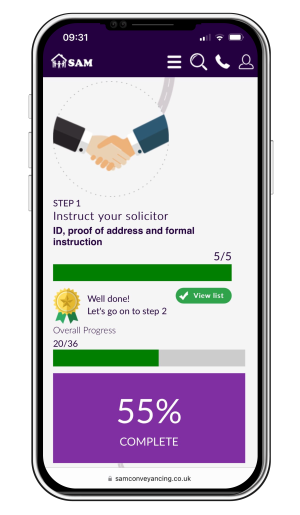
 FREE Online Conveyancing Process For Buyers
Our conveyancing process area includes:
- online checklists
- videos
- free downloads
- useful tips
It is completely free to use - from start to finish - and saves your progress along the way.
Bonus: Get a FREE book: House to Buy a House without Killing Anyone (Value £9.99).
Common pitfalls: What could delay your first purchase?
The road to completion can have hidden obstacles. In 2026, these are the most frequent reasons first-time sales slow down or collapse entirely. Avoid these traps to keep your move on track.
- Ignoring the "expiry date" on your mortgage offer
In a fluctuating interest rate environment, mortgage offers are rarely valid for more than 3 to 6 months. If your legal process drags on past this date, you may have to reapply, potentially at a higher rate. Always track your offer’s expiration date from day one.
- Making major financial changes before completion
Avoid taking out new car finance, opening credit cards, or changing jobs between your offer being accepted and your completion day. Lenders often perform a final "soft credit check" before releasing funds; a sudden change in your debt-to-income ratio can lead to the offer being withdrawn at the last minute.
- Underestimating the "service charge" in leaseholds
When buying a flat, the mortgage is only part of the cost. With 2026 building safety regulations, service charges and "sinking funds" for maintenance can be substantial. If these costs are too high, they may affect your lender's affordability assessment.
- Relying on the lender’s valuation instead of a survey
A lender's valuation is a 10-minute check to ensure the house exists and is worth the loan. It will not find rising damp, roof leaks, or structural subsidence. Skipping a RICS Level 2 survey is the biggest financial risk a first-time buyer can take.
A note on new builds
The process for new builds is faster but carries different risks that require quick action and careful checks:
- The 28-Day Urgency: Developers often demand that contracts are exchanged within 28 days of reservation. A slow solicitor will cause you to lose the property; this is a common issue.
- Snagging Survey: Never assume a new build is perfect. A snagging survey checks for minor defects (e.g., poor finishings, misaligned doors) before you complete, creating a list that the developer must fix under warranty.
Expert Tip - The search deadline
Don’t lose time once your offer is accepted. Ask your solicitor to be ready to order searches as soon as the draft contract arrives, or earlier if appropriate. Local authority searches can still cause delays, so getting ahead where possible can help keep your purchase on track and protect your mortgage offer.
CEO of SAM Conveyancing
Finding confidence in your move
Buying a house for the first time in 2026 doesn't have to be a minefield. By leveraging your status as a chain-free buyer, securing a fixed-fee solicitor early, and following this roadmap, you can move with speed and certainty. You hold more cards than you realise - now it’s time to play them.
Frequently Asked Questions

Andrew Boast FMAAT is a qualified accountant, conveyancing specialist and author with over 25 years of experience in the UK property sector. Since beginning his career in 2000 within established SRA and CLC-regulated conveyancing solicitor firms, Andrew has overseen the legal journeys of more than 75,000 clients.
He is the self-published author of the first-time buyer guide: How to Buy a House Without Killing Anyone, and a frequent contributor to mainstream UK media on legislative updates, property law, first-time buyer guides, conveyancing best practices, and stamp duty changes. Andrew specialises in resolving complex title issues, property conflict disputes, and property tax options, streamlining the enquiry process to reduce transaction times and maintaining a client-friendly focus.

Amanda Ambler is a highly accomplished conveyancing specialist with over 15 years of dedicated experience across residential property law, legal compliance, and practice management. Having held senior roles, including Head of Legal Practice and Head of Conveyancing at established UK law firms, Amanda possesses a profound, hands-on understanding of the technical intricacies of the property market.
As the designated Legal Content Reviewer for SAM Conveyancing, Amanda ensures that every guide, legal update, and resource published meets the absolute highest standards of accuracy, regulatory compliance, and factual integrity. Her rigorous review process guarantees that complex property legislation and industry processes are communicated clearly, transparently, and safely for home buyers and sellers alike.